Deep-Dive with AI
Search across all available documentation for this part.
Deep-Dive with AI
Technical Specifications
Parameters and characteristics for this part
| Specification | MIC2204BMM |
|---|---|
| Current - Output | 600 mA |
| Frequency - Switching | 2 MHz |
| Function | Step-Down |
| Mounting Type | Surface Mount |
| Number of Outputs | 1 |
| Operating Temperature [Max] | 125 ¯C |
| Operating Temperature [Min] | -40 °C |
| Output Configuration | Positive |
| Output Type | Adjustable |
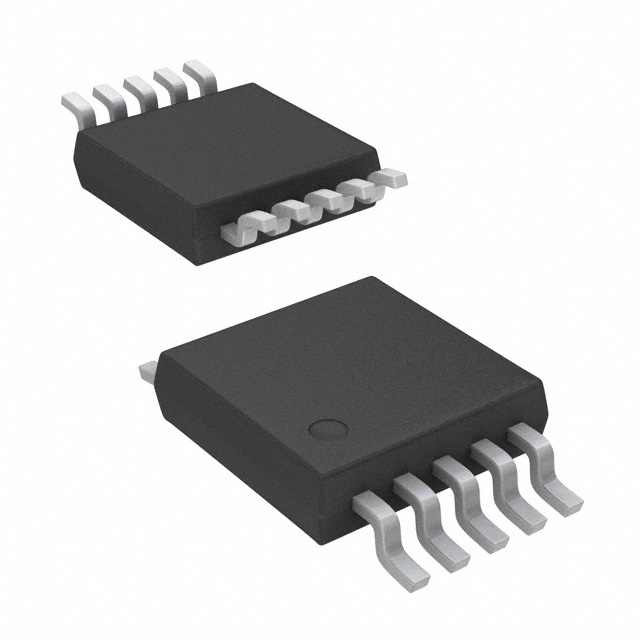
| Package / Case | 10-MSOP, 10-TFSOP |
| Package / Case [x] | 3 mm |
| Package / Case [x] | 0.118 in |
| Supplier Device Package | 10-MSOP |
| Synchronous Rectifier | True |
| Topology | Buck |
| Voltage - Input (Max) [Max] | 5.5 V |
| Voltage - Input (Min) [Min] | 2.3 V |
| Voltage - Output (Max) [Max] | 5.5 V |
| Voltage - Output (Min/Fixed) | 1 V |
Pricing
Prices provided here are for design reference only. For realtime values and availability, please visit the distributors directly
| Distributor | Package | Quantity | $ | |
|---|---|---|---|---|
| Digikey | Tube | 500 | $ 1.74 | |
Description
General part information
MIC2204 Series
The MIC2204 is a high efficiency 2MHz PWM synchronous buck switching regulator. Power conversion efficiency of above 95% is easily obtainable over a wide range of applications. A proprietary internal compensation technique ensures stability with the smallest possible inductor and ceramic output capacitor.
The MIC2204 operates from 2.3V to 5.5V input and features internal power MOSFETs that can supply over 600mA of output current with output voltages down to 1V. The MIC2204 implements a constant 2MHz pulse-width-modulation (PWM) control scheme which reduces spurious noise in sensitive RF and communication applications. Additionaly, the MIC2204 can be synchronized to an external clock, or multiple MIC2204s can easily be daisy-chained with the SYNCLOCK feature.
The MIC2204 has a high bandwidth loop (typ. 200kHz) which allows ultra fast transient response times. This is very useful when powering applications that require fast dynamic response such as CPU cores and RF circuitry in high performance cellular phones and PDAs.
Documents
Technical documentation and resources