Deep-Dive with AI
Search across all available documentation for this part.
Deep-Dive with AI
Technical Specifications
Parameters and characteristics for this part
| Specification | AVR64EA32-E/PT |
|---|---|
| Connectivity | IrDA, SMBus, UART/USART, I2C, SPI |
| Core Processor | AVR |
| Core Size | 8-Bit |
| Data Converters [custom] | 12, 10 |
| Data Converters [custom] | 24, 1 |
| EEPROM Size | 512 x 8 |
| Mounting Type | Surface Mount |
| Number of I/O | 27 |
| Operating Temperature [Max] | 125 °C |
| Operating Temperature [Min] | -40 °C |
| Oscillator Type | External, Internal |
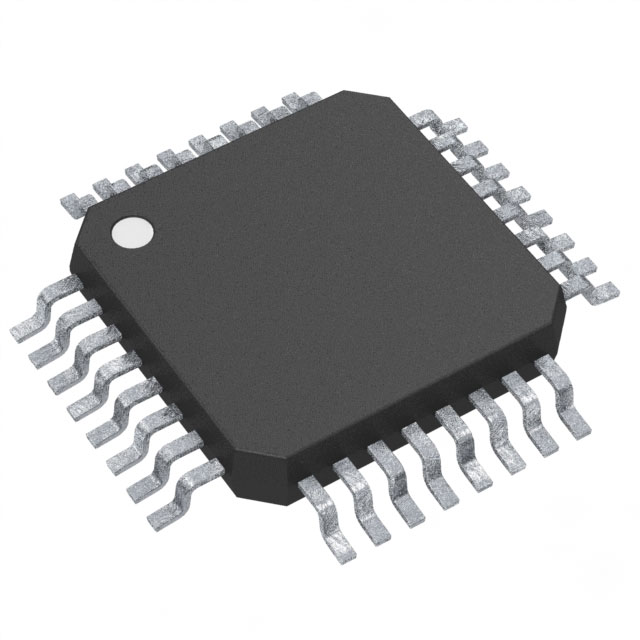
| Package / Case | 32-TQFP |
| Program Memory Size | 64 KB |
| Program Memory Type | FLASH |
| RAM Size | 6 K |
| Speed | 20 MHz |
| Supplier Device Package | 32-TQFP (7x7) |
| Voltage - Supply (Vcc/Vdd) [Max] | 5.5 V |
| Voltage - Supply (Vcc/Vdd) [Min] | 1.8 V |
Pricing
Prices provided here are for design reference only. For realtime values and availability, please visit the distributors directly
| Distributor | Package | Quantity | $ | |
|---|---|---|---|---|
| Digikey | Tray | 500 | $ 1.46 | |
| Microchip Direct | TRAY | 1 | $ 1.62 | |
| 25 | $ 1.48 | |||
| 100 | $ 1.34 | |||
| 1000 | $ 1.24 | |||
| 5000 | $ 1.18 | |||
Description
General part information
AVR64EA32 Series
[Code Examples](https://mplab-discover.microchip.com/v2/category/com.microchip.code.examples?dsl=avr64ea48)
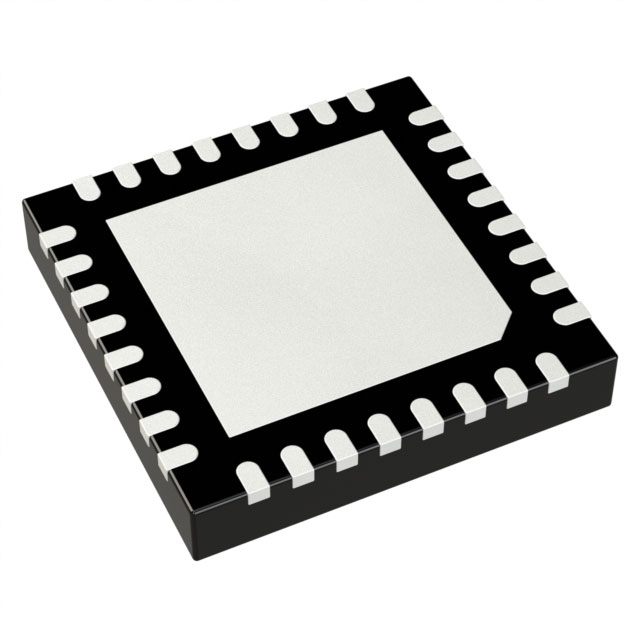
The AVR64EA32 is a microcontroller in the AVR® EA family featuring the AVR® CPU with hardware multiplier, running at up to 20 MHz and with 64 KB Flash with dedicated Read-While-Write (RWW) section, 6 KB SRAM, and 512B of EEPROM available in 32-pin VQFN and TQFP packages. The family uses the latest Core Independent Peripherals with low-power features including Event System, intelligent analog and advanced peripherals.
The new 12-bit ADC offers true differential measuring capabilities with optional hardware accumulation of up to 1024 samples, which effectively gives up to 17-bits resolution. With sampling rates up to 375 ksps the analog data is available very rapidly. The Programmable Gain Amplifier (PGA) for the ADC can amplify single-ended and differential analog inputs to make it possible to measure even small amplitude signals efficiently.
Documents
Technical documentation and resources