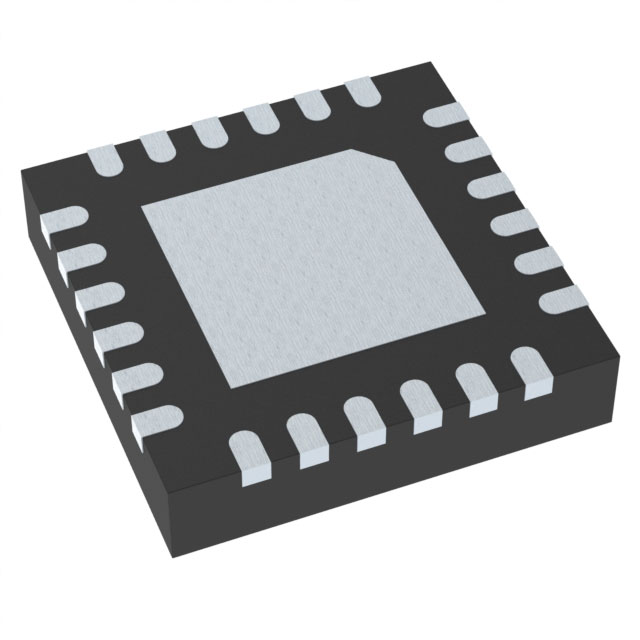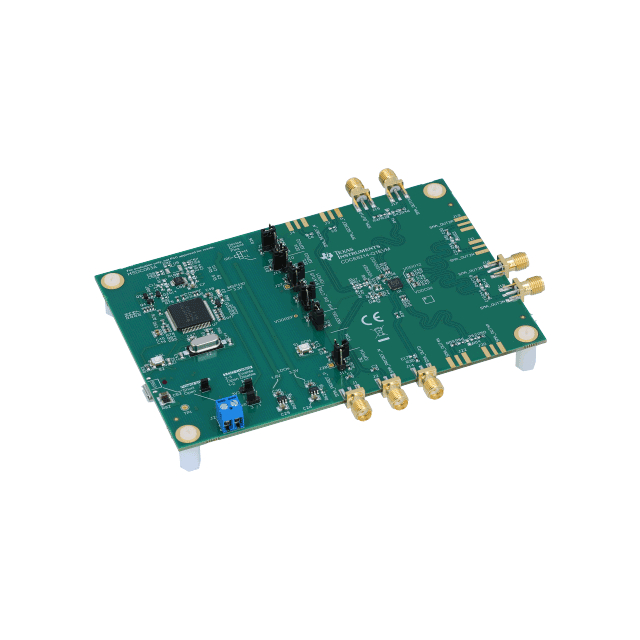
CDCE6214-Q1EVM
Active4 DIFFERENTIAL AND 1 LVCMOS OUTPUTS CLOCK GENERATOR EVALUATION MODULE AUTOMOTIVE AEC-Q100
Deep-Dive with AI
Search across all available documentation for this part.
CDCE6214-Q1EVM
Active4 DIFFERENTIAL AND 1 LVCMOS OUTPUTS CLOCK GENERATOR EVALUATION MODULE AUTOMOTIVE AEC-Q100
Deep-Dive with AI
Technical Specifications
Parameters and characteristics for this part
| Specification | CDCE6214-Q1EVM |
|---|---|
| Function | Clock Generator |
| Secondary Attributes | USB Interface(s) |
| Supplied Contents | Board(s) |
| Type | Timing |
| Utilized IC / Part | DCE6214-Q1 |
Pricing
Prices provided here are for design reference only. For realtime values and availability, please visit the distributors directly
| Distributor | Package | Quantity | $ | |
|---|---|---|---|---|
| Digikey | Box | 1 | $ 238.80 | |
Description
General part information
CDCE6214-Q1 Series
The CDCE6214 is a four-channel, ultra-low power, medium grade jitter, clock generator that can generate five independent clock outputs selectable between various modes of drivers. The input source could be a single-ended or differential input clock source, or a crystal. The CDCE6214 features a frac-N PLL to synthesize unrelated base frequency from any input frequency. The CDCE6214 can be configured through the I2C interface. In the absence of the serial interface, the GPIO pins can be used in Pin Mode to configure the product into distinctive configurations.
On-chip EEPROM can be used to change the configuration, which is pre-selectable through the pins. The device provides frequency margining options with glitch-free operation to support system design verification tests (DVT) and Ethernet Audio-Video Bridging (eAVB). Fine frequency margining is available on any output channel by steering the fractional feedback divider in DCO mode.
Internal power conditioning provides excellent power supply ripple rejection (PSRR), reducing the cost and complexity of the power delivery network. The analog and digital core blocks operate from either a 1.8-V, 2.5-V, or 3.3-V ±5% supply, and output blocks operate from a 1.8-V, 2.5-V, or 3.3-V ±5% supply.
Documents
Technical documentation and resources