TPPM0115DR
Obsolete12-V, SWITCH MODE SYNCHRONOUS BUCK CONTROLLER
Deep-Dive with AI
Search across all available documentation for this part.
TPPM0115DR
Obsolete12-V, SWITCH MODE SYNCHRONOUS BUCK CONTROLLER
Deep-Dive with AI
Technical Specifications
Parameters and characteristics for this part
| Specification | TPPM0115DR |
|---|---|
| Clock Sync | False |
| Control Features | Phase Control, Power Good |
| Frequency - Switching | 200 kHz |
| Function | Step-Down |
| Mounting Type | Surface Mount |
| Number of Outputs | 2 |
| Operating Temperature [Max] | 70 °C |
| Operating Temperature [Min] | 0 °C |
| Output Configuration | Positive |
| Output Phases | 2 |
| Output Type | Transistor Driver |
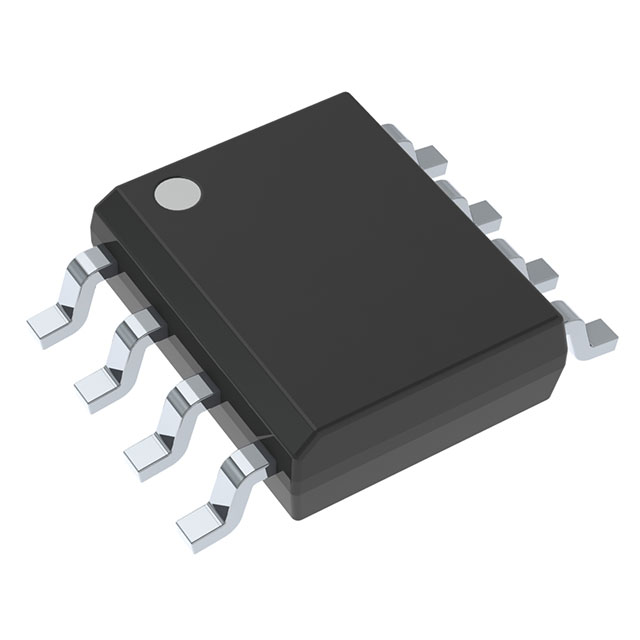
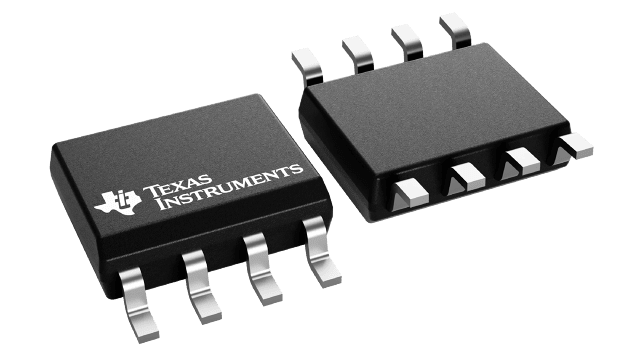
| Package / Case | 8-SOIC |
| Package / Case [x] | 0.154 in |
| Package / Case [y] | 3.9 mm |
| Supplier Device Package | 8-SOIC |
| Synchronous Rectifier | True |
| Topology | Buck |
| Voltage - Supply (Vcc/Vdd) [Max] | 12.6 V |
| Voltage - Supply (Vcc/Vdd) [Min] | 11.4 V |
Pricing
Prices provided here are for design reference only. For realtime values and availability, please visit the distributors directly
| Distributor | Package | Quantity | $ | |
|---|---|---|---|---|
| Texas Instruments | LARGE T&R | 1 | $ 3.85 | |
| 100 | $ 3.14 | |||
| 250 | $ 2.47 | |||
| 1000 | $ 2.09 | |||
Description
General part information
TPPM0115 Series
The TPPM0115 is a synchronous buck controller capable of driving two external power FETs 180° out of phase. The device requires a minimum of external standard filter components and switching FETs to regulate the desired output voltage. This is achieved with an internal switching frequency of 200 kHz (typical).
The TPPM0115 switch mode controller and associated circuitry provide efficient voltage regulation of greater than 85%. The output voltage is set by two external resistors. During power up, when the output voltage reaches 90% of the desired value, the power good (PWRGD) output is transitioned high after a short delay of 1 ms to 5 ms. During power down, when the output voltage falls below 90% of the set value, the PWRGD output is pulled low without any delay.
In the event the set output is in an over-voltage condition due to a system fault, the drive to the lower FET turns on to correct the fault. There is a dead time between switching one FET ON while the other FET is switching OFF to prevent cross conduction.
Documents
Technical documentation and resources