Deep-Dive with AI
Search across all available documentation for this part.
Deep-Dive with AI
Technical Specifications
Parameters and characteristics for this part
| Specification | SY89825UHI |
|---|---|
| Differential - Input:Output [custom] | True |
| Differential - Input:Output [custom] | True |
| Frequency - Max [Max] | 2 GHz |
| Input | LVPECL, LVDS |
| Mounting Type | Surface Mount |
| Number of Circuits | 1 |
| Operating Temperature [Max] | 85 °C |
| Operating Temperature [Min] | -40 °C |
| Output | LVPECL |
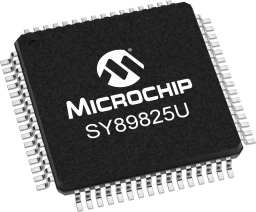
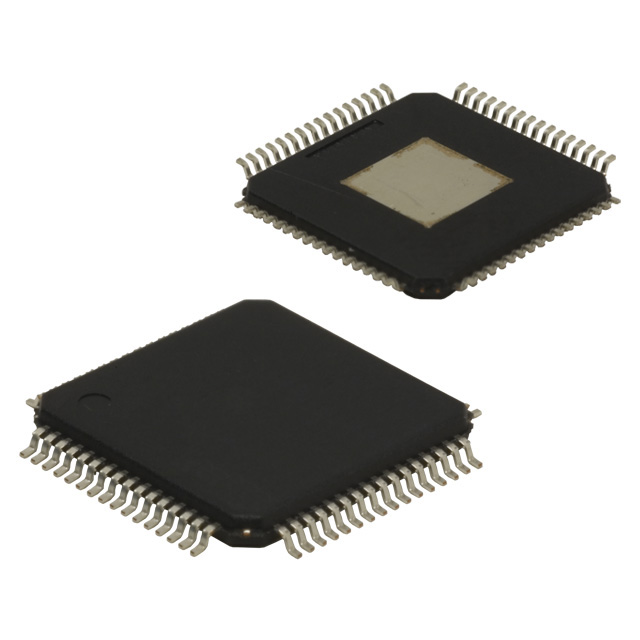
| Package / Case | 64-TQFP Exposed Pad |
| Ratio - Input:Output | 2:22 |
| Supplier Device Package | 64-TQFP-EP (10x10) |
| Type | Fanout Buffer (Distribution), Multiplexer, Translator |
| Voltage - Supply [Max] | 3.6 V |
| Voltage - Supply [Min] | 2.37 V |
Pricing
Prices provided here are for design reference only. For realtime values and availability, please visit the distributors directly
| Distributor | Package | Quantity | $ | |
|---|---|---|---|---|
Description
General part information
SY89825U Series
The SY89825U is a High Performance Bus Clock Driver with 22 differential LVPECL output pairs. This part is designed for use in low voltage (2.5V, 3.3V) applications which require a large number of outputs to drive precisely aligned, ultra low skew signals to their destination. The input is multiplexed from either LVDS or LVPECL by the CLK\_SEL pin. The LVDS input includes a 100Ω internal termination, thus eliminating the need for external termination. The Output Enable (OE) is synchronous so that the outputs will only be enabled/disabled when they are already in the LOW state. This eliminates any chance of generating a runt clock pulse when the device is enabled/ disabled as can happen with an asynchronous control.The SY89825U features low pin-to-pin skew (35ps max.) --performance previously unachievable in a standard product having such a high number of outputs. The SY89825U is available in a single space saving package which provides a lower overall cost solution. In addition, a single chip solution improves timing budgets by eliminating the multiple device solution with their corresponding large part-to-part skew.
Documents
Technical documentation and resources