Deep-Dive with AI
Search across all available documentation for this part.
Deep-Dive with AI
Technical Specifications
Parameters and characteristics for this part
| Specification | ADF4154BRUZ-RL7 |
|---|---|
| Differential - Input:Output | Yes/No |
| Divider/Multiplier | No |
| Divider/Multiplier | Yes |
| Frequency - Max [Max] | 4 GHz |
| Input | CMOS, TTL |
| Mounting Type | Surface Mount |
| Number of Circuits | 1 |
| Operating Temperature [Max] | 85 °C |
| Operating Temperature [Min] | -40 °C |
| Output | Clock |
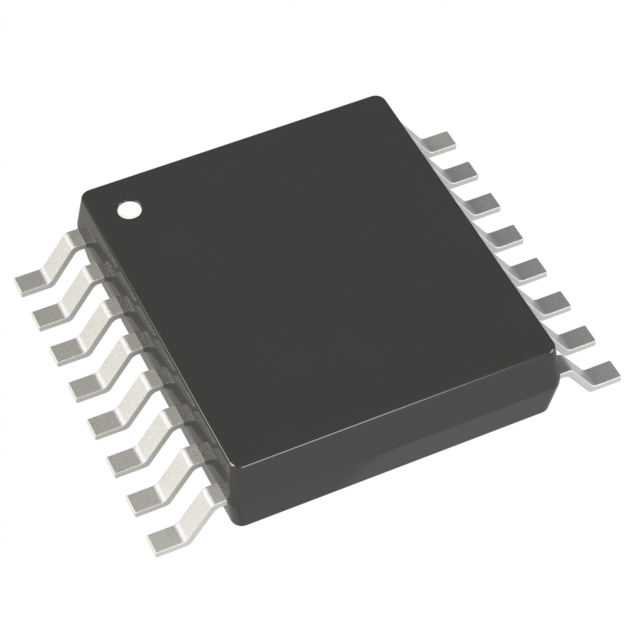
| Package / Case | 16-TSSOP |
| Package / Case [x] | 0.173 in |
| Package / Case [y] | 4.4 mm |
| PLL | True |
| Ratio - Input:Output | 2:1 |
| Supplier Device Package | 16-TSSOP |
| Type | Fractional N Synthesizer (RF) |
| Voltage - Supply [Max] | 3.3 V |
| Voltage - Supply [Min] | 2.7 V |
Pricing
Prices provided here are for design reference only. For realtime values and availability, please visit the distributors directly
| Distributor | Package | Quantity | $ | |
|---|---|---|---|---|
| Digikey | Cut Tape (CT) | 1 | $ 9.73 | |
| Digi-Reel® | 1 | $ 9.73 | ||
| Tape & Reel (TR) | 1000 | $ 4.15 | ||
Description
General part information
ADF4154 Series
The ADF4154 is a fractional-N frequency synthesizer that implements local oscillators in the up conversion and down conversion sections of wireless receivers and transmitters. It consists of a low noise digital phase frequency detector (PFD), a precision charge pump, and a programmable reference divider. There is a Σ-Δ based fractional interpolator to allow programmable fractional-N division. The INT, FRAC, and MOD registers define an overall N divider (N = (INT + (FRAC/MOD))). In addition, the 4-bit reference counter (R counter) allows selectable REFINfrequencies at the PFD input. A complete phase-locked loop (PLL) can be implemented if the synthesizer is used with an external loop filter and a voltage controlled oscillator (VCO).A key feature of the ADF4154 is the fast-lock mode with a builtin timer. The user can program a predetermined count-down time value so that the PLL will remain in wide bandwidth mode, instead of having to control this time externally.Control of all on-chip registers is via a simple 3-wire interface. The device operates with a power supply ranging from 2.7 V to 3.3 V, and can be powered down when not in use.
Documents
Technical documentation and resources