


Deep-Dive with AI
Search across all available documentation for this part.
Deep-Dive with AI
Technical Specifications
Parameters and characteristics for this part
| Specification | DS92LV090ATVEH/NOPB |
|---|---|
| Data Rate | 100 Mbps |
| Duplex | Half |
| Mounting Type | Surface Mount |
| Number of Drivers/Receivers [custom] | 9 |
| Number of Drivers/Receivers [custom] | 9 |
| Operating Temperature [Max] | 85 °C |
| Operating Temperature [Min] | -40 °C |
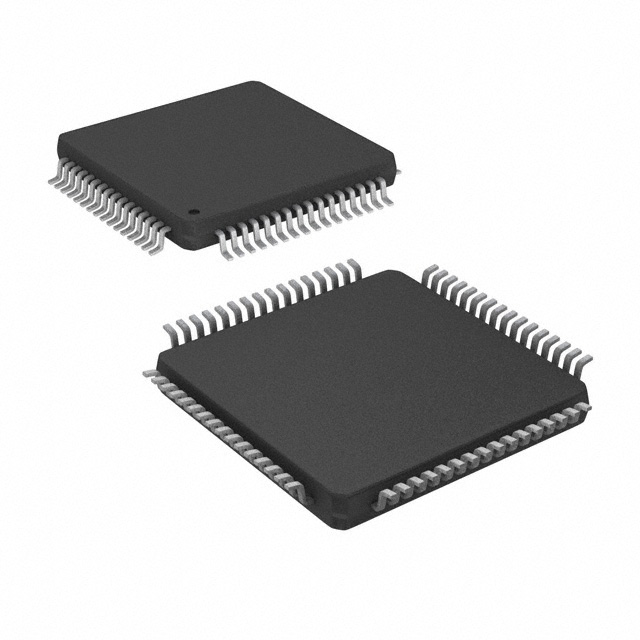
| Package / Case | 64-LQFP |
| Protocol | LVDS |
| Supplier Device Package | 64-TQFP (10x10) |
| Type | Transceiver |
| Voltage - Supply [Max] | 3.6 V |
| Voltage - Supply [Min] | 3 V |
Pricing
Prices provided here are for design reference only. For realtime values and availability, please visit the distributors directly
| Distributor | Package | Quantity | $ | |
|---|---|---|---|---|
| Digikey | Tray | 1 | $ 11.21 | |
| 10 | $ 10.13 | |||
| 25 | $ 9.65 | |||
| 160 | $ 8.38 | |||
| 320 | $ 8.01 | |||
| 480 | $ 7.30 | |||
| 960 | $ 6.36 | |||
| Texas Instruments | JEDEC TRAY (10+1) | 1 | $ 8.58 | |
| 100 | $ 7.00 | |||
| 250 | $ 5.50 | |||
| 1000 | $ 4.66 | |||
Description
General part information
DS92LV090A Series
The DS92LV090A is one in a series of Bus LVDS transceivers designed specifically for the high speed, low power proprietary backplane or cable interfaces. The device operates from a single 3.3V power supply and includes nine differential line drivers and nine receivers. To minimize bus loading, the driver outputs and receiver inputs are internally connected. The separate I/O of the logic side allows for loop back support. The device also features a flow through pin out which allows easy PCB routing for short stubs between its pins and the connector.
The driver translates 3V TTL levels (single-ended) to differential Bus LVDS (BLVDS) output levels. This allows for high speed operation, while consuming minimal power with reduced EMI. In addition, the differential signaling provides common mode noise rejection of ±1V.
The receiver threshold is less than ±100 mV over a ±1V common mode range and translates the differential Bus LVDS to standard (TTL/CMOS) levels. (See Section for more details.)
Documents
Technical documentation and resources