AD5232BRUZ50-REEL7
ActiveNONVOLATILE MEMORY, DUAL, 256-POSITION DIGITAL POTENTIOMETER
Deep-Dive with AI
Search across all available documentation for this part.
AD5232BRUZ50-REEL7
ActiveNONVOLATILE MEMORY, DUAL, 256-POSITION DIGITAL POTENTIOMETER
Deep-Dive with AI
Technical Specifications
Parameters and characteristics for this part
| Specification | AD5232BRUZ50-REEL7 |
|---|---|
| Configuration | Potentiometer |
| Features | Cascade Pin |
| Interface | SPI |
| Memory Type | Non-Volatile |
| Mounting Type | Surface Mount |
| Number of Circuits | 2 |
| Number of Taps | 256 |
| Operating Temperature [Max] | 85 °C |
| Operating Temperature [Min] | -40 °C |
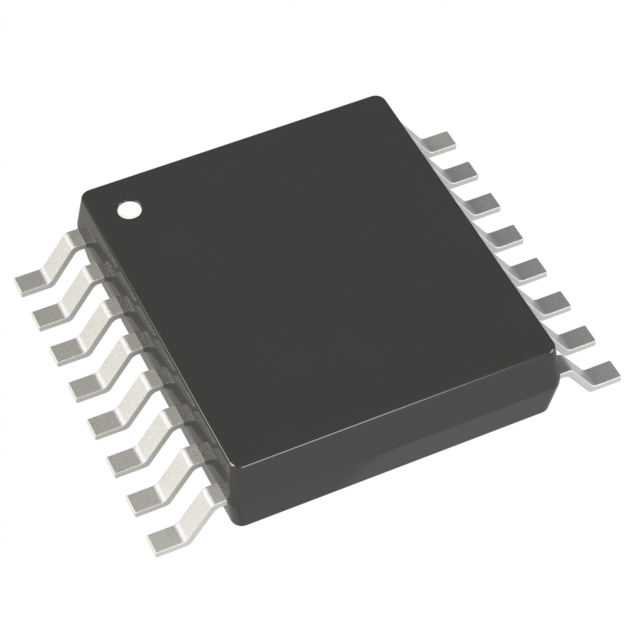
| Package / Case | 16-TSSOP |
| Package / Case [x] | 0.173 in |
| Package / Case [y] | 4.4 mm |
| Resistance - Wiper (Ohms) (Typ) | 200 Ohms |
| Resistance (Ohms) | 50 kOhms |
| Supplier Device Package | 16-TSSOP |
| Taper | Linear |
| Temperature Coefficient (Typ) | 600 ppm/°C |
| Tolerance [Max] | 20 % |
| Tolerance [Min] | -40 % |
| Voltage - Supply [Max] | 5.5 V, 2.75 V |
| Voltage - Supply [Min] | 2.7 V, -2.25 V |
Pricing
Prices provided here are for design reference only. For realtime values and availability, please visit the distributors directly
| Distributor | Package | Quantity | $ | |
|---|---|---|---|---|
| Digikey | Cut Tape (CT) | 1 | $ 10.42 | |
| Tape & Reel (TR) | 1000 | $ 4.60 | ||
| 2000 | $ 4.54 | |||
Description
General part information
AD5232 Series
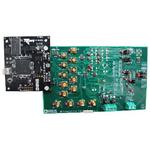
The AD5232 device provides a nonvolatile, dual-channel, digitally controlled variable resistor (VR) with 256-position resolution. This device performs the same electronic adjustment function as a mechanical potentiometer with enhanced resolution, solid state reliability, and superior low temperature coefficient performance. The versatile programming of the AD5232, performed via a microcontroller, allows multiple modes of operation and adjustment.In the direct program mode, a predetermined setting of the RDAC registers (RDAC1 and RDAC2) can be loaded directly from the microcontroller. Another important mode of operation allows the RDACx register to be refreshed with the setting previously stored in the corresponding EEMEM register (EEMEM1 and EEMEM2). When changes are made to the RDACx register to establish a new wiper position, the value of the setting can be saved into the EEMEMx register by executing an EEMEM save operation. After the settings are saved in the EEMEMx register, these values are automatically transferred to the RDACx register to set the wiper position at system power-on. Such operation is enabled by the internal preset strobe. The preset strobe can also be accessed externally.All internal register contents can be read via the serial data output (SDO). This includes the RDAC1 and RDAC2 registers, the corresponding nonvolatile EEMEM1 and EEMEM2 registers, and the 14 spare USER EEMEM registers that are available for constant storage.The basic mode of adjustment is the increment and decrement command instructions that control the wiper position setting register (RDACx). An internal scratch pad RDACx register can be moved up or down one step of the nominal resistance between Terminal A and Terminal B. This step adjustment linearly changes the wiper to Terminal B resistance (RWB) by one position segment of the device’s end-to-end resistance (RAB). For exponential/ logarithmic changes in wiper setting, a left/right shift command instruction adjusts the levels in ±6 dB steps, which can be useful for audio and light alarm applications.The AD5232 is available in a thin, 16-lead TSSOP package. All parts are guaranteed to operate over the extended industrial temperature range of −40°C to +85°C. An evaluation board, the EVAL-AD5232-10EBZ, is available.APPLICATIONSMechanical potentiometer replacementInstrumentation: gain and offset adjustmentProgrammable voltage-to-current conversionProgrammable filters, delays, and time constantsProgrammable power supplyLow resolution DAC replacementSensor calibration
Documents
Technical documentation and resources