Deep-Dive with AI
Search across all available documentation for this part.
Technical Specifications
Parameters and characteristics for this part
| Specification | FPC402RHUT |
|---|---|
| Interface | I2C |
| Mounting Type | Surface Mount |
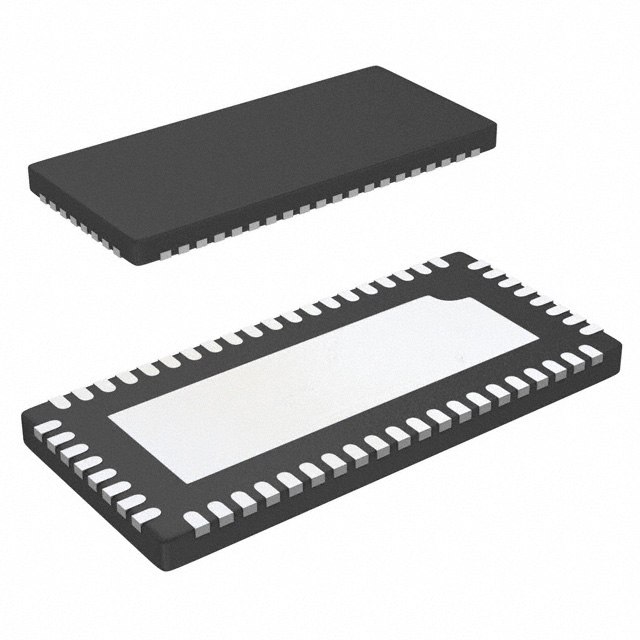
| Package / Case | 56-WFQFN Exposed Pad |
| Supplier Device Package | 56-WQFN (5x11) |
| Voltage - Supply [Max] | 3.3 V |
| Voltage - Supply [Min] | 1.8 V |
Pricing
Prices provided here are for design reference only. For realtime values and availability, please visit the distributors directly
| Distributor | Package | Quantity | $ | |
|---|---|---|---|---|
| Digikey | Cut Tape (CT) | 1 | $ 10.80 | |
| 10 | $ 7.54 | |||
| 25 | $ 6.70 | |||
| 100 | $ 5.76 | |||
| Digi-Reel® | 1 | $ 10.80 | ||
| 10 | $ 7.54 | |||
| 25 | $ 6.70 | |||
| 100 | $ 5.76 | |||
| Tape & Reel (TR) | 250 | $ 5.31 | ||
| 500 | $ 5.03 | |||
| 750 | $ 4.89 | |||
| 1250 | $ 4.75 | |||
| Texas Instruments | SMALL T&R | 1 | $ 7.00 | |
| 100 | $ 5.70 | |||
| 250 | $ 4.48 | |||
| 1000 | $ 3.80 | |||
Description
General part information
FPC402 Series
The FPC402 quad port controller serves as a low-speed signal aggregator for common port types such as SFP, QSFP, Mini-SAS HD, and others. The FPC402 aggregates all low-speed control and I2C signals across four ports and presents a single easy-to-use management interface to the host (I2C or SPI). Multiple FPC402s can be used in high-port-count applications with one common control interface to the host. The FPC402 is designed to allow placement on the bottom side of the PCB, underneath the press fit connector, to simplify routing. This localized control of the low-speed signals in the ports cuts system BOM costs by enabling the use of smaller IO count control devices (FPGAs, CPLDs, and MCUs) and by reducing routing layer congestion.
The FPC402 quad port controller serves as a low-speed signal aggregator for common port types such as SFP, QSFP, Mini-SAS HD, and others. The FPC402 aggregates all low-speed control and I2C signals across four ports and presents a single easy-to-use management interface to the host (I2C or SPI). Multiple FPC402s can be used in high-port-count applications with one common control interface to the host. The FPC402 is designed to allow placement on the bottom side of the PCB, underneath the press fit connector, to simplify routing. This localized control of the low-speed signals in the ports cuts system BOM costs by enabling the use of smaller IO count control devices (FPGAs, CPLDs, and MCUs) and by reducing routing layer congestion.