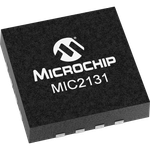
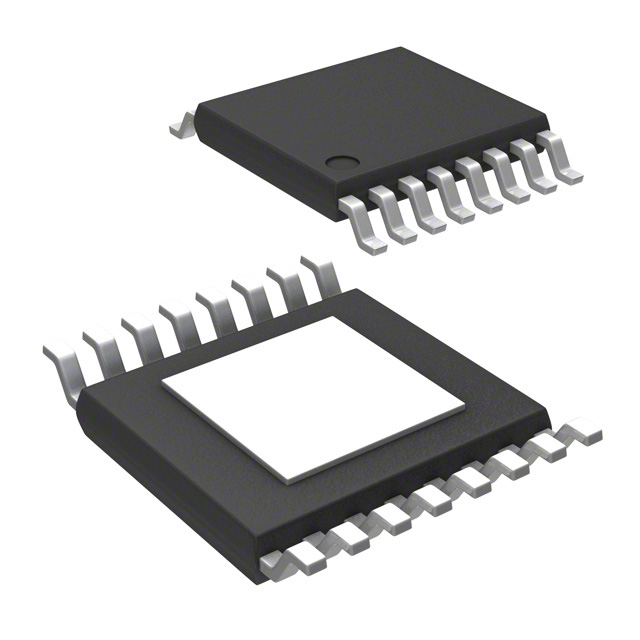
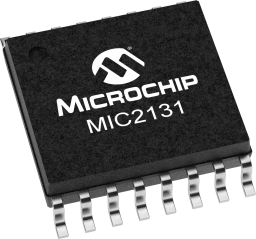
MIC2131-1YML-TR
ActiveHIGH VOLTAGE 150KHZ SYNCHRONOUS BUCK CONTROL 16 VQFN 4X4X0.9MM T/R ROHS COMPLIANT: YES
Deep-Dive with AI
Search across all available documentation for this part.
MIC2131-1YML-TR
ActiveHIGH VOLTAGE 150KHZ SYNCHRONOUS BUCK CONTROL 16 VQFN 4X4X0.9MM T/R ROHS COMPLIANT: YES
Deep-Dive with AI
Technical Specifications
Parameters and characteristics for this part
| Specification | MIC2131-1YML-TR |
|---|---|
| Clock Sync | False |
| Control Features | Soft Start, Current Limit, Enable, Power Good |
| Duty Cycle (Max) [Max] | 92 % |
| Function | Step-Down |
| Mounting Type | Surface Mount |
| Number of Outputs | 1 |
| Operating Temperature [Max] | 125 ¯C |
| Operating Temperature [Min] | -40 °C |
| Output Configuration | Positive |
| Output Phases | 1 |
| Output Type | Transistor Driver |
| Package / Case | 16-MLFÛ, 16-VQFN Exposed Pad |
| Supplier Device Package | 16-MLFÛ (4x4) |
| Synchronous Rectifier | True |
| Topology | Buck |
| Voltage - Supply (Vcc/Vdd) [Max] | 40 V |
| Voltage - Supply (Vcc/Vdd) [Min] | 8 V |
Pricing
Prices provided here are for design reference only. For realtime values and availability, please visit the distributors directly
| Distributor | Package | Quantity | $ | |
|---|---|---|---|---|
| Digikey | Tape & Reel (TR) | 5000 | $ 2.39 | |
| Microchip Direct | T/R | 1 | $ 3.15 | |
| 25 | $ 2.62 | |||
| 100 | $ 2.39 | |||
| 1000 | $ 2.30 | |||
| 5000 | $ 2.28 | |||
| Newark | Each (Supplied on Full Reel) | 100 | $ 2.47 | |
Description
General part information
MIC2131 Series
The MIC2130/1 is a high voltage input PWM synchronous buck IC. It is a voltage mode controller with a fast hysteretic control loop (FHyCL) employed during fast line and load transients. The internal gate drivers are designed to drive high current MOSFETs.
The MIC2130/1 can produce output voltages down to 0.7V with input voltage from 8V to 40V. The MIC2130 family of control ICs implements fixed frequency PWM control. The active anti-shoot through drive scheme means a wide range of external MOSFETs may be used while maintaining optimum efficiency.
The MIC2130/1 is the fully functional version of the family and implements a new feature to minimize EMI. This function is critical for systems that need to be compliant with EMI standards throughout the world.
Documents
Technical documentation and resources