


Deep-Dive with AI
Search across all available documentation for this part.
Deep-Dive with AI
Technical Specifications
Parameters and characteristics for this part
| Specification | CL88030T-E/MF |
|---|---|
| Dimming | True |
| Internal Switch(s) | False |
| Mounting Type | Surface Mount |
| Number of Outputs | 4 |
| Operating Temperature [Max] | 125 ¯C |
| Operating Temperature [Min] | -40 °C |
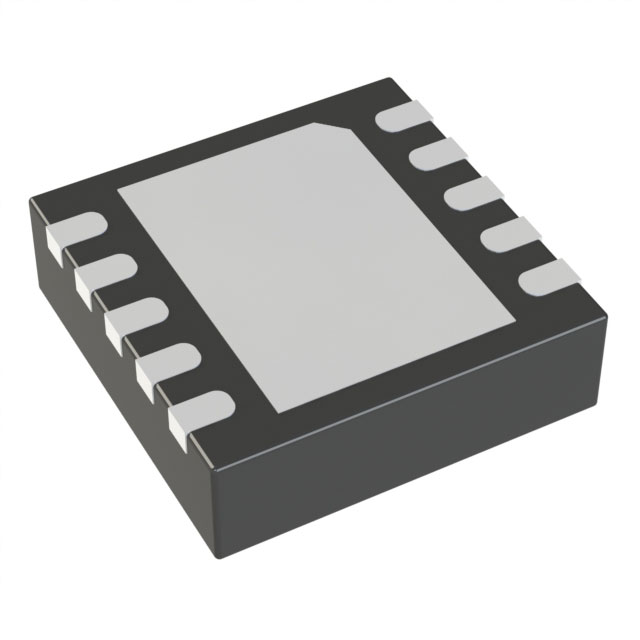
| Package / Case | 10-VFDFN Exposed Pad |
| Supplier Device Package | 10-DFN (3x3) |
| Type | AC DC Offline Switcher |
| Voltage - Supply (Max) [Max] | 12 V |
| Voltage - Supply (Min) [Min] | 10 V |
Pricing
Prices provided here are for design reference only. For realtime values and availability, please visit the distributors directly
| Distributor | Package | Quantity | $ | |
|---|---|---|---|---|
| Digikey | Cut Tape (CT) | 1 | $ 0.79 | |
| 25 | $ 0.65 | |||
| 100 | $ 0.60 | |||
| Digi-Reel® | 1 | $ 0.79 | ||
| 25 | $ 0.65 | |||
| 100 | $ 0.60 | |||
| Tape & Reel (TR) | 3300 | $ 0.60 | ||
| Microchip Direct | T/R | 1 | $ 0.79 | |
| 25 | $ 0.65 | |||
| 100 | $ 0.60 | |||
| 1000 | $ 0.55 | |||
| 5000 | $ 0.53 | |||
Description
General part information
CL88030 Series
The CL88030 and CL88031 LED Driver Integrated Circuits (ICs) are intended offline sequential linear LED drivers designed to provide LED power from a utility voltage input.
The CL88030/31 devices are designed to drive a long string of inexpensive, low-current LEDs directly from the AC mains. A basic driver circuit consists of Microchip’s CL88030/31 LED driver IC, four power FETs (six if using the CL88031), four resistors, two capacitors, and a bridge rectifier. Additional components are optional for various levels of transient protection. Adding an inexpensive NTC-thermistor assures over temperature protection (OTP). No EMI filters or power factor correction circuits are needed (unless the optional flicker-reduction feature is desired).
A string of series/parallel LEDs is tapped at four (or six) locations, called "taps". Linear current regulators sink current at each tap through a single control point and are sequentially turned on and off. High efficiency is achieved by shutting off upstream regulators when downstream regulators achieve regulation. This makes controlling overall input current easier than trying to control multiple current paths by tracking the input sine wave voltage.
Documents
Technical documentation and resources