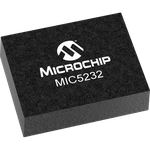
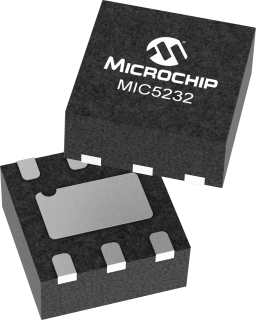
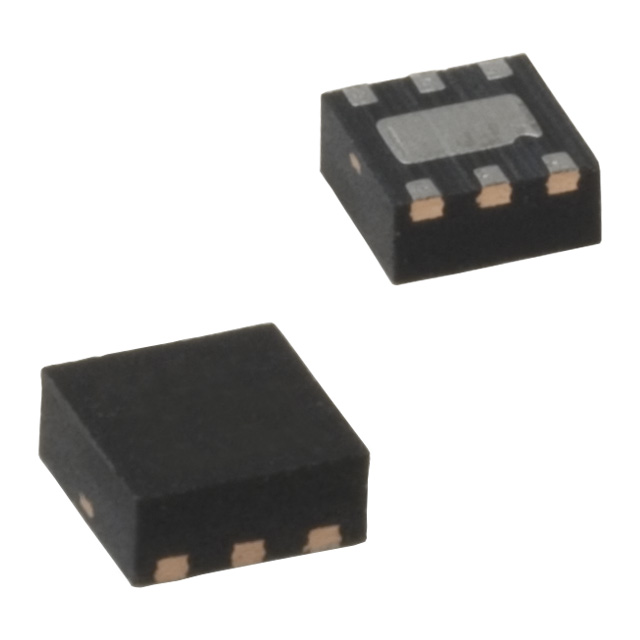
MIC5232-1.2YD5-TR
Active10MA ULTRA LOW IQ SINGLE UCAP LDO 5 TSOT - T/R ROHS COMPLIANT: YES
Deep-Dive with AI
Search across all available documentation for this part.
MIC5232-1.2YD5-TR
Active10MA ULTRA LOW IQ SINGLE UCAP LDO 5 TSOT - T/R ROHS COMPLIANT: YES
Deep-Dive with AI
Technical Specifications
Parameters and characteristics for this part
| Specification | MIC5232-1.2YD5-TR |
|---|---|
| Control Features | Enable |
| Current - Output | 10 mA |
| Current - Quiescent (Iq) | 3 µA |
| Mounting Type | Surface Mount |
| Number of Regulators | 1 |
| Operating Temperature [Max] | 125 °C |
| Operating Temperature [Min] | -40 °C |
| Output Configuration | Positive |
| Output Type | 1.81 mOhm |
| Package / Case | SOT-23-5 Thin, TSOT-23-5 |
| Protection Features | Reverse Polarity |
| PSRR [Max] | 55 dB |
| PSRR [Min] | 35 dB |
| Voltage - Input (Max) [Max] | 7 V |
| Voltage - Output (Min/Fixed) | 1.2 V |
| Voltage Dropout (Max) [Max] | 0.3 V |
Pricing
Prices provided here are for design reference only. For realtime values and availability, please visit the distributors directly
| Distributor | Package | Quantity | $ | |
|---|---|---|---|---|
| Digikey | Cut Tape (CT) | 1 | $ 0.60 | |
| 25 | $ 0.52 | |||
| 100 | $ 0.46 | |||
| Digi-Reel® | 1 | $ 0.60 | ||
| 25 | $ 0.52 | |||
| 100 | $ 0.46 | |||
| Tape & Reel (TR) | 3000 | $ 0.46 | ||
| Microchip Direct | T/R | 1 | $ 0.60 | |
| 25 | $ 0.52 | |||
| 100 | $ 0.46 | |||
| 1000 | $ 0.45 | |||
| Newark | Each (Supplied on Full Reel) | 3000 | $ 0.49 | |
Description
General part information
MIC5232 Series
The MIC5232 is an ultra-low quiescent current, low-dropout linear regulator that is capable of operating from a single-cell lithium ion battery. Consuming only 1.8µA of quiescent current while operating, the MIC5232 is ideal for stand-by applications like powering real-time clocks or memory in battery-operated electronics.
The MIC5232 is capable of providing 10mA of output current and has low output noise, providing a small, efficient solution ideal for any keep-alive application including reverse current protection, keeping reverse leakage (VOUT > VIN) down to 20nA.
The MIC5232 is a µCap design, operating with very small ceramic output capacitors for stability, reducing required board space and component cost.
Documents
Technical documentation and resources