MCP2155-I/P
ActiveIRDA® STANDARD PROTOCOL STACK CONTROLLER SUPPORTING DTE APPLICATIONS
Deep-Dive with AI
Search across all available documentation for this part.
MCP2155-I/P
ActiveIRDA® STANDARD PROTOCOL STACK CONTROLLER SUPPORTING DTE APPLICATIONS
Deep-Dive with AI
Technical Specifications
Parameters and characteristics for this part
| Specification | MCP2155-I/P |
|---|---|
| Current - Supply | 7 mA |
| Function | Controller |
| Interface | UART |
| Operating Temperature [Max] | 125 °C |
| Operating Temperature [Min] | -40 °C |
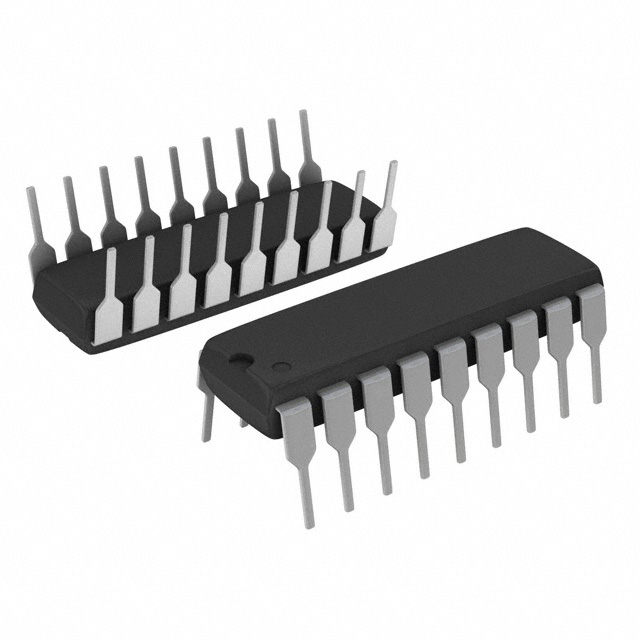
| Package / Case | 18-DIP |
| Package / Case [x] | 0.3 in |
| Package / Case [x] | 7.62 mm |
| Protocol | IRDA® |
| Supplier Device Package | 18-PDIP |
| Voltage - Supply [Max] | 5.5 V |
| Voltage - Supply [Min] | 3 V |
Pricing
Prices provided here are for design reference only. For realtime values and availability, please visit the distributors directly
| Distributor | Package | Quantity | $ | |
|---|---|---|---|---|
| Digikey | Tube | 1 | $ 5.67 | |
| 25 | $ 4.73 | |||
| 100 | $ 4.31 | |||
| Microchip Direct | TUBE | 1 | $ 5.67 | |
| 25 | $ 4.73 | |||
| 100 | $ 4.31 | |||
| 1000 | $ 4.15 | |||
| 5000 | $ 4.10 | |||
| Newark | Each | 100 | $ 4.48 | |
Description
General part information
MCP2155 Series
The MCP2155 is a cost effective, low pin count (18-pin), easy to use device for implementing IrDA standard wireless connectivity. The MCP2155 handles for the IrDA standard protocol "stack" plus bit encoding/decoding. The MCP2155 operates in Data Communication Equipment (DCE) applications and sits between a UART and an infrared optical transceiver.
The Serial interface baud rates are user selectable to one of four IrDA standard baud rates between 9600 baud and 115.2 kbaud (9600, 19200, 57600, 115200). The IR baud rates are user selectable to one of five IrDA standard baud rates between 9600 baud and 115.2 kbaud (9600, 19200, 38400, 57600, 115200). The serial interface baud rate will be specified by the BAUD1: BAUD0 pins, while the IR baud rate is specified by the Host Controller. This means that the baud rates do not need to be the same.
The MCP2155 encodes an asynchronous serial data stream, converting each data bit to the corresponding infrared (IR) formatted pulse. IR pulses that are received are decoded, and then handled by the protocol handler state machine. The protocol handler will then send the appropriate data bytes to the host controller in UART formatted serial data.
Documents
Technical documentation and resources