


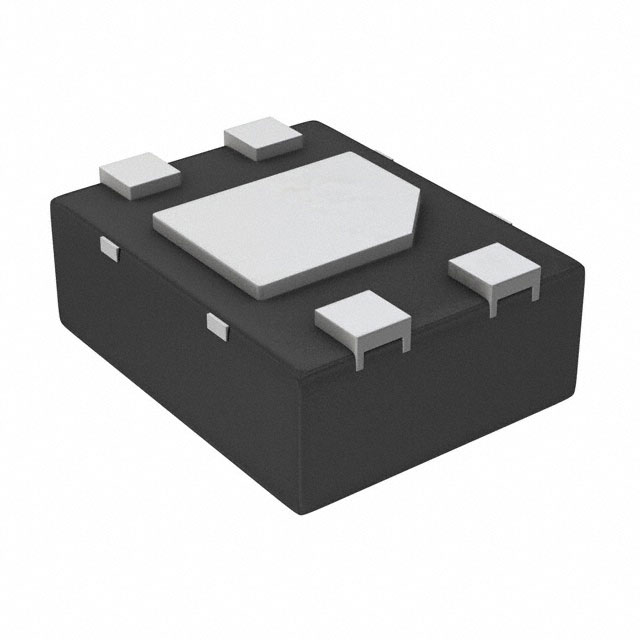
DRV5012AEDMRT
ObsoleteLOW POWER (AS LOW AS 3.3-ΜA), LOW VOLTAGE (UP TO 5.5-V) HALL EFFECT LATCH
Deep-Dive with AI
Search across all available documentation for this part.
DRV5012AEDMRT
ObsoleteLOW POWER (AS LOW AS 3.3-ΜA), LOW VOLTAGE (UP TO 5.5-V) HALL EFFECT LATCH
Deep-Dive with AI
Technical Specifications
Parameters and characteristics for this part
| Specification | DRV5012AEDMRT |
|---|---|
| Current - Output (Max) [Max] | 5 mA |
| Current - Supply (Max) [Max] | 5 mA |
| Features | Temperature Compensated |
| Function | Latch |
| Mounting Type | Surface Mount |
| Operating Temperature [Max] | 85 °C |
| Operating Temperature [Min] | -40 °C |
| Output Type | Push-Pull |
| Package / Case | 4-XFDFN Exposed Pad |
| Polarization | South Pole, North Pole |
| Sensing Range | -3.3 mT, 3.3 mT |
| Supplier Device Package | 4-X2SON |
| Technology | Hall Effect |
| Test Condition [Max] | 85 °C |
| Test Condition [Min] | -40 °C |
| Voltage - Supply [Max] | 5.5 V |
| Voltage - Supply [Min] | 1.65 V |
Pricing
Prices provided here are for design reference only. For realtime values and availability, please visit the distributors directly
| Distributor | Package | Quantity | $ | |
|---|---|---|---|---|
| Digikey | Cut Tape (CT) | 1 | $ 1.19 | |
| 5 | $ 1.01 | |||
| 10 | $ 0.94 | |||
| 25 | $ 0.85 | |||
| 50 | $ 0.79 | |||
| 100 | $ 0.73 | |||
| Digi-Reel® | 1 | $ 1.19 | ||
| 5 | $ 1.01 | |||
| 10 | $ 0.94 | |||
| 25 | $ 0.85 | |||
| 50 | $ 0.79 | |||
| 100 | $ 0.73 | |||
| Tape & Reel (TR) | 250 | $ 0.67 | ||
| 500 | $ 0.62 | |||
| 750 | $ 0.59 | |||
| 1250 | $ 0.55 | |||
| Texas Instruments | SMALL T&R | 1 | $ 0.82 | |
| 100 | $ 0.63 | |||
| 250 | $ 0.46 | |||
| 1000 | $ 0.33 | |||
Description
General part information
DRV5012 Series
The DRV5012 device is an ultra-low-power digital-latch Hall effect sensor with a pin-selectable sampling rate. ™
When a south magnetic pole is near the top of the package and the BOPthreshold is exceeded, the device drives a low voltage. The output stays low until a north pole is applied and the BRPthreshold is crossed, which causes the output to drive a high voltage. Alternating north and south poles are required to toggle the output, and integrated hysteresis separates BOPand BRPto provide robust switching.
Using an internal oscillator, the DRV5012 device samples the magnetic field and updates the output at a rate of 20 Hz or 2.5 kHz, depending on the SEL pin. This dual-bandwidth feature can allow systems to monitor changes in movement while using minimal power.
Documents
Technical documentation and resources