


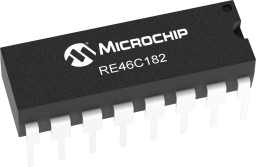
RE46C182E16
ActiveSELECTABLE HORN PATTERN, DETECTOR INTERCONNECT, LOW BATTERY DETECT, HUSH TIMER, ALARM MEMORY, PROGRAMMABLE ALARM THRESHOLDS
Deep-Dive with AI
Search across all available documentation for this part.
RE46C182E16
ActiveSELECTABLE HORN PATTERN, DETECTOR INTERCONNECT, LOW BATTERY DETECT, HUSH TIMER, ALARM MEMORY, PROGRAMMABLE ALARM THRESHOLDS
Technical Specifications
Parameters and characteristics for this part
| Specification | RE46C182E16 |
|---|---|
| Current - Supply | 30 µA |
| Mounting Type | Through Hole |
| Operating Temperature [Max] | 60 °C |
| Operating Temperature [Min] | -10 °C |
| Package / Case | 0.3 in |
| Package / Case | 16-DIP |
| Package / Case | 7.62 mm |
| Supplier Device Package | 16-PDIP |
| Type | Smoke Detector |
Pricing
Prices provided here are for design reference only. For realtime values and availability, please visit the distributors directly
| Distributor | Package | Quantity | $ | |
|---|---|---|---|---|
| Digikey | Tube | 525 | $ 1.34 | |
| Microchip Direct | CTUBE | 1 | $ 1.77 | |
| 25 | $ 1.47 | |||
| 100 | $ 1.34 | |||
| 1000 | $ 1.29 | |||
| 5000 | $ 1.27 | |||
| 10000 | $ 1.26 | |||
| Newark | Each | 100 | $ 1.34 | |
Description
General part information
RE46C182 Series
The RE46C182 is a next generation low power programmable CMOS ionization type smoke detector IC. With minimal external components this circuit will provide all the required features for an ionization type smoke detector. An on-chip oscillator strobes power to the smoke detection circuitry for 5ms every 10 seconds to keep standby current to a minimum. A check for a low battery condition is performed every 80 seconds and ionization chamber test is performed once every 320 seconds when in standby. The temporal horn pattern supports the NFPA 72 emergency evacuation signal. An interconnect pin allows multiple detectors to be connected such that when one unit alarms all units will sound. A charge dump feature will quickly discharge the interconnect line when exiting a local alarm. The interconnect input is also digitally filtered. An internal 9 minute timer can be used for a reduced sensitivity mode. A local alarm memory feature allows the user to determine if the unit has previously entered a local alarm condition. A Chamber Monitor function checks for ionization chamber degradation.
Documents
Technical documentation and resources