


Zenode.ai Logo
Beta
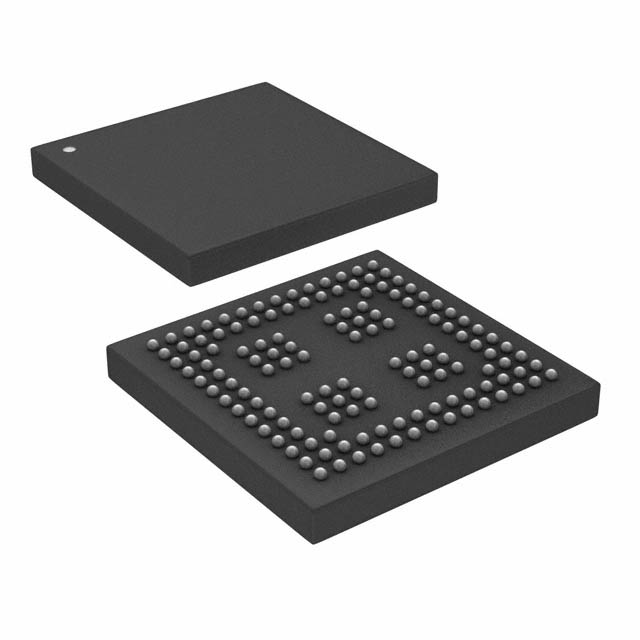
136-CSPBGA
Integrated Circuits (ICs)

ADSP-21262SBBCZ150

Active
Analog Devices

DSP, 150MHZ, CSPBGA-136, -40 TO 85DEG C ROHS COMPLIANT: YES

Deep-Dive with AI

Search across all available documentation for this part.

136-CSPBGA
Integrated Circuits (ICs)

ADSP-21262SBBCZ150

Active
Analog Devices

DSP, 150MHZ, CSPBGA-136, -40 TO 85DEG C ROHS COMPLIANT: YES

Technical Specifications

Parameters and characteristics for this part

SpecificationADSP-21262SBBCZ150
InterfaceSPI, DAI
Mounting TypeSurface Mount
Non-Volatile Memory512 kB
On-Chip RAM2 Mbit
Operating Temperature [Max]85 °C
Operating Temperature [Min]-40 °C
Package / Case136-LFBGA, CSPBGA
Supplier Device Package136-CSPBGA (12x12)
TypeFloating Point
Voltage - Core1.2 V
Voltage - I/O3.3 V

Pricing

Prices provided here are for design reference only. For realtime values and availability, please visit the distributors directly

DistributorPackageQuantity$
NewarkEach 1$ 55.05
5$ 49.02
10$ 42.99
25$ 40.69
50$ 39.71
100$ 38.73

Description

General part information

ADSP-21262 Series

The ADSP-21262 is the first member of the third-generation of SHARC®programmable DSPs. A range of applications such as high-quality audio and automotive entertainment systems, voice recognition, medical appliances and measurement devices benefit from the ADSP-21262’s integration of large on-chip memory with a wide variety of peripherals—thereby speeding time to market and keeping costs low.The ADSP-21262 is based on the SHARC DSP core that supports execution of 32-bit fixed-point and 32/40-bit floating-point arithmetic formats. With its core running at 200MHz (5 ns instruction cycle time), the ADSP-21262 is capable of executing complex Fast Fourier Transform (FFT) operations—1024-point complex FFT in 46us, more than 2.6x faster than comparatively priced processors. In audio applications, the single-instruction, multiple data (SIMD) mode effectively doubles the processor performance.The ADSP-21262 is designed with the highest level of integration, including 2 Mbit of on-chip dual-ported SRAM and 4 Mbit of mask programmable ROM memory. This large on-chip dual-ported memory enables sustained processor and I/O performance, without the need for external memory. System I/O is achieved through six full-duplex serial ports, four timers, a 16-bit parallel port, a serial peripheral interface (SPI), 22 zero-overhead Direct Memory Access (DMA) channels delivering fast data transfers without processor intervention and an innovative Digital Applications Interface (DAI) offering complete software control through its Signal Routing Unit (SRU).Digital Applications Interface (DAI) for Simplified I/O System DevelopmentThe ADSP-21262 introduces the Digital Applications Interface (DAI), an architecture that enables complete software programmability of various peripherals. The flexibility and ease-of-use of the SHARC programming model, combined with the DAI, allow manufacturers to deploy one hardware configuration into multiple product offerings with different I/O requirements.Connections are made using the flexible Signal Routing Unit (SRU), a matrix routing group of pins that provides configurable and flexible connectivity between all DAI components and the SRU. The peripherals connected through the DAI are: a precision clock generator (PCG), an input data port (IDP), six SPORTS (serial ports), six flag inputs, six flag outputs, three timers and the SRU. The IDP provides an additional input path to the DSP core, configurable as 8 channels of receive serial data or as 7 channels of receive serial data and a single channel of up to a 20-bit wide parallel data. This level of integration enables the designer to take full advantage of a wide variety of peripherals without sacrificing the overall system performance.CROSSCORE Development Tools3rd Generation SHARC DSP members are supported by ADI’s CROSSCORE brand of award winning development tools. The CROSSCORE components include the VisualDSP++™software development environment, EZ-KIT Lite™evaluation systems, and emulators.VisualDSP++ is an integrated software development environment, allowing for fast and easy development, debug, and deployment. The EZ-KIT Lite evaluation system provides an easy way to investigate the power of the ADI family of DSPs and begin to develop applications. Emulators are available for PCI and USB host platforms for rapid on-chip debugging. Additional development tools and algorithms are available from an extensive third-party development community.

Documents

Technical documentation and resources

An Almost Pure DDS Sine Wave Tone Generator

Related Document

Datasheet

Datasheet

EE-345: Boot Kernel Customization and Firmware Upgradeability on SHARC Processors® (Rev.1)

Application Note

EE-330: Windows Vista Compatibility in VisualDSP++ 5.0 Development Tools (Rev.1)

Application Note

EE-230: Code Overlays on the Third Generation SHARC® Family of Processors (Rev.2)

Application Note

EE-68: Analog Devices JTAG Emulation Technical Reference (Rev.10)

Application Note

ICE-1000/ICE-2000 Emulator User’s Guide (Rev.1.2)

Emulator Manual

EE-253: Power Bypass Decoupling of SHARC® Processors (Rev.1)

Application Note

EE-202: Using the Expert Linker for Multiprocessor LDFs (Rev.3)

Application Note

EE-216: Estimating Power Dissipation for ADSP-21262S SHARC® DSPs

Application Note

EE-191: Implementing a Glueless UART Using The SHARC® DSP SPORTs

Application Note

EE-128: DSP in C++: Calling Assembly Class Member Functions From C++

Application Note

EE-340: Connecting SHARC®and Blackfin®Processors over SPI (Rev.1)

Application Note

EE-264: Interfacing MultiMediaCard™ with ADSP-2126x SHARC® Processors (Rev.1)

Application Note

VisualDSP++®5.0 Getting Started Guide (Rev.3.0)

Software Manual

Blackfin®/SHARC®USB EZ-Extender®Manual (Rev.1.1)

User Guide

ADSP-21262 EZ-KIT Lite®Evaluation System Manual (Rev.3.2)

User Guide

EE-290: Managing the Core PLL on SHARC® Processors (Rev.5)

Application Note

ICE-100B Emulator User’s Guide (Rev.1.1)

Emulator Manual

EE-69: Understanding and Using Linker Description Files on SHARC Processors (Rev.2)

Application Note

EE-56: Tips and Tricks on SHARC® EPROM and Host Boot Loader (Rev.3)

Application Note

Apex-ICE USB Emulator Hardware Installation Guide (Rev.6.0)

Legacy Emulator Manual

VisualDSP++®5.0 Linker and Utilities Manual (Rev.3.5)

Software Manual

EE-110: A Quick Primer on ELF and DWARF File Formats

Application Note

EE-323: Implementing Dynamically Loaded Software Modules (Rev.1)

Application Note

VisualDSP++®5.0 Loader and Utilities Manual (Rev.2.5)

Software Manual

EE-267: Implementing In-Place FFTs on SISD and SIMD SHARC® Processors (Rev.1)

Application Note

EE-219: Connecting Character LCD Panels to ADSP-21262 SHARC® DSPs (Rev.1)

Application Note

EE-270: Extended-Precision Fixed-Point Arithmetic on SIMD SHARC® Processors (Rev.1)

Application Note

VisualDSP++®5.0 C/C++ Compiler Manual for SHARC®Processors (Rev.1.5)

Software Manual

EE-177: SHARC® SPI Slave Booting (Rev.3)

Application Note

EE-305: Designing and Debugging Systems with SHARC Processors (Rev.1)

Application Note

ADSP-2126x SHARC®Processor Hardware Reference (Rev.5.1)

Processor Manual

EE-355: Expert In-Circuit FLASH Programmer for SHARC® Processors (Rev.1)

Application Note

EE-208: Considering the ADSP-21262 SHARC® DSP

Application Note

ADSP-21262 High Performance Third Generation SHARC DSP

Product Highlight

SHARC®USB EZ-Extender®Manual (Rev.2.1)

User Guide

EE-231: In-Circuit Programming of an SPI Flash with SHARC® Processors (Rev.2)

Application Note

EE-255: Porting PC-Based MP3 Player Software to ADSP-21262 SHARC® Processors (Rev.1)

Application Note

EE-328: Migrating from ADSP-2106x/2116x to ADSP-2126x/2136x/2137x SHARC® Processors (Rev.1)

Application Note

EE-220: Using External Memory with Third Generation SHARC® Processors and the Parallel Port (Rev.2)

Application Note

EE-175: Emulator and Evaluation Hardware Troubleshooting Guide for VisualDSP++ Users (Rev.14)

Application Note

EE-104: Setting Up Streams with the VisualDSP Debugger

Application Note

SHARC Processor Family

Product Highlight

EE-250: Estimating Power Dissipation for Industrial Grade ADSP-21262 SHARC® Processors (Rev.1)

Application Note

VisualDSP++®5.0 Licensing Guide (Rev.1.4)

Software Manual

VisualDSP++®5.0 Users Guide (Rev.3.0)

Software Manual

SHARC®EZ-Extender®Manual (Rev.3.1)

User Guide

VisualDSP++®5.0 Kernel (VDK) Users Guide (Rev.3.5)

Software Manual

EE-222: Interfacing the ADSP-21262 SHARC EZ-KIT Lite Boards to High-Speed Converter Evaluation Boards (Rev.1)

Application Note

SHARC®Audio EZ-Extender®Manual (Rev.1.1)

User Guide

VisualDSP++®5.0 Assembler and Preprocessor Manual (Rev.3.4)

Software Manual

EE-232: Configuring the Signal Routing Unit of ADSP-2126x SHARC® DSPs (Rev.1)

Application Note

Package Drawing - 136-Ball CSPBGA (12mm x 12mm)

Package Drawing

VisualDSP++®5.0 Product Release Bulletin (Rev.3.0)

Software Manual

EE-322: Expert Code Generator for SHARC® Processors (Rev.5)

Application Note

EE-261: Understanding Jitter Requirements of PLL-Based Processors (Rev.1)

Application Note

EE-279: Interfacing NAND Flash Memory with ADSP-2126x SHARC® Processors (Rev.1)

Application Note

ADSP-21262 SHARC Anomaly List for Revisions 0.1 (Rev.K)

Integrated Circuit Anomaly

EE-295: Implementing Delay Lines on SHARC® Processors (Rev.1)

Application Note

HPUSB, USB, and HPPCI Emulator User’s Guide (Rev.3.2)

Emulator Manual

Summit-ICE PCI Emulator Hardware Installation Guide (Rev.4)

Legacy Emulator Manual

EE-223: In-Circuit Flash Programming on SHARC® Processors (Rev.2)

Application Note

EE-332: Cycle Counting and Profiling (Rev.2)

Application Note

VisualDSP++®5.0 Run-Time Library Manual for SHARC®Processors (Rev.1.5)

Software Manual

VisualDSP++®5.0 Quick Installation Reference Card (Rev.3.1)

Software Manual

EE-246: Interfacing AD7276 High-Speed Data Converters to ADSP-21262 SHARC® Processors (Rev.1)

Application Note

EE-189: Link Port Tips & Tricks For ADSP-2106x & ADSP-2116x SHARC® DSPs

Application Note