SN74AVC8T245PWR
Active8-BIT DUAL-SUPPLY BUS TRANSCEIVER WITH CONFIGURABLE VOLTAGE-LEVEL SHIFTING AND 3-STATE OUTPUTS
Deep-Dive with AI
Search across all available documentation for this part.
SN74AVC8T245PWR
Active8-BIT DUAL-SUPPLY BUS TRANSCEIVER WITH CONFIGURABLE VOLTAGE-LEVEL SHIFTING AND 3-STATE OUTPUTS
Technical Specifications
Parameters and characteristics for this part
| Specification | SN74AVC8T245PWR |
|---|---|
| Current - Output High, Low [custom] | 12 mA |
| Current - Output High, Low [custom] | 12 mA |
| Logic Type | Translation Transceiver |
| Mounting Type | Surface Mount |
| Number of Bits per Element | 8 |
| Number of Elements | 1 |
| Operating Temperature [Max] | 85 °C |
| Operating Temperature [Min] | -40 °C |
| Output Type | 3-State |
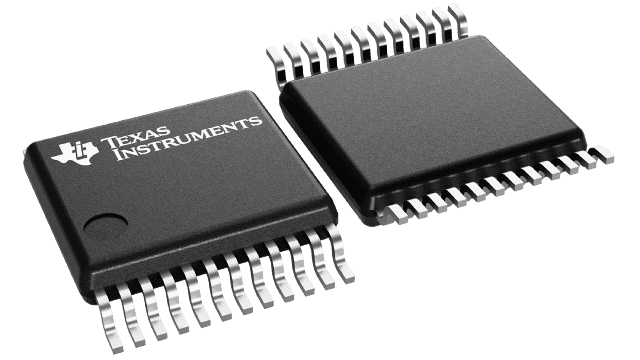
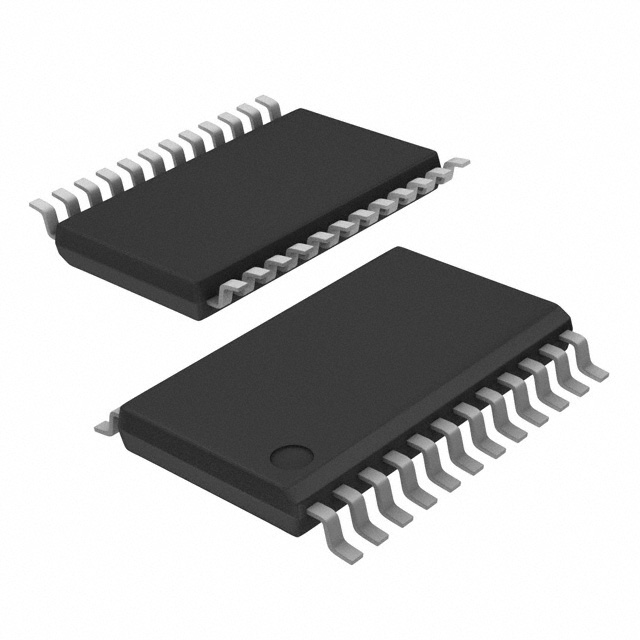
| Package / Case | 24-TSSOP |
| Package / Case | 0.173 in, 4.4 mm |
| Supplier Device Package | 24-TSSOP |
| Voltage - Supply [Max] | 3.6 V |
| Voltage - Supply [Min] | 1.2 V |
Pricing
Prices provided here are for design reference only. For realtime values and availability, please visit the distributors directly
| Distributor | Package | Quantity | $ | |
|---|---|---|---|---|
| Digikey | Cut Tape (CT) | 1 | $ 1.56 | |
| 10 | $ 1.39 | |||
| 25 | $ 1.32 | |||
| 100 | $ 1.09 | |||
| 250 | $ 1.02 | |||
| 500 | $ 0.90 | |||
| 1000 | $ 0.71 | |||
| Digi-Reel® | 1 | $ 1.56 | ||
| 10 | $ 1.39 | |||
| 25 | $ 1.32 | |||
| 100 | $ 1.09 | |||
| 250 | $ 1.02 | |||
| 500 | $ 0.90 | |||
| 1000 | $ 0.71 | |||
| Tape & Reel (TR) | 2000 | $ 0.66 | ||
| 6000 | $ 0.63 | |||
| 10000 | $ 0.60 | |||
| Texas Instruments | LARGE T&R | 1 | $ 1.14 | |
| 100 | $ 0.88 | |||
| 250 | $ 0.65 | |||
| 1000 | $ 0.46 | |||
Description
General part information
SN74AVC8T245-Q1 Series
This 8-bit noninverting bus transceiver uses two separate configurable power-supply rails. The SN74AVC8T245 is optimized to operate with V CCA/V CCB set at 1.4 V to 3.6 V. The device is operational with V CCA and V CCB as low as 1.2 V. The A port is designed to track V CCA. V CCA accepts any supply voltage from 1.2 V to 3.6 V. The B port is designed to track V CCB. V CCB accepts any supply voltage from 1.2 V to 3.6 V. This allows for universal low-voltage bidirectional translation between any of the 1.2-V, 1.5-V, 1.8-V, 2.5-V, and 3.3-V voltage nodes.
The SN74AVC8T245 is designed for asynchronous communication between data buses. The device transmits data from the A bus to the B bus or from the B bus to the A bus, depending on the logic level at the direction-control (DIR) input. The output-enable ( OE) input can be used to disable the outputs so the buses are effectively isolated.
The SN74AVC8T245 is designed so that the control pins (DIR and OE) are supplied by V CCA.
Documents
Technical documentation and resources