Development Boards, Kits, Programmers
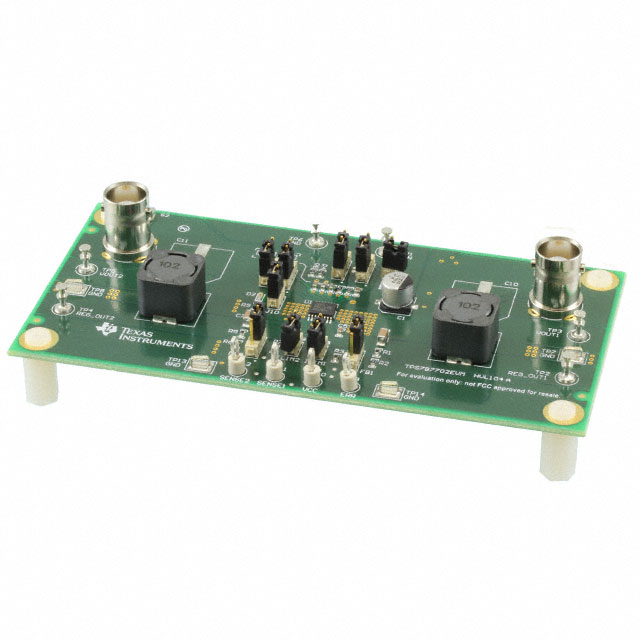
TPS7B7702EVM
ActiveTexas Instruments
TPS7B7702QPWPRQ1 LINEAR REGULATOR EVALUATION BOARD
Deep-Dive with AI
Search across all available documentation for this part.
DocumentsDatasheet
Development Boards, Kits, Programmers
TPS7B7702EVM
ActiveTexas Instruments
TPS7B7702QPWPRQ1 LINEAR REGULATOR EVALUATION BOARD
Deep-Dive with AI
DocumentsDatasheet
Technical Specifications
Parameters and characteristics for this part
| Specification | TPS7B7702EVM |
|---|---|
| Board Type | Fully Populated |
| Channels per IC | 2 - Dual |
| Contents | Board(s) |
| Regulator Type | Positive Adjustable |
| Supplied Contents | Board(s) |
| Utilized IC / Part | TPS7B7702-Q1 |
| Voltage - Output | 5 V, 8 V |
Pricing
Prices provided here are for design reference only. For realtime values and availability, please visit the distributors directly
| Distributor | Package | Quantity | $ | |
|---|---|---|---|---|
| Digikey | Box | 1 | $ 94.80 | |
| N/A | 2 | $ 94.80 | ||
Description
General part information
TPS7B7702 Series
TPS7B7702-Q1 2 - Dual Channels per IC Positive Adjustable Linear Voltage Regulator Evaluation Board
Documents
Technical documentation and resources