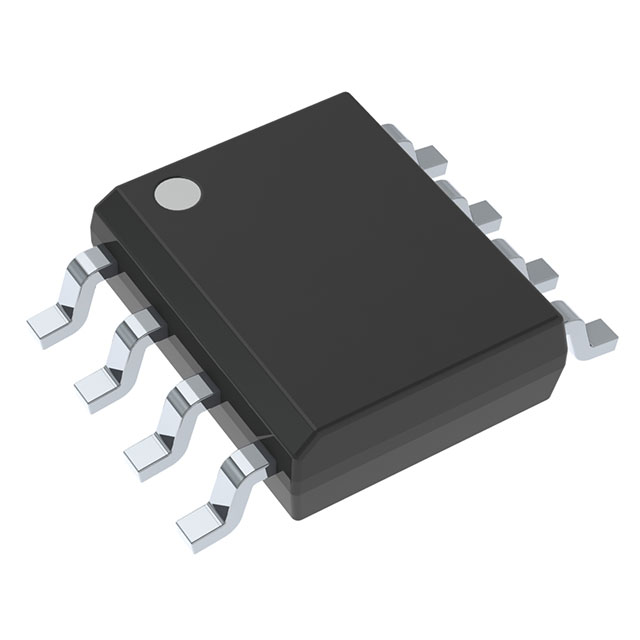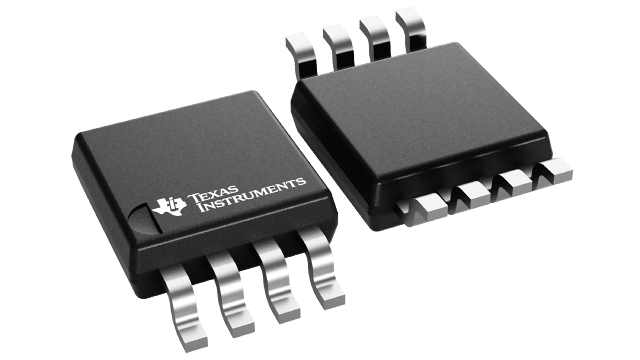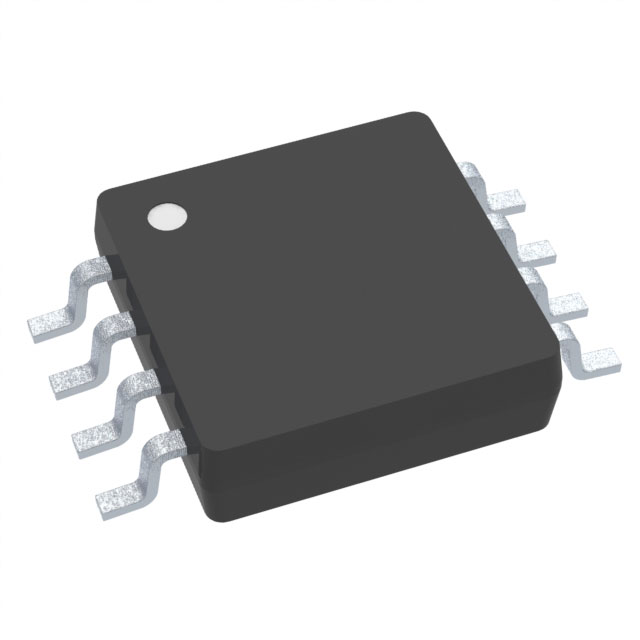
TLV6002IDGKR
ActiveDUAL, 5.5-V, 1-MHZ, RRIO OPERATIONAL AMPLIFIER
Deep-Dive with AI
Search across all available documentation for this part.
TLV6002IDGKR
ActiveDUAL, 5.5-V, 1-MHZ, RRIO OPERATIONAL AMPLIFIER
Technical Specifications
Parameters and characteristics for this part
| Specification | TLV6002IDGKR |
|---|---|
| -3db Bandwidth | 1 MHz |
| Amplifier Type | General Purpose |
| Current - Input Bias | 1 pA |
| Current - Output / Channel | 15 mA |
| Current - Supply | 75 µA |
| Gain Bandwidth Product | 1 MHz |
| Mounting Type | Surface Mount |
| Number of Circuits | 2 |
| Operating Temperature [Max] | 125 °C |
| Operating Temperature [Min] | -40 °C |
| Output Type | Rail-to-Rail |
| Package / Case | 8-MSOP, 8-TSSOP |
| Package / Case | 3 mm |
| Package / Case [custom] | 0.118 in |
| Voltage - Input Offset | 750 µV |
| Voltage - Supply Span (Max) [Max] | 5.5 V |
| Voltage - Supply Span (Min) [Min] | 1.8 V |
Pricing
Prices provided here are for design reference only. For realtime values and availability, please visit the distributors directly
| Distributor | Package | Quantity | $ | |
|---|---|---|---|---|
| Digikey | Cut Tape (CT) | 1 | $ 0.60 | |
| 10 | $ 0.42 | |||
| 25 | $ 0.38 | |||
| 100 | $ 0.33 | |||
| 250 | $ 0.31 | |||
| 500 | $ 0.29 | |||
| 1000 | $ 0.28 | |||
| Digi-Reel® | 1 | $ 0.60 | ||
| 10 | $ 0.42 | |||
| 25 | $ 0.38 | |||
| 100 | $ 0.33 | |||
| 250 | $ 0.31 | |||
| 500 | $ 0.29 | |||
| 1000 | $ 0.28 | |||
| Tape & Reel (TR) | 2500 | $ 0.27 | ||
| 5000 | $ 0.26 | |||
| 7500 | $ 0.26 | |||
| 12500 | $ 0.25 | |||
| 17500 | $ 0.25 | |||
| 25000 | $ 0.25 | |||
| Texas Instruments | LARGE T&R | 1 | $ 0.44 | |
| 100 | $ 0.34 | |||
| 250 | $ 0.25 | |||
| 1000 | $ 0.18 | |||
Description
General part information
TLV6002-Q1 Series
The TLV600x-Q1 family of single and dual-channel operational amplifiers is specifically designed for general-purpose automotive applications. Featuring rail-to-rail input and output (RRIO) swings, low quiescent current (75 µA, typical), wide bandwidth (1 MHz) and low noise (28 nV/√Hz at 1 kHz), this family is attractive for a variety of automotive applications that require a good balance between cost and performance, such as infotainment, engine control units, and automotive lighting. The low-input-bias current (±1 pA, typical) enables the TLV600x-Q1 to be used in applications with megaohm source impedances.
The robust design of the TLV600x-Q1 provides ease-of use to the circuit designer: unity-gain stability with capacitive loads of up to 150 pF, integrated RF/EMI rejection filter, no phase reversal in overdrive conditions, and high electrostatic discharge (ESD) protection (4-kV HBM).
The devices are optimized for operation at voltages as low as 1.8 V (±0.9 V) and up to 5.5 V (±2.75 V), and are specified over the extended temperature range of –40°C to +125°C.
Documents
Technical documentation and resources