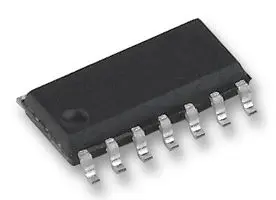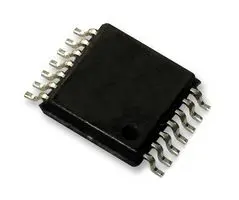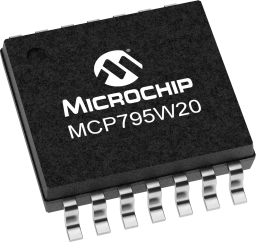
MCP795W20-I/ST
ActiveREAL TIME CLOCK SERIAL 64BYTE CLOCK/CALENDAR/ALARM/INTERRUPT/WATCHDOG TIMER/BATTERY BACKUP AUTOMOTIVE AEC-Q100 14-PIN TSSOP TUBE
Deep-Dive with AI
Search across all available documentation for this part.
MCP795W20-I/ST
ActiveREAL TIME CLOCK SERIAL 64BYTE CLOCK/CALENDAR/ALARM/INTERRUPT/WATCHDOG TIMER/BATTERY BACKUP AUTOMOTIVE AEC-Q100 14-PIN TSSOP TUBE
Technical Specifications
Parameters and characteristics for this part
| Specification | MCP795W20-I/ST |
|---|---|
| Current - Timekeeping (Max) | 1 µA |
| Features | SRAM, EEPROM, Watchdog Timer, Leap Year, Square Wave Output, Alarm |
| Interface | SPI |
| Memory Size | 64 B |
| Mounting Type | Surface Mount |
| Operating Temperature [Max] | 85 °C |
| Operating Temperature [Min] | -40 °C |
| Package / Case | 14-TSSOP |
| Package / Case [custom] | 0.173 " |
| Package / Case [custom] | 4.4 mm |
| Supplier Device Package | 14-TSSOP |
| Time Format | HH:MM:SS:hh (12/24 hr) |
| Type | Clock/Calendar |
| Voltage - Supply [Max] | 3.6 V |
| Voltage - Supply [Min] | 1.8 V |
| Voltage - Supply, Battery [Max] | 3.6 V |
| Voltage - Supply, Battery [Min] | 1.3 V |
Pricing
Prices provided here are for design reference only. For realtime values and availability, please visit the distributors directly
| Distributor | Package | Quantity | $ | |
|---|---|---|---|---|
| Arrow | N/A | 1 | $ 1.67 | |
| Digikey | Tube | 1 | $ 1.89 | |
| 25 | $ 1.75 | |||
| 100 | $ 1.66 | |||
| Microchip Direct | TUBE | 1 | $ 1.89 | |
| 25 | $ 1.75 | |||
| 100 | $ 1.66 | |||
| 1000 | $ 1.56 | |||
| 5000 | $ 1.51 | |||
| Newark | Each | 100 | $ 1.71 | |
Description
General part information
MCP795W20 Series
The MCP795W20 SPI RTCC is highly integrated with memory and advanced features normally found in higher priced devices. By starting with a basic real-time clock, digital trimming was added for higher accuracy, a battery switchover for backup power, a timestamp to log power failures and three types of memory, which includes SRAM, EEPROM and a blank unique ID in a locked section of EEPROM. The ID is blank in this device, but can also be ordered with a 48-bit or 64-bit MAC Address. By adding a watchdog timer and two programmable event detect inputs, lower power and more system robustness can be achieved by performing these functions in the RTCC, thus allowing the MCU to sleep for longer periods of time.
Documents
Technical documentation and resources