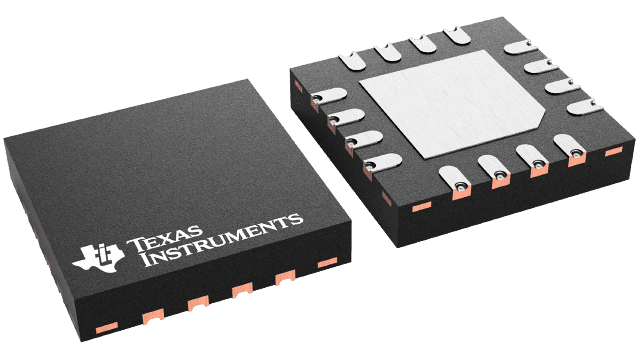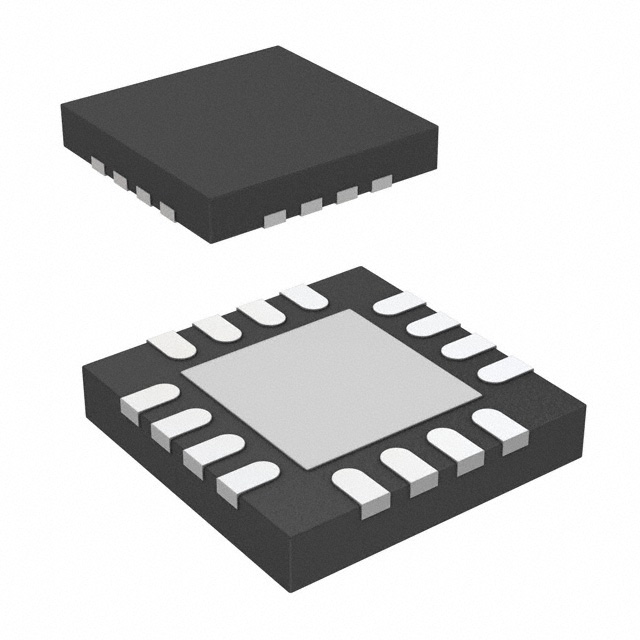
DRV8801RTYR
Active40-V, 2.8-A H-BRIDGE MOTOR DRIVER WITH CURRENT FEEDBACK
Deep-Dive with AI
Search across all available documentation for this part.
DRV8801RTYR
Active40-V, 2.8-A H-BRIDGE MOTOR DRIVER WITH CURRENT FEEDBACK
Deep-Dive with AI
Technical Specifications
Parameters and characteristics for this part
| Specification | DRV8801RTYR |
|---|---|
| Applications | General Purpose |
| Current - Output | 2.8 A |
| Function | Driver - Fully Integrated, Control and Power Stage |
| Interface | Parallel |
| Motor Type - AC, DC | Brushed DC |
| Motor Type - Stepper | Bipolar |
| Mounting Type | Surface Mount |
| Operating Temperature [Max] | 150 °C |
| Operating Temperature [Min] | -40 °C |
| Output Configuration | Half Bridge (2) |
| Package / Case | 16-WQFN Exposed Pad |
| Supplier Device Package | 16-QFN (4x4) |
| Technology | DMOS |
| Voltage - Load [Max] | 38 V |
| Voltage - Load [Min] | 8 V |
| Voltage - Supply [Max] | 38 V |
| Voltage - Supply [Min] | 8 V |
Pricing
Prices provided here are for design reference only. For realtime values and availability, please visit the distributors directly
| Distributor | Package | Quantity | $ | |
|---|---|---|---|---|
| Digikey | Cut Tape (CT) | 1 | $ 2.94 | |
| 10 | $ 2.64 | |||
| 25 | $ 2.49 | |||
| 100 | $ 2.12 | |||
| 250 | $ 1.99 | |||
| 500 | $ 1.74 | |||
| 1000 | $ 1.44 | |||
| Digi-Reel® | 1 | $ 2.94 | ||
| 10 | $ 2.64 | |||
| 25 | $ 2.49 | |||
| 100 | $ 2.12 | |||
| 250 | $ 1.99 | |||
| 500 | $ 1.74 | |||
| 1000 | $ 1.44 | |||
| Tape & Reel (TR) | 3000 | $ 0.71 | ||
| Texas Instruments | LARGE T&R | 1 | $ 1.41 | |
| 100 | $ 1.09 | |||
| 250 | $ 0.80 | |||
| 1000 | $ 0.57 | |||
Description
General part information
DRV8801A-Q1 Series
The DRV8801A-Q1 device provides a versatile motor-driver solution with a full H-bridge driver. The device can drive a brushed DC motor or one winding of a stepper motor, as well as other devices like solenoids. A simple PHASE and ENABLE interface allows easy interfacing to controller circuits.
The output stages use N-channel power MOSFETs configured as an H-bridge. The DRV8801A-Q1 device is capable of peak output currents up to ±2.8 A and operating voltages up to 36 V. An internal charge pump generates required gate drive voltages.
A low-power sleep mode is provided which shuts down internal circuitry to achieve very low quiescent current draw. This sleep mode can be set using a dedicated nSLEEP pin.
Documents
Technical documentation and resources