Deep-Dive with AI
Search across all available documentation for this part.
Deep-Dive with AI
Technical Specifications
Parameters and characteristics for this part
| Specification | AD698AP |
|---|---|
| Current - Supply | 15 mA |
| Input Type | Voltage |
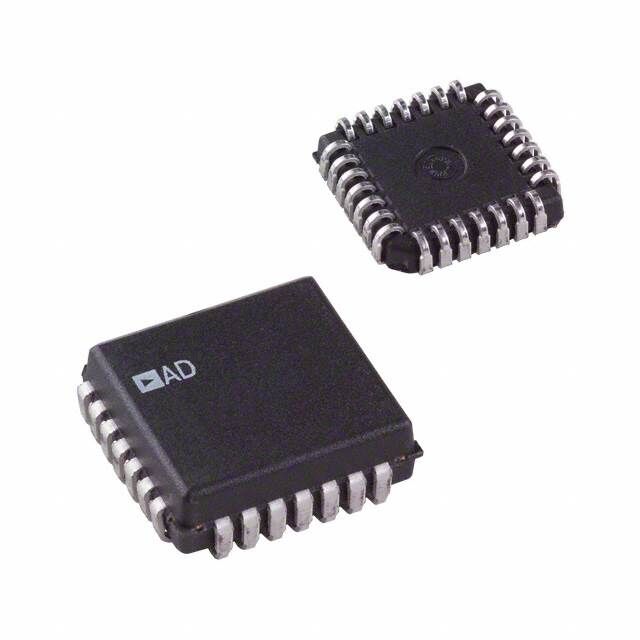
| Mounting Type | Surface Mount |
| Operating Temperature [Max] | 85 °C |
| Operating Temperature [Min] | -40 °C |
| Package / Case | 28-LCC (J-Lead) |
| Supplier Device Package | 28-PLCC (11.51x11.51) |
| Type | Signal Conditioner |
Pricing
Prices provided here are for design reference only. For realtime values and availability, please visit the distributors directly
| Distributor | Package | Quantity | $ | |
|---|---|---|---|---|
Description
General part information
AD698 Series
The AD698 is a complete, monolithic Linear Variable Differential Transformer (LVDT) signal conditioning subsystem. It is used in conjunction with LVDTs to convert transducer mechanical position to a unipolar or bipolar dc voltage with a high degree of accuracy and repeatability. All circuit functions are included on the chip. With the addition of a few external passive components to set frequency and gain, the AD698 converts the raw LVDT output to a scaled dc signal. The device will operate with half-bridge LVDTs, LVDTs connected in the series opposed configuration (4-wire), and RVDTs.The AD698 contains a low distortion sine wave oscillator to drive the LVDT primary. Two synchronous demodulation channels of the AD698 are used to detect primary and secondary amplitude. The part divides the output of the secondary by the amplitude of the primary and multiplies by a scale factor. This eliminates scale factor errors due to drift in the amplitude of the primary drive, improving temperature performance and stability.The AD698 uses a unique ratiometric architecture to eliminate several of the disadvantages associated with traditional approaches to LVDT interfacing. The benefits of this new circuit are: no adjustments are necessary; temperature stability is improved; and transducer interchangeability is improved.
Documents
Technical documentation and resources