


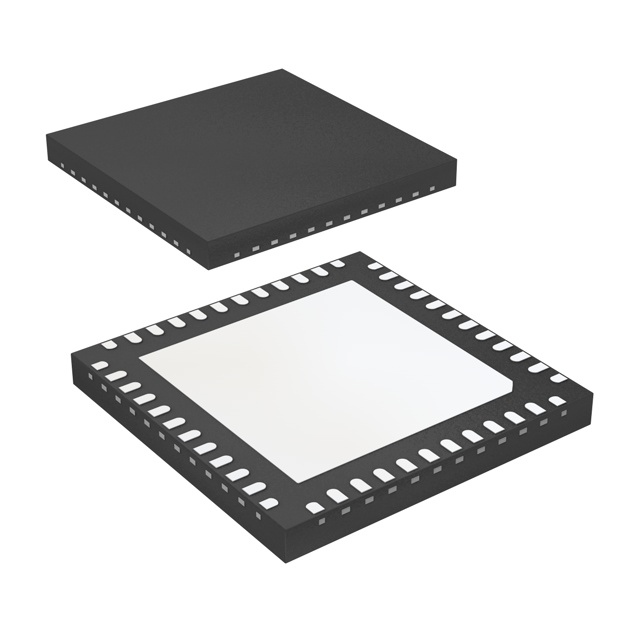
DS110RT410SQE/NOPB
Active8.5 TO 11.3-GBPS QUAD CHANNEL RETIMER WITH ADAPTIVE EQ AND CDR
Deep-Dive with AI
Search across all available documentation for this part.
DS110RT410SQE/NOPB
Active8.5 TO 11.3-GBPS QUAD CHANNEL RETIMER WITH ADAPTIVE EQ AND CDR
Technical Specifications
Parameters and characteristics for this part
| Specification | DS110RT410SQE/NOPB |
|---|---|
| Applications | Ethernet |
| Interface | I2C |
| Mounting Type | Surface Mount |
| Package / Case | 48-WFQFN Exposed Pad |
| Supplier Device Package | 48-WQFN (7x7) |
| Voltage - Supply [Max] | 2.625 V |
| Voltage - Supply [Min] | 2.375 V |
Pricing
Prices provided here are for design reference only. For realtime values and availability, please visit the distributors directly
| Distributor | Package | Quantity | $ | |
|---|---|---|---|---|
| Digikey | Cut Tape (CT) | 1 | $ 25.43 | |
| Digi-Reel® | 1 | $ 25.43 | ||
| Tape & Reel (TR) | 250 | $ 19.10 | ||
| 500 | $ 18.18 | |||
| Texas Instruments | SMALL T&R | 1 | $ 21.65 | |
| 100 | $ 18.91 | |||
| 250 | $ 14.58 | |||
| 1000 | $ 13.04 | |||
Description
General part information
DS110RT410 Series
The DS110RT410 is a four-channel retimer with integrated signal conditioning. The device includes a fully adaptive continuous-time linear equalizer (CTLE), clock and data recovery (CDR), and a transmit de-emphasis (DE) driver to enable data transmission over long, lossy and crosstalk-impaired highspeed serial links to achieve BER < 1 × 10–15. For channels with a high amount of crosstalk, the DS110DF410 should be used because it has self-calibrating 5-tap decision-feedback equalizer (DFE).
Each channel can independently lock to data rates from 8.5 to 11.3 Gbps, and associated sub-rates (divide by 2, 4, and 8) to support a variety of communication protocols. A 25-MHz crystal oscillator clock is used to speed up the CDR lock process. This clock is not used for training the PLL and does not need to be synchronous with the serial data.
The programmable settings can be applied using the SMBus (I2C) interface, or they can be loaded through an external EEPROM. An on-chip eye monitor and a PRBS generator allow real-time measurement of high-speed serial data for system bring-up or field tuning.
Documents
Technical documentation and resources