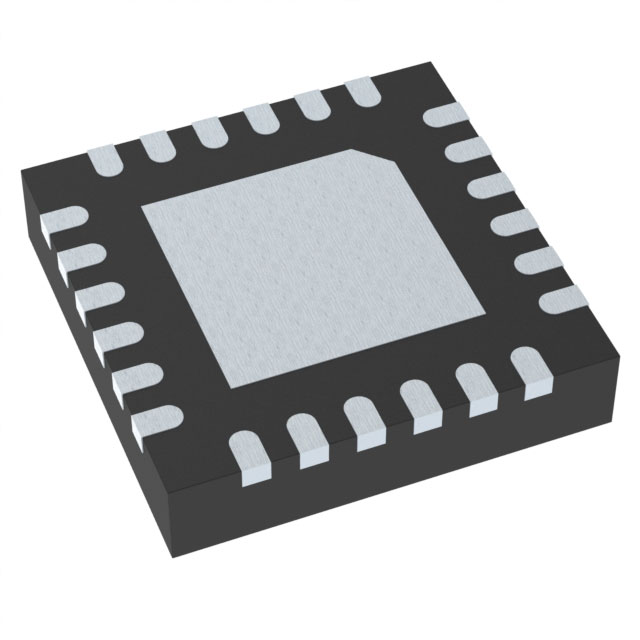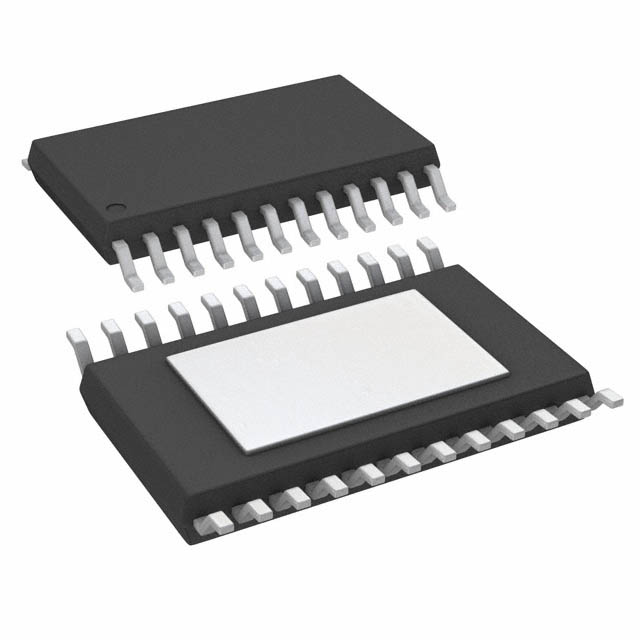
DRV8834PWP
LTB11-V, 1.5-A, DUAL H-BRIDGE OR STEPPER MOTOR DRIVER WITH 1/32 MICROSTEP INDEXER
Deep-Dive with AI
Search across all available documentation for this part.
DRV8834PWP
LTB11-V, 1.5-A, DUAL H-BRIDGE OR STEPPER MOTOR DRIVER WITH 1/32 MICROSTEP INDEXER
Deep-Dive with AI
Technical Specifications
Parameters and characteristics for this part
| Specification | DRV8834PWP |
|---|---|
| Applications | General Purpose |
| Current - Output | 1.5 A |
| Function | Driver - Fully Integrated, Control and Power Stage |
| Interface | Logic |
| Motor Type - AC, DC | Brushed DC |
| Motor Type - Stepper | Bipolar |
| Mounting Type | Surface Mount |
| Operating Temperature [Max] | 150 °C |
| Operating Temperature [Min] | -40 °C |
| Output Configuration | Half Bridge (4) |
| Package / Case | 0.173 in, 4.4 mm |
| Package / Case | 24-PowerTSSOP |
| Supplier Device Package | 24-HTSSOP |
| Technology | Power MOSFET |
| Voltage - Load [Max] | 10.8 V |
| Voltage - Load [Min] | 2.5 V |
| Voltage - Supply [Max] | 10.8 V |
| Voltage - Supply [Min] | 2.5 V |
Pricing
Prices provided here are for design reference only. For realtime values and availability, please visit the distributors directly
| Distributor | Package | Quantity | $ | |
|---|---|---|---|---|
| Digikey | Tube | 1 | $ 4.75 | |
| 10 | $ 3.16 | |||
| 25 | $ 2.74 | |||
| 100 | $ 2.28 | |||
| Texas Instruments | TUBE | 1 | $ 3.00 | |
| 100 | $ 2.47 | |||
| 250 | $ 1.78 | |||
| 1000 | $ 1.34 | |||
Description
General part information
DRV8834 Series
The DRV8834 provides a flexible motor driver solution for toys, printers, cameras, and other mechatronic applications. The device has two H-bridge drivers, and is intended to drive a bipolar stepper motor or two DC motors.
The output driver block of each H-bridge consists of N-channel power MOSFETs configured as an H-bridge to drive the motor windings. Each H-bridge includes circuitry to regulate or limit the winding current.
With proper PCB design, each H-bridge of the DRV8834 can driving up to 1.5-A RMS (or DC) continuously, at 25°C with a VMsupply of 5 V. The device can support peak currents of up to 2.2 A per bridge. Current capability is reduced slightly at lower VMvoltages.
Documents
Technical documentation and resources