SN65DSI85TPAPRQ1
ActiveAUTOMOTIVE DUAL-CHANNEL MIPI DSI TO DUAL-LINK FLATLINK™ LVDS BRIDGE
Deep-Dive with AI
Search across all available documentation for this part.
SN65DSI85TPAPRQ1
ActiveAUTOMOTIVE DUAL-CHANNEL MIPI DSI TO DUAL-LINK FLATLINK™ LVDS BRIDGE
Technical Specifications
Parameters and characteristics for this part
| Specification | SN65DSI85TPAPRQ1 |
|---|---|
| Grade | Automotive |
| Interface | I2C |
| Mounting Type | Surface Mount |
| Package / Case | 64-PowerTQFP |
| Qualification | AEC-Q100 |
| Supplier Device Package | 64-HTQFP (10x10) |
| Voltage - Supply [Max] | 1.95 V |
| Voltage - Supply [Min] | 1.65 V |
Pricing
Prices provided here are for design reference only. For realtime values and availability, please visit the distributors directly
| Distributor | Package | Quantity | $ | |
|---|---|---|---|---|
| Digikey | Cut Tape (CT) | 1 | $ 10.74 | |
| 10 | $ 9.87 | |||
| 25 | $ 9.46 | |||
| 100 | $ 8.34 | |||
| 250 | $ 7.93 | |||
| 500 | $ 7.41 | |||
| Digi-Reel® | 1 | $ 10.74 | ||
| 10 | $ 9.87 | |||
| 25 | $ 9.46 | |||
| 100 | $ 8.34 | |||
| 250 | $ 7.93 | |||
| 500 | $ 7.41 | |||
| Tape & Reel (TR) | 1000 | $ 6.33 | ||
| Texas Instruments | LARGE T&R | 1 | $ 9.32 | |
| 100 | $ 7.59 | |||
| 250 | $ 5.97 | |||
| 1000 | $ 5.06 | |||
Description
General part information
SN65DSI85-Q1 Series
The SN65DSI85-Q1 DSI-to-LVDS bridge features a dual-channel MIPI D-PHY receiver front-endconfiguration with four lanes per channel operating at 1 Gbps per lane and a maximum input bandwidth of 8 Gbps. The bridge decodes MIPI DSI 18-bpp RGB666 and 24-bpp RGB888 packets and converts the formatted video data-stream to an LVDS output operating at pixel clocks operating from 25 MHz to 154 MHz, offering a dual-link LVDS, single-link LVDS, or two Single-Link LVDS interfaces with four data lanes per link.
The SN65DSI85-Q1 device is well suited for WQXGA (2560 × 1600) at 60 frames per second (fps), as well as 3D Graphics at WUXGA and True HD (1920 × 1080) resolutions at an equivalent 120 fps with up to 24 bits-per-pixel (bpp). Partial line buffering is implemented to accommodate the data stream mismatch between the DSI and LVDS interfaces.
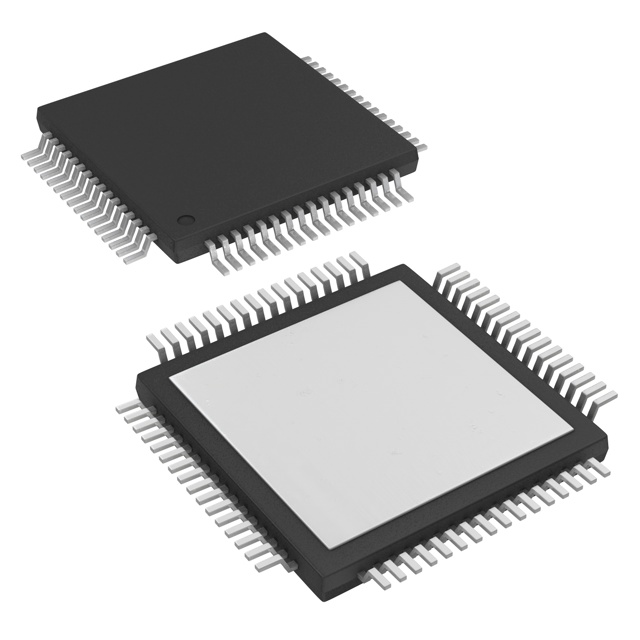
The SN65DSI85-Q1 device is implemented in a small outline 10 mm × 10 mm HTQFP package with a0.5-mm pitch, and operates across a temperature range from –40°C to 105°C.