Deep-Dive with AI
Search across all available documentation for this part.
Deep-Dive with AI
Technical Specifications
Parameters and characteristics for this part
| Specification | MIC2185YM-TR |
|---|---|
| Clock Sync | Yes |
| Control Features | Frequency Control, Enable, Soft Start |
| Duty Cycle (Max) | 100 % |
| Frequency - Switching | 400 kHz |
| Function | Step-Down |
| Mounting Type | Surface Mount |
| Number of Outputs | 1 |
| Operating Temperature (Max) | 85 °C |
| Operating Temperature (Min) | -40 °C |
| Output Configuration | Positive |
| Output Phases | 1 |
| Output Type | Transistor Driver |
| Package Length | 0.154 in |
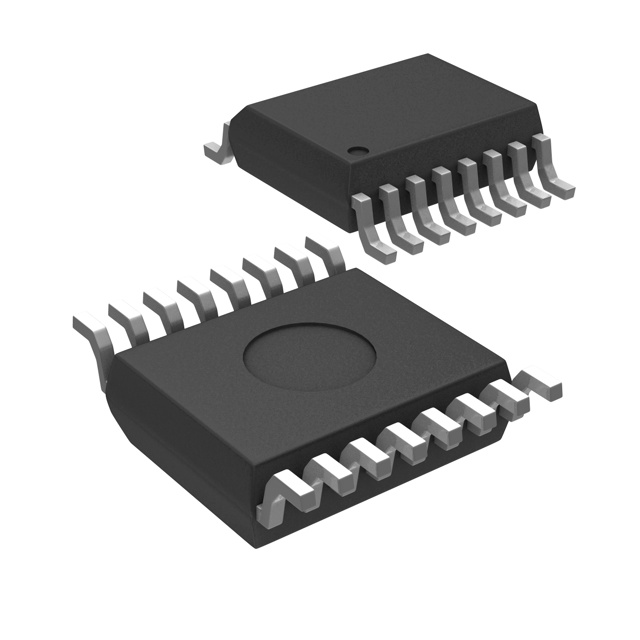
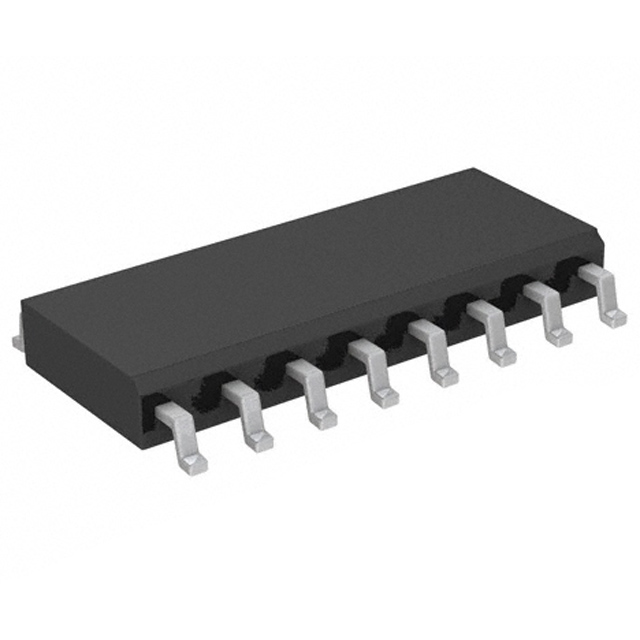
| Package Name | 16-SOIC |
| Package Width | 3.9 mm |
| Synchronous Rectifier | No |
| Topology | Buck |
| Voltage - Supply (Vcc/Vdd) Maximum | 14 V |
| Voltage - Supply (Vcc/Vdd) Minimum | 2.9 V |
Pricing
Prices provided here are for design reference only. For realtime values and availability, please visit the distributors directly
| Distributor | Package | Quantity | $ | Updated |
|---|---|---|---|---|
| Microchip Direct | T/R | 1 | $ 4.77 | 1m+ |
| 25 | $ 3.97 | |||
| 100 | $ 3.60 | |||
| 1000 | $ 3.48 | |||
| 5000 | $ 3.44 | |||
CAD
3D models and CAD resources for this part
Description
General part information
MIC2185 Series
MIC2185 is a high efficiency synchronous boost PWM control IC. With its wide input voltage range of 2.9V to 14V, the MIC2185 can be used to efficiently boost voltages in 1- or 2-cell Li-Ion battery powered applications, as well as fixed 3.3V and 5V systems. Its powerful 5 Ohm output drivers allow the MIC2185 to supply large output currents with the selection of the proper external MOSFETs.
With it's fixed frequency PWM architecture, and easily synchronized drive, the MIC2185 is ideal for noise-sensitive telecommunications applications. The nominal 400kHz operating frequency of the MIC2185 can be divided by two, allowing the device to be externally synchronized to frequencies below 400kHz.
The MIC2185 also features a low current shutdown mode and a programmable undervoltage lockout. A skipped pulse mode of operation can be manually set to achieve higher efficiencies at light load conditions.
Documents
Technical documentation and resources