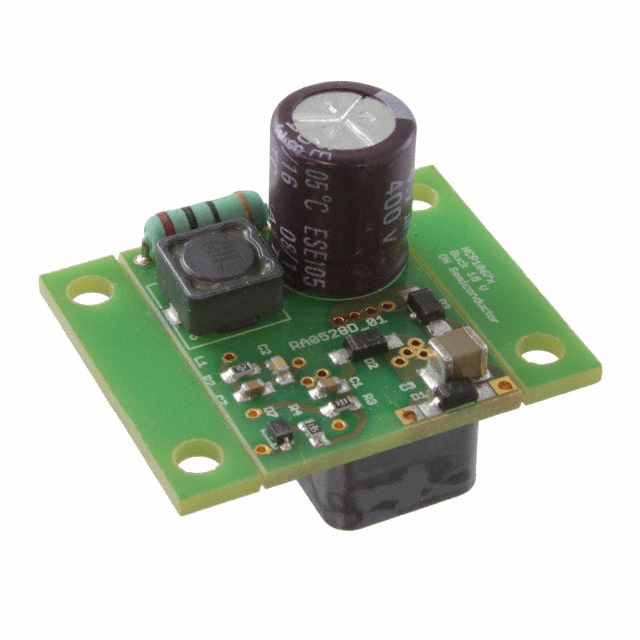
NCP10672B15GEVB
ActiveHIGH-VOLTAGE SWITCHER EVALUATION BOARD ROHS COMPLIANT: YES
Deep-Dive with AI
Search across all available documentation for this part.
NCP10672B15GEVB
ActiveHIGH-VOLTAGE SWITCHER EVALUATION BOARD ROHS COMPLIANT: YES
Deep-Dive with AI
Technical Specifications
Parameters and characteristics for this part
| Specification | NCP10672B15GEVB |
|---|---|
| Board Type | Fully Populated |
| Current - Output | 270 mA |
| Main Purpose | Primary Side, AC/DC |
| Outputs and Type | Non-Isolated |
| Outputs and Type | 1 |
| Regulator Topology | Flyback |
| Supplied Contents | Board(s) |
| Utilized IC / Part | NCP10672 |
| Voltage - Input [Max] | 265 VAC |
| Voltage - Input [Min] | 90 VAC |
| Voltage - Output | 15 VDC |
Pricing
Prices provided here are for design reference only. For realtime values and availability, please visit the distributors directly
Description
General part information
NCP10672 Series
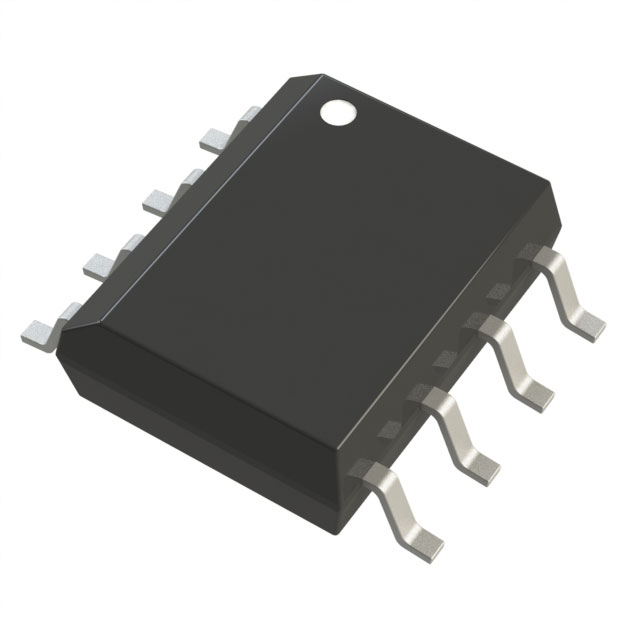
The NCP1067X products integrate a fixed frequency current mode controller with a700 V MOSFET. Available in a SOIC-7 package, the NCP1067X offer a high level ofintegration, including soft−start, frequency−jittering, short−circuit protection, skip−cycle, ramp compensation, and a Dynamic Self−Supply (eliminating the need for an auxiliary winding).During nominal load operation, the NCP1067X switches at one of the availablefrequencies (60 or 100 kHz). When the output power demand diminishes, the IC automatically enters into a skip mode to reduce the standby consumption down.Protection features include: a timer to detect an overload or a short−circuit event,Overvoltage Protection with auto−recovery.For improved standby performance, the connection of an auxiliary winding orsupplying the IC from the output, stops the DSS operation and helps to reduce input power consumption below 15 mW at high line.NCP1067x can be seamlessly used both in non-isolated and in isolated topologies.
Documents
Technical documentation and resources