


Deep-Dive with AI
Search across all available documentation for this part.
Deep-Dive with AI
Technical Specifications
Parameters and characteristics for this part
| Specification | AD809BRZ-REEL |
|---|---|
| Differential - Input:Output [custom] | True |
| Differential - Input:Output [custom] | True |
| Divider/Multiplier | False |
| Frequency - Max [Max] | 155.52 MHz |
| Input | PECL, ECL, TTL, CMOS |
| Mounting Type | Surface Mount |
| Number of Circuits | 1 |
| Operating Temperature [Max] | 85 °C |
| Operating Temperature [Min] | -40 °C |
| Output | ECL, PECL |
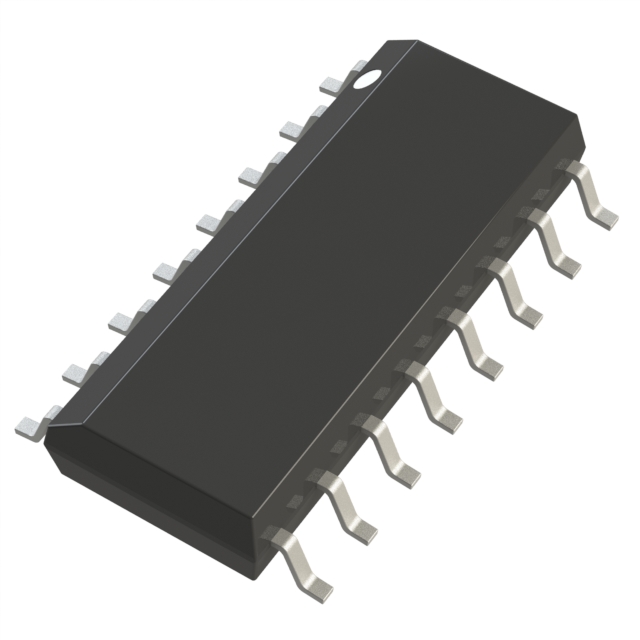
| Package / Case | 16-SOIC |
| Package / Case [x] | 0.154 in |
| Package / Case [y] | 3.9 mm |
| PLL | True |
| Ratio - Input:Output | 2:1 |
| Supplier Device Package | 16-SOIC |
| Type | Clock/Frequency Synthesizer |
| Voltage - Supply [Max] | 5.5 V |
| Voltage - Supply [Min] | 4.5 V |
Pricing
Prices provided here are for design reference only. For realtime values and availability, please visit the distributors directly
| Distributor | Package | Quantity | $ | |
|---|---|---|---|---|
Description
General part information
AD809 Series
The AD809 provides a 155.52 MHz ECL/PECL output clock from either a 19.44 MHz or a 9.72 MHz TTL/CMOS/ECL/PECL reference frequency. The AD809 functionality supports a distributed timing architecture, allowing a backplane or PCB 19.44 MHz or 9.72 MHz timing reference signal to be distributed to multiple 155.52 Mbps ports. The AD809 can be applied to create the transmit bit clock for one or more ports.An input signal multiplexer supports loop-timed applications where a 155.52 MHz transmit bit clock is recovered from the 155.52 Mbps received data.The low jitter VCO, low power and wide operating temperature range make the device suitable for generating a 155.52 MHz bit clock for SONET/SDH/Fiber in the Loop systems.The device has a low cost, on-chip VCO that locks to either 8x or 16x the frequency at the 19.44 MHz or 9.72 MHz input. No external components are needed for frequency synthesis; however, the user can adjust loop dynamics through selection of a damping factor capacitor whose value determines loop damping.The AD809 design guarantees that the clock output frequency will drift low (by roughly 20%) in the absence of a signal at the input.The AD809 consumes 90 mW and operates from a single power supply at either +5 V or -5.2 V.
Documents
Technical documentation and resources