


Deep-Dive with AI
Search across all available documentation for this part.
Deep-Dive with AI
Technical Specifications
Parameters and characteristics for this part
| Specification | AD7724ASTZ |
|---|---|
| Data Interface | Serial |
| Mounting Type | Surface Mount |
| Number of Channels [custom] | 2 |
| Operating Temperature [Max] | 85 °C |
| Operating Temperature [Min] | -40 °C |
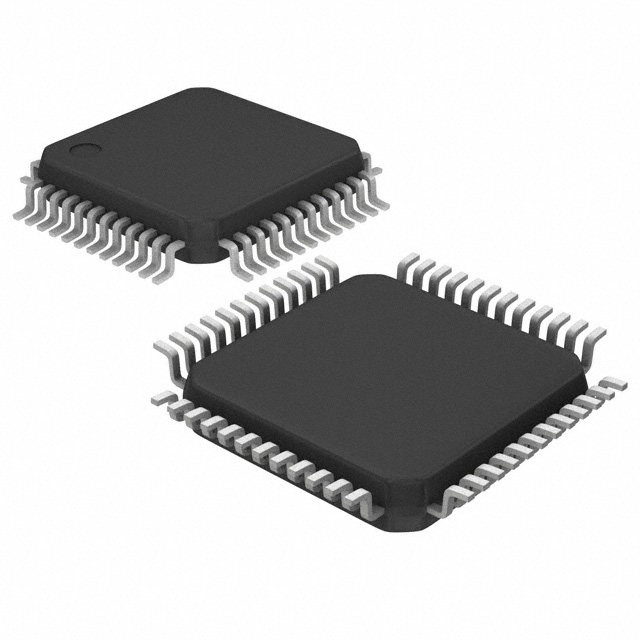
| Package / Case | 48-LQFP |
| Resolution (Bits) | 15 b |
| Sampling Rate (Per Second) | 250 k |
| Supplier Device Package | 48-LQFP (7x7) |
| Type | Modulator |
| Voltage - Supply [Max] | 5.25 V |
| Voltage - Supply [Min] | 2.85 V, 4.75 V |
| Voltage Supply Source | Analog and Digital |
Pricing
Prices provided here are for design reference only. For realtime values and availability, please visit the distributors directly
| Distributor | Package | Quantity | $ | |
|---|---|---|---|---|
| Digikey | Tray | 1 | $ 29.84 | |
| 10 | $ 22.27 | |||
| 25 | $ 20.33 | |||
| 80 | $ 18.46 | |||
| 230 | $ 17.27 | |||
Description
General part information
AD7724 Series
The AD7724 is a dual 7th-order, sigma-delta modulator - it's dual version of the AD7720. Its SNR performance is 90 dB over a 90 kHz bandwidth. The part operates from a 5 V supply and accepts a differential input range of 0 V to 2.5 V or ±1.25 V centered about a common-mode bias. The analog inputs are continuously sampled by the analog modulators, eliminating the need for external sample and hold circuitry. The input information is contained in the output stream as a density of ones. The original information can be reconstructed with an appropriate digital filter.The part provides an accurate on-chip 2.5 V reference. A reference input/output function is provided to allow either the internal reference or an external system reference to be used as the reference source for the part.The part is offered in a 48-pin TQFP package and is designed to operate from –40°C to 85°C.Typically, the AD7724 is followed by a digital filter to achieve a parallel A/D result, which is just like our standard sigma-delta A/Ds. Having a separate filter allows users to customize their filter response, which can be done with one of our own DSPs or with a gate array.
Documents
Technical documentation and resources