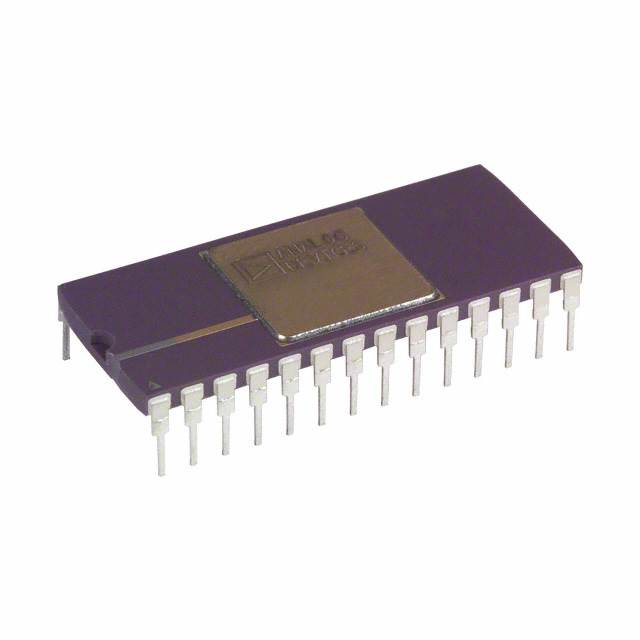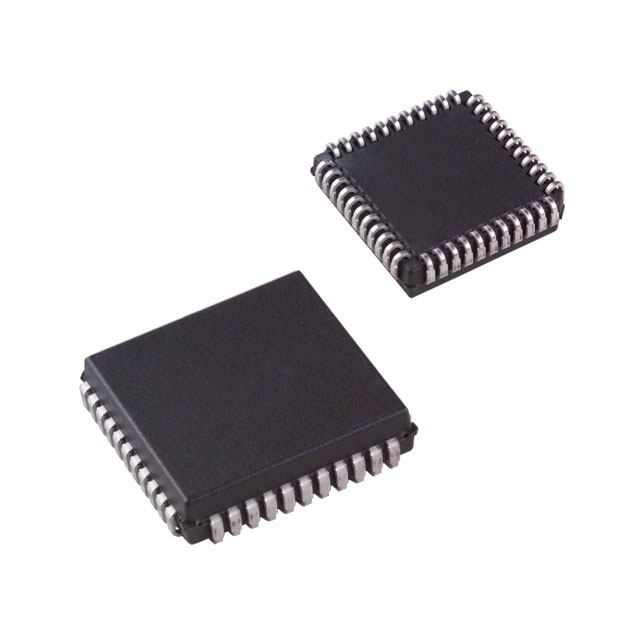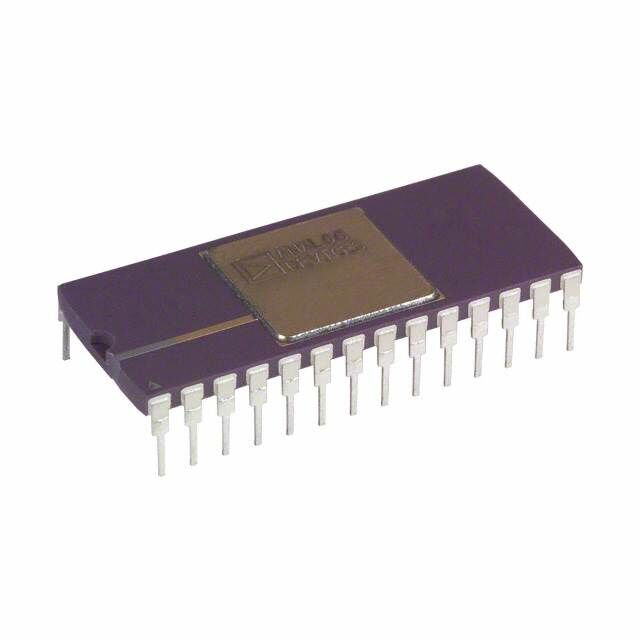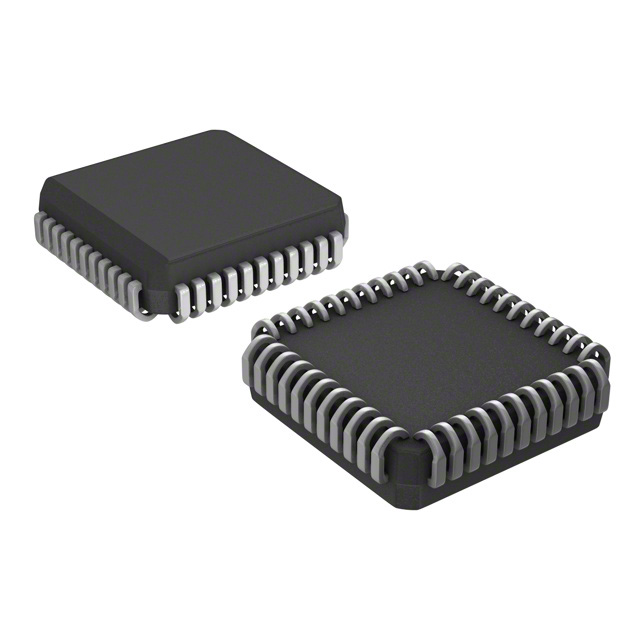
AD679BJ
Active1-CHANNEL SINGLE ADC FLASH 128KSPS 14-BIT PARALLEL 44-PIN JLCC TUBE
Deep-Dive with AI
Search across all available documentation for this part.
AD679BJ
Active1-CHANNEL SINGLE ADC FLASH 128KSPS 14-BIT PARALLEL 44-PIN JLCC TUBE
Technical Specifications
Parameters and characteristics for this part
| Specification | AD679BJ |
|---|---|
| Architecture | Flash |
| Configuration | S/H-ADC |
| Data Interface | Parallel |
| Input Type | Single Ended |
| Mounting Type | Surface Mount |
| Number of A/D Converters | 1 |
| Number of Bits | 14 |
| Number of Inputs | 1 |
| Operating Temperature [Max] | 85 °C |
| Operating Temperature [Min] | -40 °C |
| Ratio - S/H:ADC | 1:1 |
| Reference Type | External, Internal |
| Sampling Rate (Per Second) | 128 per second |
| Supplier Device Package | 44-JLCC (16.39x16.39) |
| Voltage - Supply, Analog [Max] | 12 V |
| Voltage - Supply, Analog [Min] | -12 V |
| Voltage - Supply, Digital | 5 V |
Pricing
Prices provided here are for design reference only. For realtime values and availability, please visit the distributors directly
Description
General part information
AD679 Series
The AD679 is a complete, multipurpose 14-bit monolithic analog-to-digital converter, consisting of a sample-hold amplifier (SHA), a microprocessor compatible bus interface, a voltage reference and clock generation circuitry.The AD679 is specified for ac (or "dynamic") parameters such as S/N+D ratio, THD and IMD which are important in signal processing applications. In addition, the AD679K, B and T grades are fully specified for dc parameters which are important in measurement applications.The 14 data bits are accessed in two read operations (8+6), with left justification. Data format is straight binary for unipolar mode and twos complement binary for bipolar mode. The input has a full-scale range of 10 V with a full power bandwidth of 1 MHz and a full linear bandwidth of 500 kHz. High input impedance (10 M ohm) allows direct connection to unbuffered sources without signal degradation. Conversions can be initiated either under microprocessor control or by an external clock asynchronous to the system clock.This product is fabricated on Analog Devices' BiMOS process, combining low power CMOS logic with high precision, low noise bipolar circuits; laser-trimmed thin-film resistors provide high accuracy. The converter utilizes a recursive subranging algorithm which includes error correction and flash converter circuitry to achieve high speed and resolution.The AD679 operates from +5 V and ±12 V supplies and dissipates 560 mW (typ). The part is available in 28-lead plastic DIP, ceramic DIP, and 44 J-leaded ceramic surface-mount packages.PRODUCT HIGHLIGHTSCOMPLETE INTEGRATION: The AD679 minimizes external component requirements by combining a high speed sample-and-hold amplifier (SHA), ADC, 5 V reference, clock, and digital interface on a single chip. This provides a fully specified sampling A/D function unattainable with discrete designs.SPECIFICATIONS: The AD679K, B, and T grades provide fully specified and tested ac and dc parameters. The AD679J, A, and S grades are specified and tested for ac parameters; dc accuracy specifications are shown as typicals. DC specifications (such as INL, gain, and offset) are important in control and measurement applications. AC specifications (such as S/N+D ratio, THD, and IMD) are of value in signal processing applications.EASE OF USE: The pinout is designed for easy board layout, and the two-read output provides compatibility with 8-bit buses. Factory trimming eliminates the need for calibration modes or external trimming to achieve rated performance.RELIABILITY: The AD679 utilizes Analog Devices’ monolithic BiMOS technology. This ensures long-term reliability compared to multichip and hybrid designs.UPGRADE PATH: The AD679 provides the same pinout as the 12-bit, 200 kSPS AD678 ADC.The AD679 is available in versions compliant with MILSTD-883. Refer to the Analog Devices Military Products Databook or current AD679/883B data sheet for detailed specifications.
Documents
Technical documentation and resources