Deep-Dive with AI
Search across all available documentation for this part.
Deep-Dive with AI
Technical Specifications
Parameters and characteristics for this part
| Specification | HCS365/P |
|---|---|
| Applications | Keyless Entry, Remote Secure Access |
| Mounting Type | Through Hole |
| Package / Case | 0.3 in |
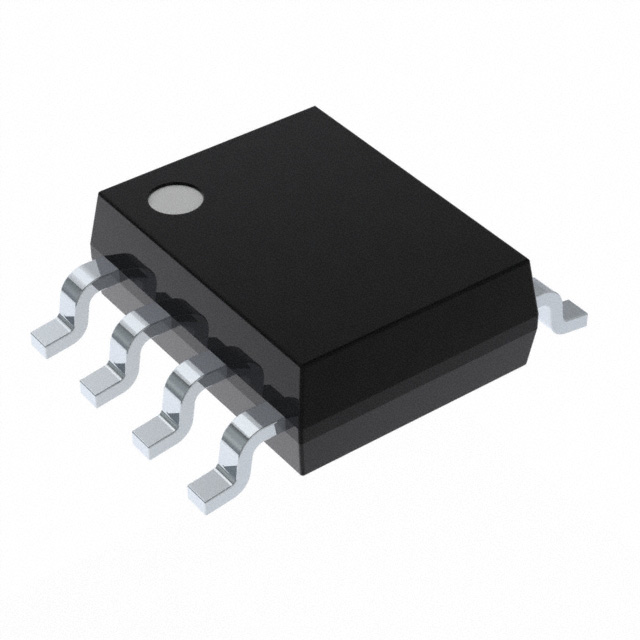
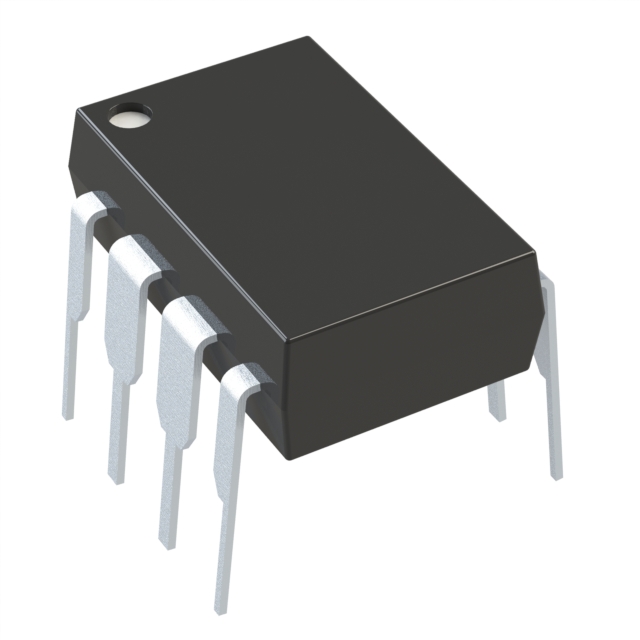
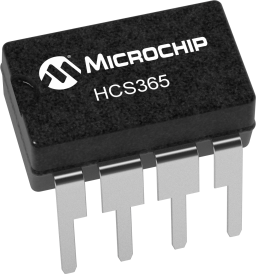
| Package / Case | 8-DIP |
| Package / Case | 7.62 mm |
| Supplier Device Package | 8-PDIP |
| Type | Code Hopping Encoder |
Pricing
Prices provided here are for design reference only. For realtime values and availability, please visit the distributors directly
| Distributor | Package | Quantity | $ | |
|---|---|---|---|---|
| Digikey | Tube | 360 | $ 2.23 | |
| Microchip Direct | TUBE | 1 | $ 2.43 | |
| 25 | $ 2.32 | |||
| 100 | $ 2.23 | |||
| 1000 | $ 2.06 | |||
| 5000 | $ 1.97 | |||
Description
General part information
HCS365 Series
The HCS365 is a code hopping encoder designed for secure Remote Keyless Entry (RKE) systems. The HCS365 utilizes Microchip’s patented KEELOQ® hopping technology, which incorporates high security, a small package outline, and low cost, to make this device a perfect solution for unidirectional remote keyless entry systems and access control systems. The HCS365 combines a 32-bit hopping code generated by a non-linear encryption algorithm, with a 28/32-bit serial number and 5/3 status bits to create a 69-bit transmission stream. The length of the transmission eliminates the threat of code scanning and the code hopping mechanism makes each transmission unique, thus rendering code capture and re-send (code grabbing) schemes useless. The encoder key, serial number, and configuration data are stored in EEPROM, which is not accessible via any external connection. This makes the HCS365 a very secure unit. The HCS365 provides an easy-to-use serial interface for programming the necessary security keys, system parameters, and configuration data. The HCS365 operates over a wide voltage range of 2.05V to 5.5V and has four button inputs in an 8-pin configuration. This allows the system designer the freedom to utilize up to 15 functions. Additional features include a PWM, VPWM, PPM, Manchester encoding, an internal tunable oscillator, Dual encoder operation, PLL interface and a Queue counter.
Documents
Technical documentation and resources