OPA462IDDA
Active180-V, WIDE BANDWIDTH (6.5 MHZ), HIGH-SLEW RATE (25 V/ΜS) UNITY-GAIN STABLE OP AMP
Deep-Dive with AI
Search across all available documentation for this part.
OPA462IDDA
Active180-V, WIDE BANDWIDTH (6.5 MHZ), HIGH-SLEW RATE (25 V/ΜS) UNITY-GAIN STABLE OP AMP
Technical Specifications
Parameters and characteristics for this part
| Specification | OPA462IDDA |
|---|---|
| Amplifier Type | General Purpose |
| Current - Input Bias | 1.4 pA |
| Current - Output / Channel | 30 mA |
| Current - Supply | 3.2 mA |
| Gain Bandwidth Product | 6.5 MHz |
| Mounting Type | Surface Mount |
| Number of Circuits | 1 |
| Operating Temperature [Max] | 85 °C |
| Operating Temperature [Min] | -40 °C |
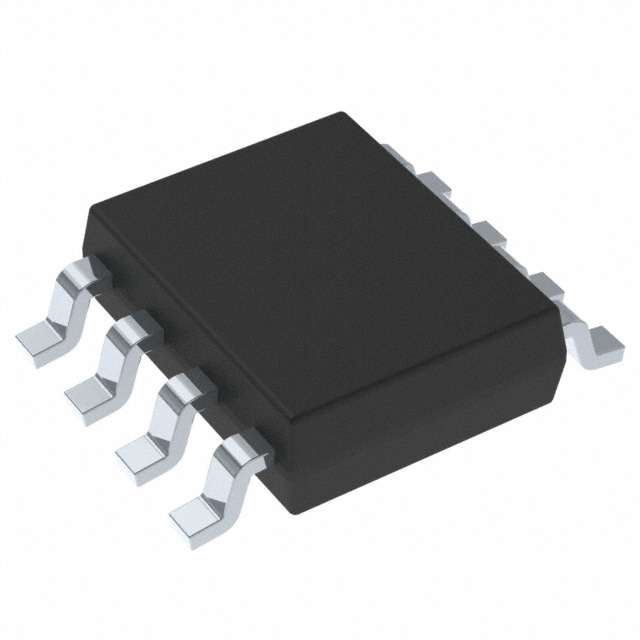
| Package / Case | 8-PowerSOIC |
| Package / Case [x] | 0.154 in |
| Package / Case [y] | 3.9 mm |
| Slew Rate | 25 V/µs |
| Supplier Device Package | 8-SO PowerPad |
| Voltage - Input Offset | 200 çV |
| Voltage - Supply Span (Max) [Max] | 180 V |
| Voltage - Supply Span (Min) [Min] | 12 V |
Pricing
Prices provided here are for design reference only. For realtime values and availability, please visit the distributors directly
| Distributor | Package | Quantity | $ | |
|---|---|---|---|---|
| Digikey | Tube | 1 | $ 21.18 | |
| 10 | $ 19.54 | |||
| 75 | $ 18.66 | |||
| 150 | $ 16.68 | |||
| 300 | $ 15.91 | |||
| 525 | $ 15.15 | |||
| Texas Instruments | TUBE | 1 | $ 18.04 | |
| 100 | $ 15.76 | |||
| 250 | $ 12.15 | |||
| 1000 | $ 10.87 | |||
Description
General part information
OPA462 Series
The OPA462 is a high voltage (180 V) and high current drive (45 mA) operational amplifier. The device is unity-gain stable and has a gain-bandwidth product of 6.5 MHz.
The OPA462 is internally protected against over-temperature conditions and current overloads. The device is fully specified to perform over a wide power-supply range of ±6 V to ±90 V, or on a single supply of 12 V to 180 V. The status flag is an open-drain output that allows the device to be easily referenced to standard low-voltage logic circuitry. This high-voltage operational amplifier provides excellent accuracy and wide output swing, and is free from phase inversion problems that are often found in similar amplifiers.
The output can be disabled using the enable-disable (E/D) pin. The E/D pin has a common return pin to allow for easy interface to low-voltage logic circuitry. This disable is accomplished without disturbing the input signal path, not only saving power but also protecting the load.
Documents
Technical documentation and resources