


Deep-Dive with AI
Search across all available documentation for this part.
Deep-Dive with AI
Technical Specifications
Parameters and characteristics for this part
| Specification | AD7707BRU-REEL7 |
|---|---|
| Architecture | Sigma-Delta |
| Configuration | MUX-PGA-ADC |
| Data Interface | DSP, SPI |
| Features | PGA |
| Input Type | Single Ended, Pseudo-Differential |
| Mounting Type | Surface Mount |
| Number of A/D Converters | 1 |
| Number of Bits | 16 |
| Number of Inputs | 1, 2 |
| Operating Temperature [Max] | 85 °C |
| Operating Temperature [Min] | -40 °C |
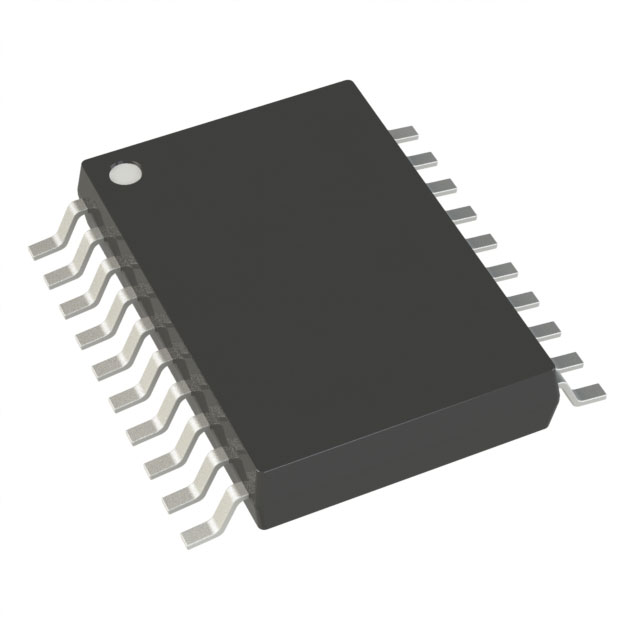
| Package / Case | 20-TSSOP |
| Package / Case [x] | 0.173 in |
| Package / Case [y] | 4.4 mm |
| Reference Type | External |
| Sampling Rate (Per Second) | 500 Per Second |
| Supplier Device Package | 20-TSSOP |
| Voltage - Supply, Analog | 5 V |
| Voltage - Supply, Analog [Max] | 3.3 V |
| Voltage - Supply, Analog [Min] | 2.7 V |
| Voltage - Supply, Digital | 5 V |
| Voltage - Supply, Digital [Max] | 3.3 V |
| Voltage - Supply, Digital [Min] | 2.7 V |
Pricing
Prices provided here are for design reference only. For realtime values and availability, please visit the distributors directly
| Distributor | Package | Quantity | $ | |
|---|---|---|---|---|
Description
General part information
AD7707 Series
The AD7707 is a complete analog front end for low frequency measurement applications. This 3-channel device can accept either low level input signals directly from a transducer or high level (±10 V) signals and produce a serial digital output. It employs a Σ-Δ conversion technique to realize up to 16 bits of no missing codes performance. The selected input signal is applied to a proprietary programmable gain front end based around an analog modulator. The modulator output is processed by an on-chip digital filter. The first notch of this digital filter can be programmed via an on-chip control register allowing adjustment of the filter cutoff and output update rate.The AD7707 operates from a single 2.7 V to 3.3 V or 4.75 V to 5.25 V supply. The AD7707 features two low level pseudo differential analog input channels, one high level input channel and a differential reference input. Input signal ranges of 0 mV to 20 mV through 0 V to 2.5 V can be accommodated on both low level input channels when operating with a VDD of 5 V and a reference of 2.5 V. They can also handle bipolar input signal ranges of ±20 mV through ±2.5 V, which are referenced to the LCOM input. The AD7707, with a 3 V supply and a 1.225 V reference, can handle unipolar input signal ranges of 0 mV to 10 mV through 0 V to 1.225 V. Its bipolar input signal ranges are ±10 mV through ±1.225 V. The high level input channel can accept input signal ranges of ±10 V, ±5 V, 0 V to 10 V and 0 V to 5 V. The AD7707 thus performs all signal conditioning and conversion for a 3-channel system.The AD7707 is ideal for use in smart, microcontroller or DSP- based systems. It features a serial interface that can be configured for 3-wire operation. Gain settings, signal polarity and update rate selection can be configured in software using the input serial port. The part contains self-calibration and system calibration options to eliminate gain and offset errors on the part itself or in the system.CMOS construction ensures very low power dissipation, and the power-down mode reduces the standby power consumption to 20 μW typical. This part is available in a 20-lead wide body (0.3 inch) small outline (SOIC) package and a low profile 20-lead TSSOP.PRODUCT HIGHLIGHTSThe AD7707 consumes less than 1 mW at 3 V supplies and 1 MHz master clock, making it ideal for use in low power systems. Standby current is less than 8 μA.On-chip thin-film resistors allow ±10 V, ±5 V, 0 V to 10 V, and 0 V to 5 V high level input signals to be directly accommodated on the analog inputs without requiring split supplies or charge-pumps.The low level input channels allow the AD7707 to accept input signals directly from a strain gage or transducer removing a considerable amount of signal conditioning.The part features excellent static performance specifications with 16 bits, no missing codes, ±0.003% accuracy, and low rms noise. Endpoint errors and the effects of temperature drift are eliminated by on-chip calibration options, which remove zero-scale and full-scale errors.
Documents
Technical documentation and resources
