TPS40211EVM-352
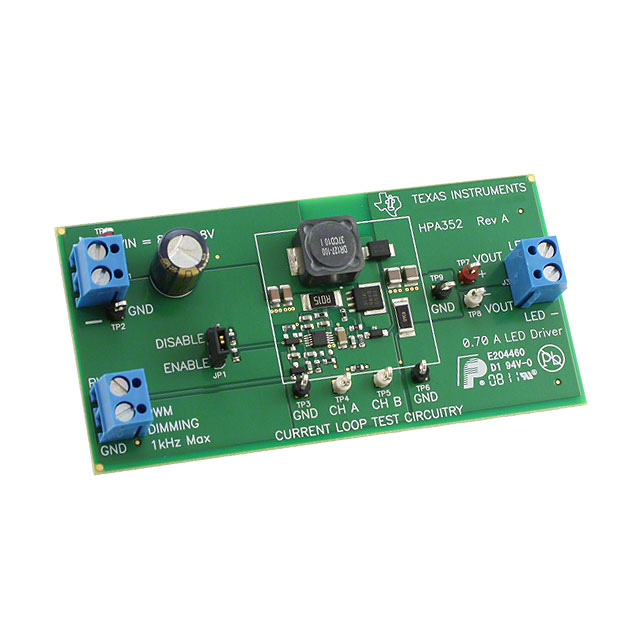
ActiveEVAL MODULE FOR TPS40211-352
Deep-Dive with AI
Search across all available documentation for this part.
TPS40211EVM-352
ActiveEVAL MODULE FOR TPS40211-352
Deep-Dive with AI
Technical Specifications
Parameters and characteristics for this part
| Specification | TPS40211EVM-352 |
|---|---|
| Current - Output / Channel | 700 mA |
| Outputs and Type | Non-Isolated |
| Outputs and Type | 1 |
| Supplied Contents | Board(s) |
| Utilized IC / Part | TPS40211 |
| Voltage - Input [Max] | 18 V |
| Voltage - Input [Min] | 8 V |
| Voltage - Output [Max] | 35 V |
| Voltage - Output [Min] | 20 V |
Pricing
Prices provided here are for design reference only. For realtime values and availability, please visit the distributors directly
| Distributor | Package | Quantity | $ | |
|---|---|---|---|---|
| Digikey | Box | 1 | $ 58.80 | |
Description
General part information
TPS40211-Q1 Series
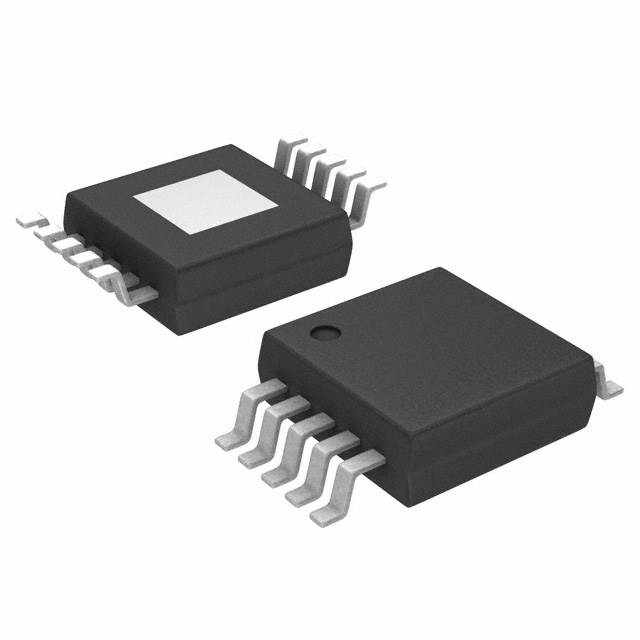
The TPS40210-Q1 and TPS40211-Q1 devices are wide-input-voltage (4.5 V to 52 V) non-synchronous boost controllers. They are suitable for topologies that require a grounded source N-channel FET, including boost, flyback, SEPIC, and various LED driver applications. Device features include programmable soft start, overcurrent protection with automatic retry, and programmable oscillator frequency. Current-mode control provides improved transient response and simplified loop compensation. The main difference between the two parts is the reference voltage to which the error amplifier regulates the FB pin.
The TPS40210-Q1 and TPS40211-Q1 devices are wide-input-voltage (4.5 V to 52 V) non-synchronous boost controllers. They are suitable for topologies that require a grounded source N-channel FET, including boost, flyback, SEPIC, and various LED driver applications. Device features include programmable soft start, overcurrent protection with automatic retry, and programmable oscillator frequency. Current-mode control provides improved transient response and simplified loop compensation. The main difference between the two parts is the reference voltage to which the error amplifier regulates the FB pin.
Documents
Technical documentation and resources