


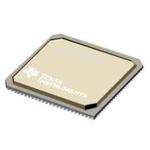
DLPC410ZYR
ActiveDLP® CONTROLLER FOR DLP650LNIR, DLP7000, AND DLP9500 DIGITAL MICROMIRROR DEVICES (DMDS)
Deep-Dive with AI
Search across all available documentation for this part.
DLPC410ZYR
ActiveDLP® CONTROLLER FOR DLP650LNIR, DLP7000, AND DLP9500 DIGITAL MICROMIRROR DEVICES (DMDS)
Technical Specifications
Parameters and characteristics for this part
| Specification | DLPC410ZYR |
|---|---|
| Applications | Image Processing and Control |
| Mounting Type | Surface Mount |
| Supplier Device Package | 676-FCBGA (27x27) |
| Type | Digital Controller |
Pricing
Prices provided here are for design reference only. For realtime values and availability, please visit the distributors directly
| Distributor | Package | Quantity | $ | |
|---|---|---|---|---|
| Digikey | Tray | 1 | $ 322.09 | |
| 10 | $ 308.48 | |||
| 25 | $ 301.68 | |||
| Texas Instruments | JEDEC TRAY (5+1) | 1 | $ 282.97 | |
| 10 | $ 260.51 | |||
| 100 | $ 224.58 | |||
Description
General part information
DLPC410 Series
The DLPC410 is a digital controller that supports five DMD options: DLP650LNIR, DLP7000, DLP7000UV, DLP9500, and DLP9500UV. It is the convenient, high-speed data and control interface between the application electronics and the DMD. The DLPC410 provides DMD Mirror Clocking Pulses (Resets) and timing information to the DLPA200 DMD Micromirror Driver. The device is configured with firmware stored in the DLPR410 PROM.
This family of chipsets enables pixel data rates up to 48 Gigabits per second (Gbps) with the option for single, dual, quad, and global Resets. In addition, random row addressing and LOAD4 capabilities are offered. Often the family of chips is used when designing UV and NIR systems such as direct imaging lithography, 3D printing, and laser marking systems that need fast throughput and pixel accurate control.
In DLP-based electronics solutions, image data is 100% digital from the DLPC410 input port to the projected image. The image stays in digital form and is never converted into an analog signal. The DLPC410 processes the digital input image and converts the data into a format needed by the image on the DMD. The DMD then steers the light using binary pulse-width modulation (PWM) for each pixel mirror.
Documents
Technical documentation and resources