DLPC410 Series
DLP® controller for DLP650LNIR, DLP7000, and DLP9500 digital micromirror devices (DMDs)
Manufacturer: Texas Instruments
Catalog
DLP® controller for DLP650LNIR, DLP7000, and DLP9500 digital micromirror devices (DMDs)
Key Features
• Operates the Following DLP®Chips:DLP650LNIR, DLP7000, DLP7000UV, DLP9500, and DLP9500UV DMDsDLPA200 DMD Micromirror DriverDLPR410 Configuration PROMEnables High Speed DMD Pattern Rates1-Bit Binary Pattern Rates up to 32 kHz8-Bit Monochrome Pattern Rates up to 4 kHz400 MHz Input Data Clock Rates64-Bit 2xLVDS Data Bus Interfaces In/OutSupports Random Row and LOAD4 DMD AddressingCompatible With a Variety of User Defined Processors or FPGAsOperates the Following DLP®Chips:DLP650LNIR, DLP7000, DLP7000UV, DLP9500, and DLP9500UV DMDsDLPA200 DMD Micromirror DriverDLPR410 Configuration PROMEnables High Speed DMD Pattern Rates1-Bit Binary Pattern Rates up to 32 kHz8-Bit Monochrome Pattern Rates up to 4 kHz400 MHz Input Data Clock Rates64-Bit 2xLVDS Data Bus Interfaces In/OutSupports Random Row and LOAD4 DMD AddressingCompatible With a Variety of User Defined Processors or FPGAs
Description
AI
The DLPC410 is a digital controller that supports five DMD options: DLP650LNIR, DLP7000, DLP7000UV, DLP9500, and DLP9500UV. It is the convenient, high-speed data and control interface between the application electronics and the DMD. The DLPC410 provides DMD Mirror Clocking Pulses (Resets) and timing information to the DLPA200 DMD Micromirror Driver. The device is configured with firmware stored in the DLPR410 PROM.
This family of chipsets enables pixel data rates up to 48 Gigabits per second (Gbps) with the option for single, dual, quad, and global Resets. In addition, random row addressing and LOAD4 capabilities are offered. Often the family of chips is used when designing UV and NIR systems such as direct imaging lithography, 3D printing, and laser marking systems that need fast throughput and pixel accurate control.
In DLP-based electronics solutions, image data is 100% digital from the DLPC410 input port to the projected image. The image stays in digital form and is never converted into an analog signal. The DLPC410 processes the digital input image and converts the data into a format needed by the image on the DMD. The DMD then steers the light using binary pulse-width modulation (PWM) for each pixel mirror.
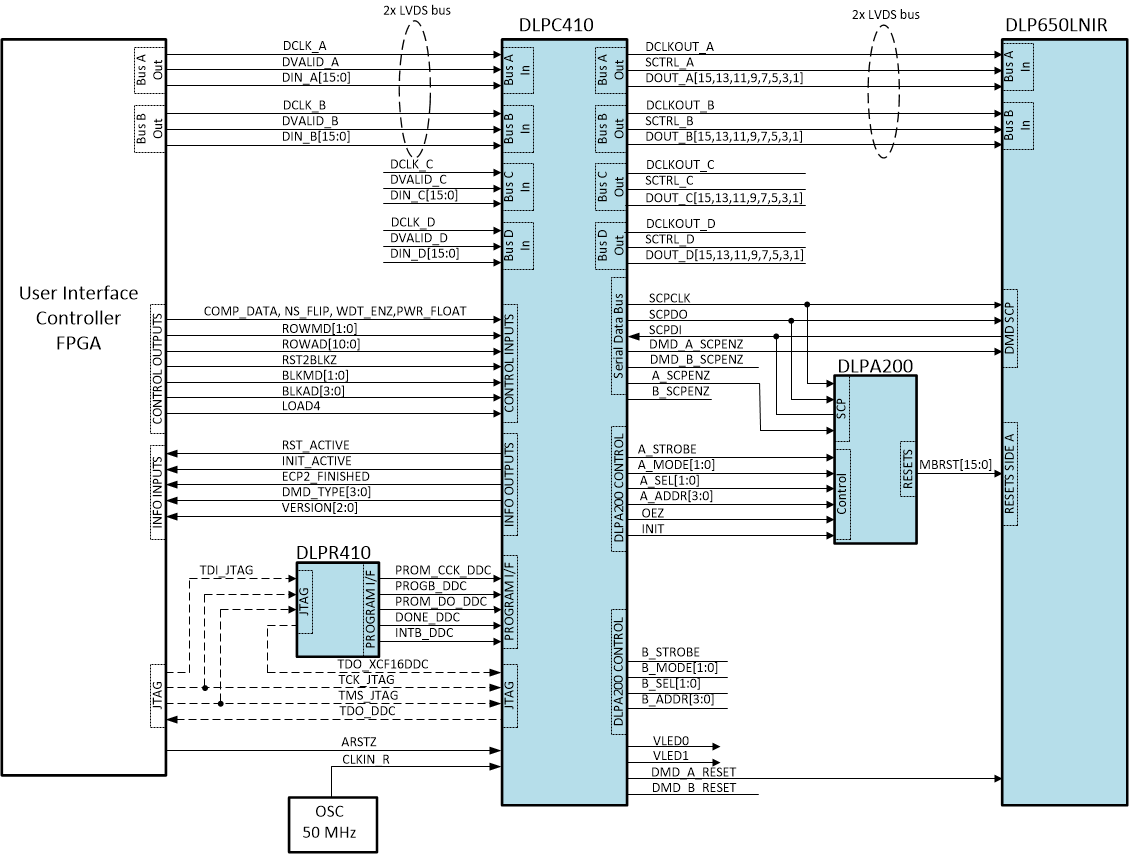
The DLPC410 is the DMD digital controller that controls the DLP650LNIR, DLP7000, DLP7000UV, DLP9500, and DLP9500UV DMDs (seeFunctional Block Diagram,Functional Block Diagram, andFunctional Block Diagram). The DLPC410 provides developers easy access to the DMD as well as high speed, independent micromirror control. See the list of required chipset components for each DMD solution inDevice Configurationstable:
Reliable function and operation of the DLPC410 requires that it be used in conjunction with the other components of the chipset inDLPC410 Device Configurationstable. For more information on the chipset components, see the data sheets inRelated Documentation.
The DLPC410 is a digital controller that supports five DMD options: DLP650LNIR, DLP7000, DLP7000UV, DLP9500, and DLP9500UV. It is the convenient, high-speed data and control interface between the application electronics and the DMD. The DLPC410 provides DMD Mirror Clocking Pulses (Resets) and timing information to the DLPA200 DMD Micromirror Driver. The device is configured with firmware stored in the DLPR410 PROM.
This family of chipsets enables pixel data rates up to 48 Gigabits per second (Gbps) with the option for single, dual, quad, and global Resets. In addition, random row addressing and LOAD4 capabilities are offered. Often the family of chips is used when designing UV and NIR systems such as direct imaging lithography, 3D printing, and laser marking systems that need fast throughput and pixel accurate control.
In DLP-based electronics solutions, image data is 100% digital from the DLPC410 input port to the projected image. The image stays in digital form and is never converted into an analog signal. The DLPC410 processes the digital input image and converts the data into a format needed by the image on the DMD. The DMD then steers the light using binary pulse-width modulation (PWM) for each pixel mirror.
The DLPC410 is the DMD digital controller that controls the DLP650LNIR, DLP7000, DLP7000UV, DLP9500, and DLP9500UV DMDs (seeFunctional Block Diagram,Functional Block Diagram, andFunctional Block Diagram). The DLPC410 provides developers easy access to the DMD as well as high speed, independent micromirror control. See the list of required chipset components for each DMD solution inDevice Configurationstable:
Reliable function and operation of the DLPC410 requires that it be used in conjunction with the other components of the chipset inDLPC410 Device Configurationstable. For more information on the chipset components, see the data sheets inRelated Documentation.