DRV8843PWP
LTB45-V, 2.5-A BIPOLAR STEPPER OR DUAL H-BRIDGE MOTOR DRIVER WITH CURRENT REGULATION AND PWM CONTROL
Deep-Dive with AI
Search across all available documentation for this part.
DRV8843PWP
LTB45-V, 2.5-A BIPOLAR STEPPER OR DUAL H-BRIDGE MOTOR DRIVER WITH CURRENT REGULATION AND PWM CONTROL
Technical Specifications
Parameters and characteristics for this part
| Specification | DRV8843PWP |
|---|---|
| Applications | General Purpose |
| Current - Output | 1.75 A |
| Function | Driver - Fully Integrated, Control and Power Stage |
| Interface | Parallel |
| Motor Type - AC, DC | Brushed DC |
| Motor Type - Stepper | Bipolar |
| Mounting Type | Surface Mount |
| Operating Temperature [Max] | 150 °C |
| Operating Temperature [Min] | -40 °C |
| Output Configuration | Half Bridge (4) |
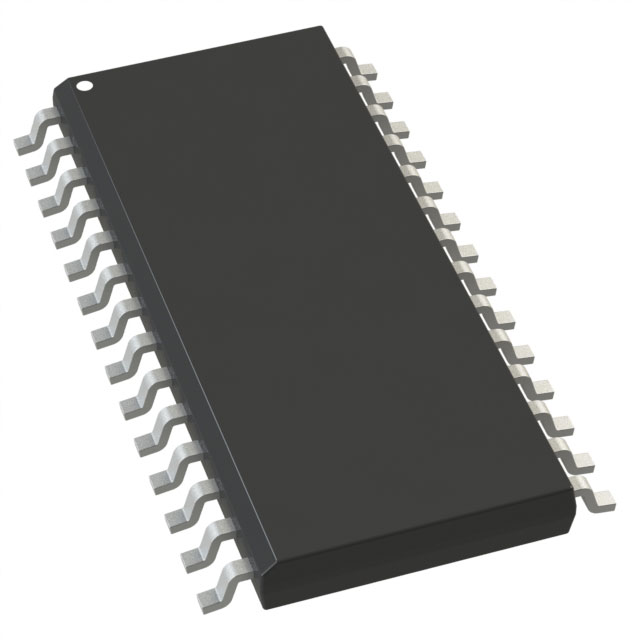
| Package / Case | 28-PowerTSSOP |
| Package / Case [custom] | 4.4 mm |
| Package / Case [custom] | 0.173 " |
| Supplier Device Package | 28-HTSSOP |
| Technology | Power MOSFET |
| Voltage - Load [Max] | 45 V |
| Voltage - Load [Min] | 8.2 V |
| Voltage - Supply [Max] | 45 V |
| Voltage - Supply [Min] | 8.2 V |
Pricing
Prices provided here are for design reference only. For realtime values and availability, please visit the distributors directly
| Distributor | Package | Quantity | $ | |
|---|---|---|---|---|
| Digikey | Tube | 1 | $ 4.25 | |
| 10 | $ 3.82 | |||
| 50 | $ 3.61 | |||
| 100 | $ 3.13 | |||
| 250 | $ 2.97 | |||
| 500 | $ 2.82 | |||
| Texas Instruments | TUBE | 1 | $ 5.20 | |
| 100 | $ 4.56 | |||
| 250 | $ 3.20 | |||
| 1000 | $ 2.58 | |||
Description
General part information
DRV8843 Series
The DRV8843 provides an integrated dual H-bridge motor driver solution for printers, scanners, and other automated equipment applications. The device can be used to drive one or two brushed DC motors, a bipolar stepper motor, or other loads. A simple PWM interface allows easy interfacing to controller circuits.
The output driver block consists of N-channel power MOSFETs configured as H-bridges. The DRV8843 an supply up to 2.5-A peak or 1.75-A RMS output current (with proper heat sinking at 24 V and TA = 25°C) per H-bridge.
A low-power sleep mode is provided which shuts down internal circuitry to achieve very low quiescent current draw. This sleep mode can be set using a dedicated nSLEEP pin.
Documents
Technical documentation and resources