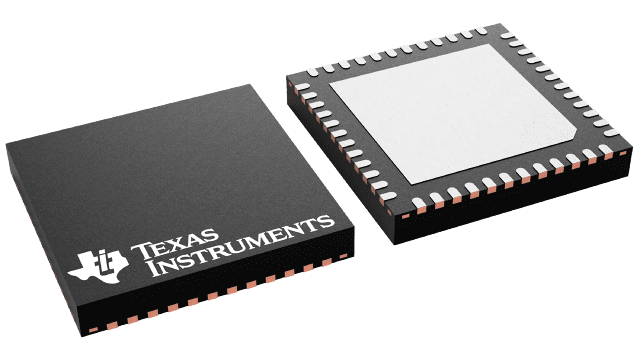
MSP430F525225 MHz MCU with 128KB Flash, 16KB SRAM, comparator, DMA, UART/SPI/I2C, 1.8V Split-Rail I/O | Microcontrollers | 2 | Active | Using an "always-on" ultra-low-power system controller can significantly reduce power consumption on portable devices like handsets and tablets. These controllers can act as sensor hubs and monitor user stimuli (for example, reading inertial sensors or touch sensors) and vital system parameters like battery health and temperature, while power-hungry application processors and touch screen controllers are turned off. The microcontroller can then "wake up" the system based on a user input or on a fault condition that requires CPU intervention.
The MSP430F525x series is the latest addition to the 1.8-V split-rail I/O portfolio (previously only available on MSP430F522x) and is specifically designed for "always-on" system controller applications. 1.8-V I/O allows for seamless interface to application processors and other devices without the need for external level translation, while the primary supply to the MCU can be on a higher voltage rail.
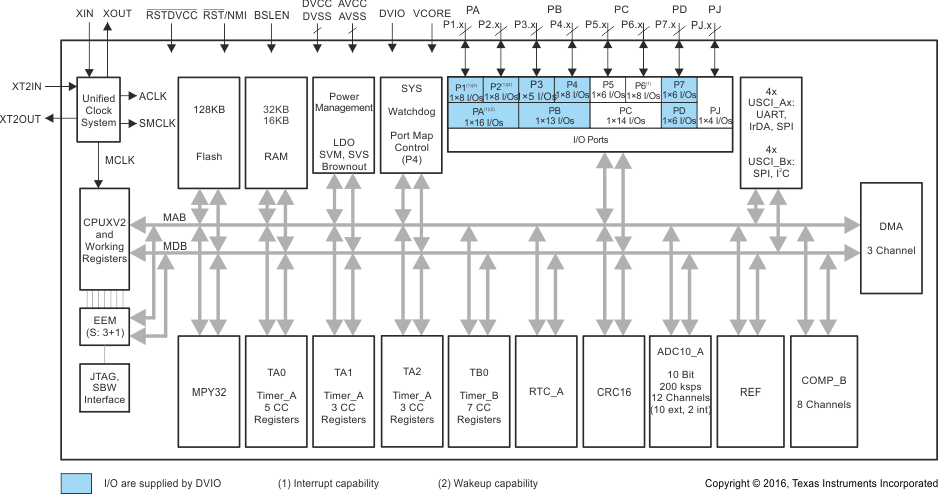
Compared to the MSP430F522x, the MSP430F525x provides up to four times more RAM (32KB) and double the serial interfaces (four USCI_A and four USCI_B). The MSP430F525x also features four 16-bit timers, a high-performance 10-bit ADC, a hardware multiplier, DMA, a comparator, and an RTC module with alarm capabilities. The MSP430F525x consumes 290 µA/MHz (typical) in active mode running from flash memory, and it consumes 1.6 µA (typical) in standby mode (LPM3). The MSP430F525x can switch to active mode in 3.5 µs (typical), which makes it a great fit for "always-on" low-power applications.
Key benefits of the MSP430F525x are as follows:
For complete module descriptions, see theMSP430F5xx and MSP430F6xx Family User’s Guide. For design guidelines, seeDesigning With MSP430F522x and MSP430F521x Devices.
Using an "always-on" ultra-low-power system controller can significantly reduce power consumption on portable devices like handsets and tablets. These controllers can act as sensor hubs and monitor user stimuli (for example, reading inertial sensors or touch sensors) and vital system parameters like battery health and temperature, while power-hungry application processors and touch screen controllers are turned off. The microcontroller can then "wake up" the system based on a user input or on a fault condition that requires CPU intervention.
The MSP430F525x series is the latest addition to the 1.8-V split-rail I/O portfolio (previously only available on MSP430F522x) and is specifically designed for "always-on" system controller applications. 1.8-V I/O allows for seamless interface to application processors and other devices without the need for external level translation, while the primary supply to the MCU can be on a higher voltage rail.
Compared to the MSP430F522x, the MSP430F525x provides up to four times more RAM (32KB) and double the serial interfaces (four USCI_A and four USCI_B). The MSP430F525x also features four 16-bit timers, a high-performance 10-bit ADC, a hardware multiplier, DMA, a comparator, and an RTC module with alarm capabilities. The MSP430F525x consumes 290 µA/MHz (typical) in active mode running from flash memory, and it consumes 1.6 µA (typical) in standby mode (LPM3). The MSP430F525x can switch to active mode in 3.5 µs (typical), which makes it a great fit for "always-on" low-power applications.
Key benefits of the MSP430F525x are as follows:
For complete module descriptions, see theMSP430F5xx and MSP430F6xx Family User’s Guide. For design guidelines, seeDesigning With MSP430F522x and MSP430F521x Devices. |
MSP430F525325 MHz MCU with 128KB Flash, 16KB SRAM, 10-bit ADC, comparator, DMA, 1.8V Split-Rail I/O | Embedded | 2 | Active | Using an "always-on" ultra-low-power system controller can significantly reduce power consumption on portable devices like handsets and tablets. These controllers can act as sensor hubs and monitor user stimuli (for example, reading inertial sensors or touch sensors) and vital system parameters like battery health and temperature, while power-hungry application processors and touch screen controllers are turned off. The microcontroller can then "wake up" the system based on a user input or on a fault condition that requires CPU intervention.
The MSP430F525x series is the latest addition to the 1.8-V split-rail I/O portfolio (previously only available on MSP430F522x) and is specifically designed for "always-on" system controller applications. 1.8-V I/O allows for seamless interface to application processors and other devices without the need for external level translation, while the primary supply to the MCU can be on a higher voltage rail.
Compared to the MSP430F522x, the MSP430F525x provides up to four times more RAM (32KB) and double the serial interfaces (four USCI_A and four USCI_B). The MSP430F525x also features four 16-bit timers, a high-performance 10-bit ADC, a hardware multiplier, DMA, a comparator, and an RTC module with alarm capabilities. The MSP430F525x consumes 290 µA/MHz (typical) in active mode running from flash memory, and it consumes 1.6 µA (typical) in standby mode (LPM3). The MSP430F525x can switch to active mode in 3.5 µs (typical), which makes it a great fit for "always-on" low-power applications.
Key benefits of the MSP430F525x are as follows:
For complete module descriptions, see theMSP430F5xx and MSP430F6xx Family User’s Guide. For design guidelines, seeDesigning With MSP430F522x and MSP430F521x Devices.
Using an "always-on" ultra-low-power system controller can significantly reduce power consumption on portable devices like handsets and tablets. These controllers can act as sensor hubs and monitor user stimuli (for example, reading inertial sensors or touch sensors) and vital system parameters like battery health and temperature, while power-hungry application processors and touch screen controllers are turned off. The microcontroller can then "wake up" the system based on a user input or on a fault condition that requires CPU intervention.
The MSP430F525x series is the latest addition to the 1.8-V split-rail I/O portfolio (previously only available on MSP430F522x) and is specifically designed for "always-on" system controller applications. 1.8-V I/O allows for seamless interface to application processors and other devices without the need for external level translation, while the primary supply to the MCU can be on a higher voltage rail.
Compared to the MSP430F522x, the MSP430F525x provides up to four times more RAM (32KB) and double the serial interfaces (four USCI_A and four USCI_B). The MSP430F525x also features four 16-bit timers, a high-performance 10-bit ADC, a hardware multiplier, DMA, a comparator, and an RTC module with alarm capabilities. The MSP430F525x consumes 290 µA/MHz (typical) in active mode running from flash memory, and it consumes 1.6 µA (typical) in standby mode (LPM3). The MSP430F525x can switch to active mode in 3.5 µs (typical), which makes it a great fit for "always-on" low-power applications.
Key benefits of the MSP430F525x are as follows:
For complete module descriptions, see theMSP430F5xx and MSP430F6xx Family User’s Guide. For design guidelines, seeDesigning With MSP430F522x and MSP430F521x Devices. |
| Microcontrollers | 3 | Active | |
MSP430F525525 MHz MCU with 128KB Flash, 32KB SRAM, 10-bit ADC, comparator, DMA, 1.8V Split-Rail I/O | Embedded | 4 | Active | Using an "always-on" ultra-low-power system controller can significantly reduce power consumption on portable devices like handsets and tablets. These controllers can act as sensor hubs and monitor user stimuli (for example, reading inertial sensors or touch sensors) and vital system parameters like battery health and temperature, while power-hungry application processors and touch screen controllers are turned off. The microcontroller can then "wake up" the system based on a user input or on a fault condition that requires CPU intervention.
The MSP430F525x series is the latest addition to the 1.8-V split-rail I/O portfolio (previously only available on MSP430F522x) and is specifically designed for "always-on" system controller applications. 1.8-V I/O allows for seamless interface to application processors and other devices without the need for external level translation, while the primary supply to the MCU can be on a higher voltage rail.
Compared to the MSP430F522x, the MSP430F525x provides up to four times more RAM (32KB) and double the serial interfaces (four USCI_A and four USCI_B). The MSP430F525x also features four 16-bit timers, a high-performance 10-bit ADC, a hardware multiplier, DMA, a comparator, and an RTC module with alarm capabilities. The MSP430F525x consumes 290 µA/MHz (typical) in active mode running from flash memory, and it consumes 1.6 µA (typical) in standby mode (LPM3). The MSP430F525x can switch to active mode in 3.5 µs (typical), which makes it a great fit for "always-on" low-power applications.
Key benefits of the MSP430F525x are as follows:
For complete module descriptions, see theMSP430F5xx and MSP430F6xx Family User’s Guide. For design guidelines, seeDesigning With MSP430F522x and MSP430F521x Devices.
Using an "always-on" ultra-low-power system controller can significantly reduce power consumption on portable devices like handsets and tablets. These controllers can act as sensor hubs and monitor user stimuli (for example, reading inertial sensors or touch sensors) and vital system parameters like battery health and temperature, while power-hungry application processors and touch screen controllers are turned off. The microcontroller can then "wake up" the system based on a user input or on a fault condition that requires CPU intervention.
The MSP430F525x series is the latest addition to the 1.8-V split-rail I/O portfolio (previously only available on MSP430F522x) and is specifically designed for "always-on" system controller applications. 1.8-V I/O allows for seamless interface to application processors and other devices without the need for external level translation, while the primary supply to the MCU can be on a higher voltage rail.
Compared to the MSP430F522x, the MSP430F525x provides up to four times more RAM (32KB) and double the serial interfaces (four USCI_A and four USCI_B). The MSP430F525x also features four 16-bit timers, a high-performance 10-bit ADC, a hardware multiplier, DMA, a comparator, and an RTC module with alarm capabilities. The MSP430F525x consumes 290 µA/MHz (typical) in active mode running from flash memory, and it consumes 1.6 µA (typical) in standby mode (LPM3). The MSP430F525x can switch to active mode in 3.5 µs (typical), which makes it a great fit for "always-on" low-power applications.
Key benefits of the MSP430F525x are as follows:
For complete module descriptions, see theMSP430F5xx and MSP430F6xx Family User’s Guide. For design guidelines, seeDesigning With MSP430F522x and MSP430F521x Devices. |
MSP430F525625 MHz MCU with 128KB Flash, 16KB SRAM, comparator, DMA, UART/SPI/I2C, 1.8V Split-Rail I/O | Microcontrollers | 4 | Active | Using an "always-on" ultra-low-power system controller can significantly reduce power consumption on portable devices like handsets and tablets. These controllers can act as sensor hubs and monitor user stimuli (for example, reading inertial sensors or touch sensors) and vital system parameters like battery health and temperature, while power-hungry application processors and touch screen controllers are turned off. The microcontroller can then "wake up" the system based on a user input or on a fault condition that requires CPU intervention.
The MSP430F525x series is the latest addition to the 1.8-V split-rail I/O portfolio (previously only available on MSP430F522x) and is specifically designed for "always-on" system controller applications. 1.8-V I/O allows for seamless interface to application processors and other devices without the need for external level translation, while the primary supply to the MCU can be on a higher voltage rail.
Compared to the MSP430F522x, the MSP430F525x provides up to four times more RAM (32KB) and double the serial interfaces (four USCI_A and four USCI_B). The MSP430F525x also features four 16-bit timers, a high-performance 10-bit ADC, a hardware multiplier, DMA, a comparator, and an RTC module with alarm capabilities. The MSP430F525x consumes 290 µA/MHz (typical) in active mode running from flash memory, and it consumes 1.6 µA (typical) in standby mode (LPM3). The MSP430F525x can switch to active mode in 3.5 µs (typical), which makes it a great fit for "always-on" low-power applications.
Key benefits of the MSP430F525x are as follows:
For complete module descriptions, see theMSP430F5xx and MSP430F6xx Family User’s Guide. For design guidelines, seeDesigning With MSP430F522x and MSP430F521x Devices.
Using an "always-on" ultra-low-power system controller can significantly reduce power consumption on portable devices like handsets and tablets. These controllers can act as sensor hubs and monitor user stimuli (for example, reading inertial sensors or touch sensors) and vital system parameters like battery health and temperature, while power-hungry application processors and touch screen controllers are turned off. The microcontroller can then "wake up" the system based on a user input or on a fault condition that requires CPU intervention.
The MSP430F525x series is the latest addition to the 1.8-V split-rail I/O portfolio (previously only available on MSP430F522x) and is specifically designed for "always-on" system controller applications. 1.8-V I/O allows for seamless interface to application processors and other devices without the need for external level translation, while the primary supply to the MCU can be on a higher voltage rail.
Compared to the MSP430F522x, the MSP430F525x provides up to four times more RAM (32KB) and double the serial interfaces (four USCI_A and four USCI_B). The MSP430F525x also features four 16-bit timers, a high-performance 10-bit ADC, a hardware multiplier, DMA, a comparator, and an RTC module with alarm capabilities. The MSP430F525x consumes 290 µA/MHz (typical) in active mode running from flash memory, and it consumes 1.6 µA (typical) in standby mode (LPM3). The MSP430F525x can switch to active mode in 3.5 µs (typical), which makes it a great fit for "always-on" low-power applications.
Key benefits of the MSP430F525x are as follows:
For complete module descriptions, see theMSP430F5xx and MSP430F6xx Family User’s Guide. For design guidelines, seeDesigning With MSP430F522x and MSP430F521x Devices. |
| Integrated Circuits (ICs) | 4 | Active | |
MSP430F525825 MHz MCU with 128KB Flash, 32KB SRAM, comparator, DMA, UART/SPI/I2C, 1.8V Split-Rail I/O | Embedded | 2 | Active | Using an "always-on" ultra-low-power system controller can significantly reduce power consumption on portable devices like handsets and tablets. These controllers can act as sensor hubs and monitor user stimuli (for example, reading inertial sensors or touch sensors) and vital system parameters like battery health and temperature, while power-hungry application processors and touch screen controllers are turned off. The microcontroller can then "wake up" the system based on a user input or on a fault condition that requires CPU intervention.
The MSP430F525x series is the latest addition to the 1.8-V split-rail I/O portfolio (previously only available on MSP430F522x) and is specifically designed for "always-on" system controller applications. 1.8-V I/O allows for seamless interface to application processors and other devices without the need for external level translation, while the primary supply to the MCU can be on a higher voltage rail.
Compared to the MSP430F522x, the MSP430F525x provides up to four times more RAM (32KB) and double the serial interfaces (four USCI_A and four USCI_B). The MSP430F525x also features four 16-bit timers, a high-performance 10-bit ADC, a hardware multiplier, DMA, a comparator, and an RTC module with alarm capabilities. The MSP430F525x consumes 290 µA/MHz (typical) in active mode running from flash memory, and it consumes 1.6 µA (typical) in standby mode (LPM3). The MSP430F525x can switch to active mode in 3.5 µs (typical), which makes it a great fit for "always-on" low-power applications.
Key benefits of the MSP430F525x are as follows:
For complete module descriptions, see theMSP430F5xx and MSP430F6xx Family User’s Guide. For design guidelines, seeDesigning With MSP430F522x and MSP430F521x Devices.
Using an "always-on" ultra-low-power system controller can significantly reduce power consumption on portable devices like handsets and tablets. These controllers can act as sensor hubs and monitor user stimuli (for example, reading inertial sensors or touch sensors) and vital system parameters like battery health and temperature, while power-hungry application processors and touch screen controllers are turned off. The microcontroller can then "wake up" the system based on a user input or on a fault condition that requires CPU intervention.
The MSP430F525x series is the latest addition to the 1.8-V split-rail I/O portfolio (previously only available on MSP430F522x) and is specifically designed for "always-on" system controller applications. 1.8-V I/O allows for seamless interface to application processors and other devices without the need for external level translation, while the primary supply to the MCU can be on a higher voltage rail.
Compared to the MSP430F522x, the MSP430F525x provides up to four times more RAM (32KB) and double the serial interfaces (four USCI_A and four USCI_B). The MSP430F525x also features four 16-bit timers, a high-performance 10-bit ADC, a hardware multiplier, DMA, a comparator, and an RTC module with alarm capabilities. The MSP430F525x consumes 290 µA/MHz (typical) in active mode running from flash memory, and it consumes 1.6 µA (typical) in standby mode (LPM3). The MSP430F525x can switch to active mode in 3.5 µs (typical), which makes it a great fit for "always-on" low-power applications.
Key benefits of the MSP430F525x are as follows:
For complete module descriptions, see theMSP430F5xx and MSP430F6xx Family User’s Guide. For design guidelines, seeDesigning With MSP430F522x and MSP430F521x Devices. |
MSP430F525925 MHz MCU with 128KB Flash, 32KB SRAM, 10-bit ADC, comparator, DMA, 1.8V Split-Rail I/O | Integrated Circuits (ICs) | 2 | Active | Using an "always-on" ultra-low-power system controller can significantly reduce power consumption on portable devices like handsets and tablets. These controllers can act as sensor hubs and monitor user stimuli (for example, reading inertial sensors or touch sensors) and vital system parameters like battery health and temperature, while power-hungry application processors and touch screen controllers are turned off. The microcontroller can then "wake up" the system based on a user input or on a fault condition that requires CPU intervention.
The MSP430F525x series is the latest addition to the 1.8-V split-rail I/O portfolio (previously only available on MSP430F522x) and is specifically designed for "always-on" system controller applications. 1.8-V I/O allows for seamless interface to application processors and other devices without the need for external level translation, while the primary supply to the MCU can be on a higher voltage rail.
Compared to the MSP430F522x, the MSP430F525x provides up to four times more RAM (32KB) and double the serial interfaces (four USCI_A and four USCI_B). The MSP430F525x also features four 16-bit timers, a high-performance 10-bit ADC, a hardware multiplier, DMA, a comparator, and an RTC module with alarm capabilities. The MSP430F525x consumes 290 µA/MHz (typical) in active mode running from flash memory, and it consumes 1.6 µA (typical) in standby mode (LPM3). The MSP430F525x can switch to active mode in 3.5 µs (typical), which makes it a great fit for "always-on" low-power applications.
Key benefits of the MSP430F525x are as follows:
For complete module descriptions, see theMSP430F5xx and MSP430F6xx Family User’s Guide. For design guidelines, seeDesigning With MSP430F522x and MSP430F521x Devices.
Using an "always-on" ultra-low-power system controller can significantly reduce power consumption on portable devices like handsets and tablets. These controllers can act as sensor hubs and monitor user stimuli (for example, reading inertial sensors or touch sensors) and vital system parameters like battery health and temperature, while power-hungry application processors and touch screen controllers are turned off. The microcontroller can then "wake up" the system based on a user input or on a fault condition that requires CPU intervention.
The MSP430F525x series is the latest addition to the 1.8-V split-rail I/O portfolio (previously only available on MSP430F522x) and is specifically designed for "always-on" system controller applications. 1.8-V I/O allows for seamless interface to application processors and other devices without the need for external level translation, while the primary supply to the MCU can be on a higher voltage rail.
Compared to the MSP430F522x, the MSP430F525x provides up to four times more RAM (32KB) and double the serial interfaces (four USCI_A and four USCI_B). The MSP430F525x also features four 16-bit timers, a high-performance 10-bit ADC, a hardware multiplier, DMA, a comparator, and an RTC module with alarm capabilities. The MSP430F525x consumes 290 µA/MHz (typical) in active mode running from flash memory, and it consumes 1.6 µA (typical) in standby mode (LPM3). The MSP430F525x can switch to active mode in 3.5 µs (typical), which makes it a great fit for "always-on" low-power applications.
Key benefits of the MSP430F525x are as follows:
For complete module descriptions, see theMSP430F5xx and MSP430F6xx Family User’s Guide. For design guidelines, seeDesigning With MSP430F522x and MSP430F521x Devices. |
MSP430F530425 MHz MCU with 8KB Flash, 6KB SRAM, 10-bit ADC, DMA, UART/SPI/I2C, timer, HW multiplier | Integrated Circuits (ICs) | 3 | Active | The TI MSP family of ultra-low-power microcontrollers consists of several devices featuring different sets of peripherals targeted for various applications. The architecture, combined with five low-power modes, is optimized to achieve extended battery life in portable measurement applications. The device features a powerful 16-bit RISC CPU, 16-bit registers, and constant generators that contribute to maximum code efficiency. The digitally controlled oscillator (DCO) allows the device to wake up from low-power modes to active mode in less than 5 µs.
The MSP430F5310, MSP430F5309, and MSP430F5308 devices are microcontroller configurations with a 3.3-V LDO, four 16-bit timers, a high-performance 10-bit ADC, two USCIs(1), a hardware multiplier, DMA, an RTC module with alarm capabilities, and 31 or 47 I/O pins.
The MSP430F5304 device is a configuration with a 3.3-V LDO, four 16-bit timers, a high-performance 10-bit ADC, one USCI, a hardware multiplier, DMA, an RTC module with alarm capabilities, and 31 I/O pins.
For complete module descriptions, see theMSP430F5xx and MSP430F6xx Family User’s Guide.
(1)In the 48-pin packages, the USCI functions that are pinned out are limited to what the user configures on port 4 with the port mapping controller. It may not be possible to bring out all functions simultaneously.
The TI MSP family of ultra-low-power microcontrollers consists of several devices featuring different sets of peripherals targeted for various applications. The architecture, combined with five low-power modes, is optimized to achieve extended battery life in portable measurement applications. The device features a powerful 16-bit RISC CPU, 16-bit registers, and constant generators that contribute to maximum code efficiency. The digitally controlled oscillator (DCO) allows the device to wake up from low-power modes to active mode in less than 5 µs.
The MSP430F5310, MSP430F5309, and MSP430F5308 devices are microcontroller configurations with a 3.3-V LDO, four 16-bit timers, a high-performance 10-bit ADC, two USCIs(1), a hardware multiplier, DMA, an RTC module with alarm capabilities, and 31 or 47 I/O pins.
The MSP430F5304 device is a configuration with a 3.3-V LDO, four 16-bit timers, a high-performance 10-bit ADC, one USCI, a hardware multiplier, DMA, an RTC module with alarm capabilities, and 31 I/O pins.
For complete module descriptions, see theMSP430F5xx and MSP430F6xx Family User’s Guide.
(1)In the 48-pin packages, the USCI functions that are pinned out are limited to what the user configures on port 4 with the port mapping controller. It may not be possible to bring out all functions simultaneously. |
MSP430F530825 MHz MCU with 16KB Flash, 6KB SRAM, 10-bit ADC, comparator, DMA, UART/SPI/I2C, HW multiplier | Integrated Circuits (ICs) | 8 | Active | The TI MSP family of ultra-low-power microcontrollers consists of several devices featuring different sets of peripherals targeted for various applications. The architecture, combined with five low-power modes, is optimized to achieve extended battery life in portable measurement applications. The device features a powerful 16-bit RISC CPU, 16-bit registers, and constant generators that contribute to maximum code efficiency. The digitally controlled oscillator (DCO) allows the device to wake up from low-power modes to active mode in less than 5 µs.
The MSP430F5310, MSP430F5309, and MSP430F5308 devices are microcontroller configurations with a 3.3-V LDO, four 16-bit timers, a high-performance 10-bit ADC, two USCIs(1), a hardware multiplier, DMA, an RTC module with alarm capabilities, and 31 or 47 I/O pins.
The MSP430F5304 device is a configuration with a 3.3-V LDO, four 16-bit timers, a high-performance 10-bit ADC, one USCI, a hardware multiplier, DMA, an RTC module with alarm capabilities, and 31 I/O pins.
For complete module descriptions, see theMSP430F5xx and MSP430F6xx Family User’s Guide.
(1)In the 48-pin packages, the USCI functions that are pinned out are limited to what the user configures on port 4 with the port mapping controller. It may not be possible to bring out all functions simultaneously.
The TI MSP family of ultra-low-power microcontrollers consists of several devices featuring different sets of peripherals targeted for various applications. The architecture, combined with five low-power modes, is optimized to achieve extended battery life in portable measurement applications. The device features a powerful 16-bit RISC CPU, 16-bit registers, and constant generators that contribute to maximum code efficiency. The digitally controlled oscillator (DCO) allows the device to wake up from low-power modes to active mode in less than 5 µs.
The MSP430F5310, MSP430F5309, and MSP430F5308 devices are microcontroller configurations with a 3.3-V LDO, four 16-bit timers, a high-performance 10-bit ADC, two USCIs(1), a hardware multiplier, DMA, an RTC module with alarm capabilities, and 31 or 47 I/O pins.
The MSP430F5304 device is a configuration with a 3.3-V LDO, four 16-bit timers, a high-performance 10-bit ADC, one USCI, a hardware multiplier, DMA, an RTC module with alarm capabilities, and 31 I/O pins.
For complete module descriptions, see theMSP430F5xx and MSP430F6xx Family User’s Guide.
(1)In the 48-pin packages, the USCI functions that are pinned out are limited to what the user configures on port 4 with the port mapping controller. It may not be possible to bring out all functions simultaneously. |