| Integrated Circuits (ICs) | 7 | Active | |
| Integrated Circuits (ICs) | 1 | Obsolete | |
TPS77401-EPEnhanced product, 250-mA LDO voltage regulator with power good | Power Management (PMIC) | 1 | Active | The TPS77401 is a low-dropout (LDO) regulator with power good (PG) function. This device is capable of supplying 250 mA of output current with a dropout of 200 mV. Quiescent current is 92 µA at full load dropping down to 1 µA when device is disabled. This device is optimized to be stable with a wide range of output capacitors including low-ESR ceramic (10-µF) or low-capacitance (1 µF) tantalum capacitors. This device has extremely low noise output performance (55 µVrms) without using any added filter capacitors. The TPS77401 is designed to have fast transient response for larger load current changes.
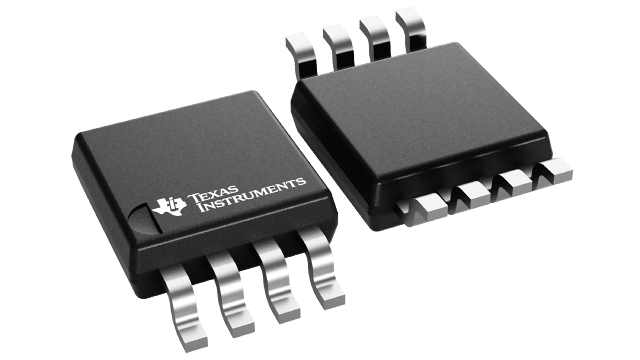
The TPS77401 is offered in 1.5-V, 1.8-V, 2.7-V, 2.8-V, 3.3-V, and 5-V fixed-voltage versions and in an adjustable version (programmable over the range of 1.5 V to 5.5 V). Output voltage tolerance is 2% over line, load, and temperature ranges. The TPS77401 device is available in an 8-pin mini small-outline package (MSOP) (DGK).
Because the PMOS device behaves as a low-value resistor, the dropout voltage is very low (typically 200 mV at an output current of 250 mA for 3.3-V option) and is directly proportional to the output current. Additionally, since the PMOS pass element is a voltage-driven device, the quiescent current is very low and independent of output loading (typically 92 µA over the full range of output current, 0 mA to 250 mA). These two key specifications yield a significant improvement in operating life for battery-powered systems.
The device is enabled when the enable (EN) pin is connected to a low-level input voltage. This LDO family also features a sleep mode; applying a TTL high signal toENshuts down the regulator, reducing the quiescent current to less than 1 µA at TJ= 25°C.
For the TPS77401, the power good (PG) terminal is an active-high output, which can be used to implement a power-on reset or a low-battery indicator. An internal comparator in the TPS77401 monitors the output voltage of the regulator to detect an undervoltage condition on the regulated output voltage. When OUT falls below 82% of its regulated voltage, PG goes to a low-impedance state. PG goes to a high-impedance state when OUT is above 82% of its regulated voltage.
The TPS77401 is a low-dropout (LDO) regulator with power good (PG) function. This device is capable of supplying 250 mA of output current with a dropout of 200 mV. Quiescent current is 92 µA at full load dropping down to 1 µA when device is disabled. This device is optimized to be stable with a wide range of output capacitors including low-ESR ceramic (10-µF) or low-capacitance (1 µF) tantalum capacitors. This device has extremely low noise output performance (55 µVrms) without using any added filter capacitors. The TPS77401 is designed to have fast transient response for larger load current changes.
The TPS77401 is offered in 1.5-V, 1.8-V, 2.7-V, 2.8-V, 3.3-V, and 5-V fixed-voltage versions and in an adjustable version (programmable over the range of 1.5 V to 5.5 V). Output voltage tolerance is 2% over line, load, and temperature ranges. The TPS77401 device is available in an 8-pin mini small-outline package (MSOP) (DGK).
Because the PMOS device behaves as a low-value resistor, the dropout voltage is very low (typically 200 mV at an output current of 250 mA for 3.3-V option) and is directly proportional to the output current. Additionally, since the PMOS pass element is a voltage-driven device, the quiescent current is very low and independent of output loading (typically 92 µA over the full range of output current, 0 mA to 250 mA). These two key specifications yield a significant improvement in operating life for battery-powered systems.
The device is enabled when the enable (EN) pin is connected to a low-level input voltage. This LDO family also features a sleep mode; applying a TTL high signal toENshuts down the regulator, reducing the quiescent current to less than 1 µA at TJ= 25°C.
For the TPS77401, the power good (PG) terminal is an active-high output, which can be used to implement a power-on reset or a low-battery indicator. An internal comparator in the TPS77401 monitors the output voltage of the regulator to detect an undervoltage condition on the regulated output voltage. When OUT falls below 82% of its regulated voltage, PG goes to a low-impedance state. PG goes to a high-impedance state when OUT is above 82% of its regulated voltage. |
| Voltage Regulators - Linear, Low Drop Out (LDO) Regulators | 1 | Unknown | |
| Power Management (PMIC) | 1 | Obsolete | |
| Voltage Regulators - Linear, Low Drop Out (LDO) Regulators | 23 | Active | |
TPS77501Automotive 500-mA, 10-V, low-dropout voltage regulator with enable & RESET with delay | Power Management (PMIC) | 3 | Active | The TPS775xx and TPS776xx devices are designed to have a fast transient response and be stable with a 10-µF low ESR capacitors. This combination provides high performance at a reasonable cost.
Because the PMOS device behaves as a low-value resistor, the dropout voltage is very low (typically 169 mV at an output current of 500 mA for the TPS77x33) and is directly proportional to the output current. Additionally, since the PMOS pass element is a voltage-driven device, the quiescent current is very low and independent of output loading (typically 85 \xECA over the full range of output current, 0 mA to 500 mA). These two key specifications yield a significant improvement in operating life for battery-powered systems. This LDO family also features a sleep mode; applying a TTL high signal to EN (enable) shuts down the regulator, reducing the quiescent current to 1 µ at TJ = 25&DEC.
TheRESEToutput of the TPS775xx initiates a reset in microcomputer and microprocessor systems in the event of an undervoltage condition. An internal comparator in the TPS775xx monitors the output voltage of the regulator to detect an undervoltage condition on the regulated output voltage.
Power good (PG) of the TPS776xx is an active high output, which can be used to implement a power-on reset or a low-battery indicator.
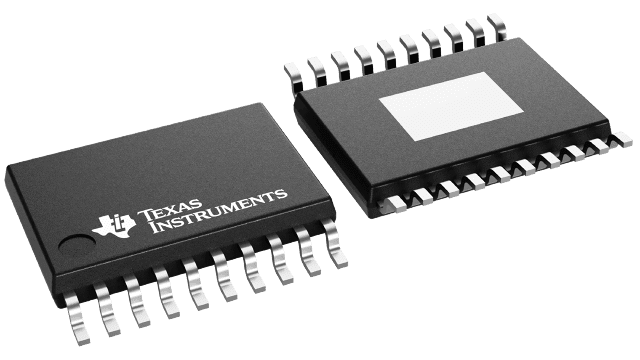
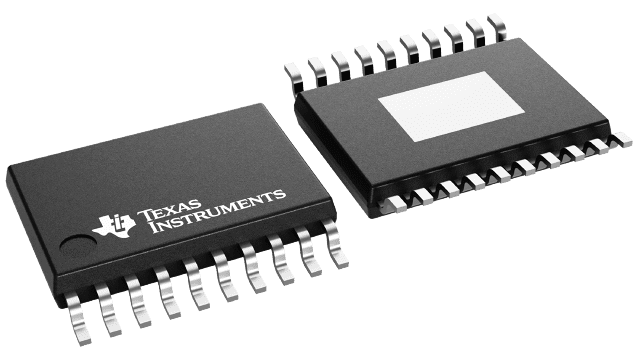
The TPS775xx and TPS776xx are offered in 1.5-V, 1.6-V (TPS77516 only), 1.8-V, 2.5-V, 2.8 V (TPS77628 only), and 3.3-V fixed-voltage versions and in an adjustable version (programmable over the range of 1.5 V to 5.5 V for TPS77501 option and 1.2 V to 5.5 V for TPS77601 option). Output voltage tolerance is specified as a maximum of 2% over line, load, and temperature ranges. The TPS775xx and TPS776xx families are available in 20 pin TSSOP package.
The TPS775xx and TPS776xx devices are designed to have a fast transient response and be stable with a 10-µF low ESR capacitors. This combination provides high performance at a reasonable cost.
Because the PMOS device behaves as a low-value resistor, the dropout voltage is very low (typically 169 mV at an output current of 500 mA for the TPS77x33) and is directly proportional to the output current. Additionally, since the PMOS pass element is a voltage-driven device, the quiescent current is very low and independent of output loading (typically 85 \xECA over the full range of output current, 0 mA to 500 mA). These two key specifications yield a significant improvement in operating life for battery-powered systems. This LDO family also features a sleep mode; applying a TTL high signal to EN (enable) shuts down the regulator, reducing the quiescent current to 1 µ at TJ = 25&DEC.
TheRESEToutput of the TPS775xx initiates a reset in microcomputer and microprocessor systems in the event of an undervoltage condition. An internal comparator in the TPS775xx monitors the output voltage of the regulator to detect an undervoltage condition on the regulated output voltage.
Power good (PG) of the TPS776xx is an active high output, which can be used to implement a power-on reset or a low-battery indicator.
The TPS775xx and TPS776xx are offered in 1.5-V, 1.6-V (TPS77516 only), 1.8-V, 2.5-V, 2.8 V (TPS77628 only), and 3.3-V fixed-voltage versions and in an adjustable version (programmable over the range of 1.5 V to 5.5 V for TPS77501 option and 1.2 V to 5.5 V for TPS77601 option). Output voltage tolerance is specified as a maximum of 2% over line, load, and temperature ranges. The TPS775xx and TPS776xx families are available in 20 pin TSSOP package. |
TPS77515Enhanced product, fast transient response 500-mA low-dropout voltage regular | Integrated Circuits (ICs) | 3 | Active | The TPS775xx devices are designed to have a fast transient response and be stable with a 10-µF low ESR capacitors. This combination provides high performance at a reasonable cost.
Because the PMOS device behaves as a low-value resistor, the dropout voltage is very low (typically 169 mV at an output current of 500 mA for the TPS77x33) and is directly proportional to the output current. Additionally, since the PMOS pass element is a voltage-driven device, the quiescent current is very low and independent of output loading (typically 85 µA over the full range of output current, 0 mA to 500 mA). These two key specifications yield a significant improvement in operating life for battery-powered systems. This LDO family also features a sleep mode; applying a TTL high signal to EN\ (enable) shuts down the regulator, reducing the quiescent current to 1 µA at TJ= 25°C.
TheRESEToutput of the TPS775xx initiates a reset in microcomputer and microprocessor systems in the event of an undervoltage condition. An internal comparator in the TPS775xx monitors the output voltage of the regulator to detect an undervoltage condition on the regulated output voltage.
The TPS775xx is offered in 1.5-V, 1.6-V, 1.8-V, 2.5-V, and 3.3-V fixed-voltage versions and in an adjustable version (programmable over the range of 1.5 V to 5.5 V for TPS77501 option. Output voltage tolerance is specified as a maximum of 2% over line, load, and temperature ranges. The TPS775xx family is available in 20 pin TSSOP package.
The TPS775xx devices are designed to have a fast transient response and be stable with a 10-µF low ESR capacitors. This combination provides high performance at a reasonable cost.
Because the PMOS device behaves as a low-value resistor, the dropout voltage is very low (typically 169 mV at an output current of 500 mA for the TPS77x33) and is directly proportional to the output current. Additionally, since the PMOS pass element is a voltage-driven device, the quiescent current is very low and independent of output loading (typically 85 µA over the full range of output current, 0 mA to 500 mA). These two key specifications yield a significant improvement in operating life for battery-powered systems. This LDO family also features a sleep mode; applying a TTL high signal to EN\ (enable) shuts down the regulator, reducing the quiescent current to 1 µA at TJ= 25°C.
TheRESEToutput of the TPS775xx initiates a reset in microcomputer and microprocessor systems in the event of an undervoltage condition. An internal comparator in the TPS775xx monitors the output voltage of the regulator to detect an undervoltage condition on the regulated output voltage.
The TPS775xx is offered in 1.5-V, 1.6-V, 1.8-V, 2.5-V, and 3.3-V fixed-voltage versions and in an adjustable version (programmable over the range of 1.5 V to 5.5 V for TPS77501 option. Output voltage tolerance is specified as a maximum of 2% over line, load, and temperature ranges. The TPS775xx family is available in 20 pin TSSOP package. |
TPS77515-EPEnhanced product, fast transient response 500-mA low-dropout voltage regular | Power Management (PMIC) | 1 | Active | The TPS775xx devices are designed to have a fast transient response and be stable with a 10-µF low ESR capacitors. This combination provides high performance at a reasonable cost.
Because the PMOS device behaves as a low-value resistor, the dropout voltage is very low (typically 169 mV at an output current of 500 mA for the TPS77x33) and is directly proportional to the output current. Additionally, since the PMOS pass element is a voltage-driven device, the quiescent current is very low and independent of output loading (typically 85 µA over the full range of output current, 0 mA to 500 mA). These two key specifications yield a significant improvement in operating life for battery-powered systems. This LDO family also features a sleep mode; applying a TTL high signal to EN\ (enable) shuts down the regulator, reducing the quiescent current to 1 µA at TJ= 25°C.
TheRESEToutput of the TPS775xx initiates a reset in microcomputer and microprocessor systems in the event of an undervoltage condition. An internal comparator in the TPS775xx monitors the output voltage of the regulator to detect an undervoltage condition on the regulated output voltage.
The TPS775xx is offered in 1.5-V, 1.6-V, 1.8-V, 2.5-V, and 3.3-V fixed-voltage versions and in an adjustable version (programmable over the range of 1.5 V to 5.5 V for TPS77501 option. Output voltage tolerance is specified as a maximum of 2% over line, load, and temperature ranges. The TPS775xx family is available in 20 pin TSSOP package.
The TPS775xx devices are designed to have a fast transient response and be stable with a 10-µF low ESR capacitors. This combination provides high performance at a reasonable cost.
Because the PMOS device behaves as a low-value resistor, the dropout voltage is very low (typically 169 mV at an output current of 500 mA for the TPS77x33) and is directly proportional to the output current. Additionally, since the PMOS pass element is a voltage-driven device, the quiescent current is very low and independent of output loading (typically 85 µA over the full range of output current, 0 mA to 500 mA). These two key specifications yield a significant improvement in operating life for battery-powered systems. This LDO family also features a sleep mode; applying a TTL high signal to EN\ (enable) shuts down the regulator, reducing the quiescent current to 1 µA at TJ= 25°C.
TheRESEToutput of the TPS775xx initiates a reset in microcomputer and microprocessor systems in the event of an undervoltage condition. An internal comparator in the TPS775xx monitors the output voltage of the regulator to detect an undervoltage condition on the regulated output voltage.
The TPS775xx is offered in 1.5-V, 1.6-V, 1.8-V, 2.5-V, and 3.3-V fixed-voltage versions and in an adjustable version (programmable over the range of 1.5 V to 5.5 V for TPS77501 option. Output voltage tolerance is specified as a maximum of 2% over line, load, and temperature ranges. The TPS775xx family is available in 20 pin TSSOP package. |
| Power Management (PMIC) | 2 | Unknown | |