| Integrated Circuits (ICs) | 6 | Active | |
TPS767D301Enhanced product, dual-output low-dropout voltage regular | Power Management (PMIC) | 4 | Active | The TPS767D301-EP dual-voltage regulator offers fast transient response, low dropout (LDO) voltages, and dual outputs in a compact package and incorporates stability with 10-µF low-ESR output capacitors.
The TPS767D301-EP dual-voltage regulator is designed primarily for DSP applications. This device can be used in any mixed-output voltage application, with each regulator supporting up to 1 A. Dual active-low reset (RESET) signals allow resetting of core logic and I/O separately.
Because the PMOS device behaves as a low-value resistor, the dropout voltage is very low and is directly proportional to the output current. Additionally, since the PMOS pass element is a voltage-driven device, the quiescent current is very low and independent of output loading (typically 85 µA over the full range of output current, 0 mA to 1 A). These two key specifications yield a significant improvement in operating life for battery-powered systems. This LDO device also features a sleep mode; applying a TTL high signal to enable (EN) shuts down the regulator, reducing the quiescent current to 1 µA at TJ= 25°C.
TheRESEToutput of the TPS767D301-EP initiates a reset in microcomputer and microprocessor systems in the event of an undervoltage condition. An internal comparator in the TPS767D301-EP monitors the output voltage of the regulator to detect an undervoltage condition on the regulated output voltage.
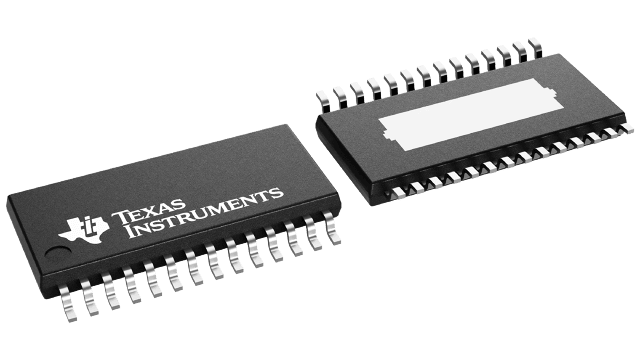
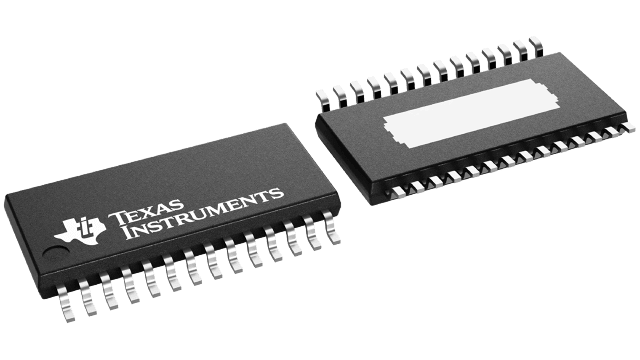
The TPS767D301-EP is offered in an adjustable version (programmable over the range of 1.5 V to 5.5 V). Output voltage tolerance is specified as a maximum of 3% over line, load, and temperature ranges. The TPS767D301-EP is available in a 28-pin PWP (TSSOP) package. The device operates over a junction temperature range of –55°C to 125°C.
The TPS767D301-EP dual-voltage regulator offers fast transient response, low dropout (LDO) voltages, and dual outputs in a compact package and incorporates stability with 10-µF low-ESR output capacitors.
The TPS767D301-EP dual-voltage regulator is designed primarily for DSP applications. This device can be used in any mixed-output voltage application, with each regulator supporting up to 1 A. Dual active-low reset (RESET) signals allow resetting of core logic and I/O separately.
Because the PMOS device behaves as a low-value resistor, the dropout voltage is very low and is directly proportional to the output current. Additionally, since the PMOS pass element is a voltage-driven device, the quiescent current is very low and independent of output loading (typically 85 µA over the full range of output current, 0 mA to 1 A). These two key specifications yield a significant improvement in operating life for battery-powered systems. This LDO device also features a sleep mode; applying a TTL high signal to enable (EN) shuts down the regulator, reducing the quiescent current to 1 µA at TJ= 25°C.
TheRESEToutput of the TPS767D301-EP initiates a reset in microcomputer and microprocessor systems in the event of an undervoltage condition. An internal comparator in the TPS767D301-EP monitors the output voltage of the regulator to detect an undervoltage condition on the regulated output voltage.
The TPS767D301-EP is offered in an adjustable version (programmable over the range of 1.5 V to 5.5 V). Output voltage tolerance is specified as a maximum of 3% over line, load, and temperature ranges. The TPS767D301-EP is available in a 28-pin PWP (TSSOP) package. The device operates over a junction temperature range of –55°C to 125°C. |
TPS767D301-EPEnhanced product, dual-output low-dropout voltage regular | Voltage Regulators - Linear, Low Drop Out (LDO) Regulators | 1 | LTB | The TPS767D301-EP dual-voltage regulator offers fast transient response, low dropout (LDO) voltages, and dual outputs in a compact package and incorporates stability with 10-µF low-ESR output capacitors.
The TPS767D301-EP dual-voltage regulator is designed primarily for DSP applications. This device can be used in any mixed-output voltage application, with each regulator supporting up to 1 A. Dual active-low reset (RESET) signals allow resetting of core logic and I/O separately.
Because the PMOS device behaves as a low-value resistor, the dropout voltage is very low and is directly proportional to the output current. Additionally, since the PMOS pass element is a voltage-driven device, the quiescent current is very low and independent of output loading (typically 85 µA over the full range of output current, 0 mA to 1 A). These two key specifications yield a significant improvement in operating life for battery-powered systems. This LDO device also features a sleep mode; applying a TTL high signal to enable (EN) shuts down the regulator, reducing the quiescent current to 1 µA at TJ= 25°C.
TheRESEToutput of the TPS767D301-EP initiates a reset in microcomputer and microprocessor systems in the event of an undervoltage condition. An internal comparator in the TPS767D301-EP monitors the output voltage of the regulator to detect an undervoltage condition on the regulated output voltage.
The TPS767D301-EP is offered in an adjustable version (programmable over the range of 1.5 V to 5.5 V). Output voltage tolerance is specified as a maximum of 3% over line, load, and temperature ranges. The TPS767D301-EP is available in a 28-pin PWP (TSSOP) package. The device operates over a junction temperature range of –55°C to 125°C.
The TPS767D301-EP dual-voltage regulator offers fast transient response, low dropout (LDO) voltages, and dual outputs in a compact package and incorporates stability with 10-µF low-ESR output capacitors.
The TPS767D301-EP dual-voltage regulator is designed primarily for DSP applications. This device can be used in any mixed-output voltage application, with each regulator supporting up to 1 A. Dual active-low reset (RESET) signals allow resetting of core logic and I/O separately.
Because the PMOS device behaves as a low-value resistor, the dropout voltage is very low and is directly proportional to the output current. Additionally, since the PMOS pass element is a voltage-driven device, the quiescent current is very low and independent of output loading (typically 85 µA over the full range of output current, 0 mA to 1 A). These two key specifications yield a significant improvement in operating life for battery-powered systems. This LDO device also features a sleep mode; applying a TTL high signal to enable (EN) shuts down the regulator, reducing the quiescent current to 1 µA at TJ= 25°C.
TheRESEToutput of the TPS767D301-EP initiates a reset in microcomputer and microprocessor systems in the event of an undervoltage condition. An internal comparator in the TPS767D301-EP monitors the output voltage of the regulator to detect an undervoltage condition on the regulated output voltage.
The TPS767D301-EP is offered in an adjustable version (programmable over the range of 1.5 V to 5.5 V). Output voltage tolerance is specified as a maximum of 3% over line, load, and temperature ranges. The TPS767D301-EP is available in a 28-pin PWP (TSSOP) package. The device operates over a junction temperature range of –55°C to 125°C. |
| Voltage Regulators - Linear, Low Drop Out (LDO) Regulators | 3 | Active | |
| Power Management (PMIC) | 2 | Obsolete | |
| Voltage Regulators - Linear, Low Drop Out (LDO) Regulators | 7 | Active | |
| Power Management (PMIC) | 2 | Active | |
TPS76801Automotive 1-A, 10-V, low-dropout voltage regulator with power good & enable | Power Management (PMIC) | 11 | Active | This device is designed to have a fast transient response and be stable with 10-µF low ESR capacitors. This combination provides high performance at a reasonable cost.
Because the PMOS device behaves as a low-value resistor, the dropout voltage is very low (typically 230 mV at an output current of 1 A for the TPS76850) and is directly proportional to the output current. Additionally, since the PMOS pass element is a voltage-driven device, the quiescent current is very low and independent of output loading (typically 85 µA over the full range of output current, 0 mA to 1 A). These two key specifications yield a significant improvement in operating life for battery-powered systems. This LDO family also features a sleep mode; applying a TTL high signal toEN(enable) shuts down the regulator, reducing the quiescent current to less than 1 µA at TJ= 25°C.
Power good (PG) is an active high output, which can be used to implement a power-on reset or a low-battery indicator.
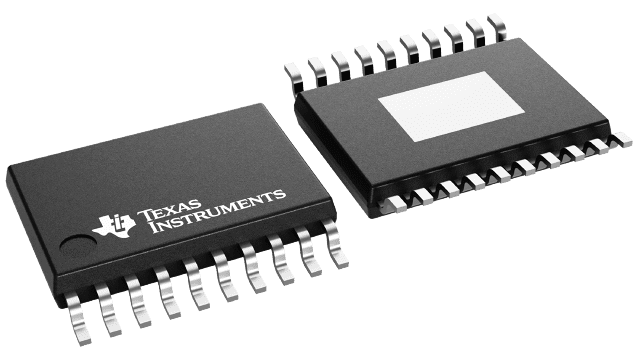
The TPS768xx is offered in 1.5-V, 1.8-V, 2.5-V, 2.7-V, 2.8-V, 3.0-V, 3.3-V, and 5.0-V fixed-voltage versions and in an adjustable version (programmable over the range of 1.2 V to 5.5 V). Output voltage tolerance is specified as a maximum of 2% over line, load, and temperature ranges. The TPS768xx family is available in a 20-pin PWP package.
This device is designed to have a fast transient response and be stable with 10-µF low ESR capacitors. This combination provides high performance at a reasonable cost.
Because the PMOS device behaves as a low-value resistor, the dropout voltage is very low (typically 230 mV at an output current of 1 A for the TPS76850) and is directly proportional to the output current. Additionally, since the PMOS pass element is a voltage-driven device, the quiescent current is very low and independent of output loading (typically 85 µA over the full range of output current, 0 mA to 1 A). These two key specifications yield a significant improvement in operating life for battery-powered systems. This LDO family also features a sleep mode; applying a TTL high signal toEN(enable) shuts down the regulator, reducing the quiescent current to less than 1 µA at TJ= 25°C.
Power good (PG) is an active high output, which can be used to implement a power-on reset or a low-battery indicator.
The TPS768xx is offered in 1.5-V, 1.8-V, 2.5-V, 2.7-V, 2.8-V, 3.0-V, 3.3-V, and 5.0-V fixed-voltage versions and in an adjustable version (programmable over the range of 1.2 V to 5.5 V). Output voltage tolerance is specified as a maximum of 2% over line, load, and temperature ranges. The TPS768xx family is available in a 20-pin PWP package. |
TPS76815Enhanced product, fast transient response 1-A low-dropout voltage regular | Power Management (PMIC) | 2 | Active | This device is designed to have a fast transient response and be stable with 10-µF low ESR capacitors. This combination provides high performance at a reasonable cost.
Because the PMOS device behaves as a low-value resistor, the dropout voltage is very low (typically 230 mV at an output current of 1 A for the TPS76850) and is directly proportional to the output current. Additionally, since the PMOS pass element is a voltage-driven device, the quiescent current is very low and independent of output loading (typically 85 µA over the full range of output current, 0 mA to 1 A). These two key specifications yield a significant improvement in operating life for battery-powered systems. This LDO family also features a sleep mode; applying a TTL high signal toEN(enable) shuts down the regulator, reducing the quiescent current to less than 1 µA at TJ= 25°C.
Power good (PG) is an active high output, which can be used to implement a power-on reset or a low-battery indicator.
The TPS768xx is offered in 1.5-V, 1.8-V, 2.5-V, 2.7-V, 2.8-V, 3.0-V, 3.3-V, and 5.0-V fixed-voltage versions and in an adjustable version (programmable over the range of 1.2 V to 5.5 V). Output voltage tolerance is specified as a maximum of 2% over line, load, and temperature ranges. The TPS768xx family is available in a 20-pin PWP package.
This device is designed to have a fast transient response and be stable with 10-µF low ESR capacitors. This combination provides high performance at a reasonable cost.
Because the PMOS device behaves as a low-value resistor, the dropout voltage is very low (typically 230 mV at an output current of 1 A for the TPS76850) and is directly proportional to the output current. Additionally, since the PMOS pass element is a voltage-driven device, the quiescent current is very low and independent of output loading (typically 85 µA over the full range of output current, 0 mA to 1 A). These two key specifications yield a significant improvement in operating life for battery-powered systems. This LDO family also features a sleep mode; applying a TTL high signal toEN(enable) shuts down the regulator, reducing the quiescent current to less than 1 µA at TJ= 25°C.
Power good (PG) is an active high output, which can be used to implement a power-on reset or a low-battery indicator.
The TPS768xx is offered in 1.5-V, 1.8-V, 2.5-V, 2.7-V, 2.8-V, 3.0-V, 3.3-V, and 5.0-V fixed-voltage versions and in an adjustable version (programmable over the range of 1.2 V to 5.5 V). Output voltage tolerance is specified as a maximum of 2% over line, load, and temperature ranges. The TPS768xx family is available in a 20-pin PWP package. |
TPS76815-EPEnhanced product, fast transient response 1-A low-dropout voltage regular | Integrated Circuits (ICs) | 1 | Active | This device is designed to have a fast transient response and be stable with 10-µF low ESR capacitors. This combination provides high performance at a reasonable cost.
Because the PMOS device behaves as a low-value resistor, the dropout voltage is very low (typically 230 mV at an output current of 1 A for the TPS76850) and is directly proportional to the output current. Additionally, since the PMOS pass element is a voltage-driven device, the quiescent current is very low and independent of output loading (typically 85 µA over the full range of output current, 0 mA to 1 A). These two key specifications yield a significant improvement in operating life for battery-powered systems. This LDO family also features a sleep mode; applying a TTL high signal toEN(enable) shuts down the regulator, reducing the quiescent current to less than 1 µA at TJ= 25°C.
Power good (PG) is an active high output, which can be used to implement a power-on reset or a low-battery indicator.
The TPS768xx is offered in 1.5-V, 1.8-V, 2.5-V, 2.7-V, 2.8-V, 3.0-V, 3.3-V, and 5.0-V fixed-voltage versions and in an adjustable version (programmable over the range of 1.2 V to 5.5 V). Output voltage tolerance is specified as a maximum of 2% over line, load, and temperature ranges. The TPS768xx family is available in a 20-pin PWP package.
This device is designed to have a fast transient response and be stable with 10-µF low ESR capacitors. This combination provides high performance at a reasonable cost.
Because the PMOS device behaves as a low-value resistor, the dropout voltage is very low (typically 230 mV at an output current of 1 A for the TPS76850) and is directly proportional to the output current. Additionally, since the PMOS pass element is a voltage-driven device, the quiescent current is very low and independent of output loading (typically 85 µA over the full range of output current, 0 mA to 1 A). These two key specifications yield a significant improvement in operating life for battery-powered systems. This LDO family also features a sleep mode; applying a TTL high signal toEN(enable) shuts down the regulator, reducing the quiescent current to less than 1 µA at TJ= 25°C.
Power good (PG) is an active high output, which can be used to implement a power-on reset or a low-battery indicator.
The TPS768xx is offered in 1.5-V, 1.8-V, 2.5-V, 2.7-V, 2.8-V, 3.0-V, 3.3-V, and 5.0-V fixed-voltage versions and in an adjustable version (programmable over the range of 1.2 V to 5.5 V). Output voltage tolerance is specified as a maximum of 2% over line, load, and temperature ranges. The TPS768xx family is available in a 20-pin PWP package. |