UC3872Resonant lamp ballast controller | Lighting, Ballast Controllers | 4 | Active | The UC3872 is a resonant lamp ballast controller optimized for driving cold cathode fluorescent, neon, and other gas discharge lamps. The resonant power stage develops a sinusoidal lamp drive voltage, and minimizes switching loss and EMI generation. Lamp intensity adjustment is accomplished with a buck regulator, which is synchronized to the external power stage\x92s resonant frequency. Suitable for automotive and battery powered applications, the UC3872 draws only 1\xB5A when disabled.
Soft start and open lamp detect circuitry have been incorporated to minimize component stresses. Open lamp detection is enabled at the completion of a soft start cycle. The chip is optimized for smooth duty cycle control to 100%.
Other features include a precision 1.2% reference, undervoltage lockout, and accurate minimum and maximum frequency control.
The UC3872 is a resonant lamp ballast controller optimized for driving cold cathode fluorescent, neon, and other gas discharge lamps. The resonant power stage develops a sinusoidal lamp drive voltage, and minimizes switching loss and EMI generation. Lamp intensity adjustment is accomplished with a buck regulator, which is synchronized to the external power stage\x92s resonant frequency. Suitable for automotive and battery powered applications, the UC3872 draws only 1\xB5A when disabled.
Soft start and open lamp detect circuitry have been incorporated to minimize component stresses. Open lamp detection is enabled at the completion of a soft start cycle. The chip is optimized for smooth duty cycle control to 100%.
Other features include a precision 1.2% reference, undervoltage lockout, and accurate minimum and maximum frequency control. |
| Power Management (PMIC) | 5 | Obsolete | |
| Power Management (PMIC) | 4 | LTB | |
UC3876Bipolar phase shifted full bridge controller with 15.25V/9.25V UVLO, 0°C to 70°C | Integrated Circuits (ICs) | 1 | LTB | The UC1875 family of integrated circuits implements control of a bridge power stage by phase-shifting the switching of one half-bridge with respect to the other, allowing constant frequency pulse-width modulation in combination with resonant, zero-voltage switching for high efficiency performance at high frequencies. This family of circuits may be configured to provide control in either voltage or current mode operation, with a separate over-current shutdown for fast fault protection.
A programmable time delay is provided to insert a dead-time at the turn-on of each output stage. This delay, providing time to allow the resonant switching action, is independently controllable for each output pair (A-B, C-D).
With the oscillator capable of operation at frequencies in excess of 2MHz, overall switching frequencies to 1MHz are practical. In addition to the standard free running mode, with the CLOCKSYNC pin, the user may configure these devices to accept an external clock synchronization signal, or may lock together up to 5 units with the operational frequency determined by the fastest device.
Protective features include an undervoltage lockout which maintains all outputs in an active-low state until the supply reaches a 10.75V threshold. 1.5V hysteresis is built in for reliable, boot-strapped chip supply. Over-current protection is provided, and will latch the outputs in the OFF state within 70nsec of a fault. The current-fault circuitry implements full-cycle restart operation.
Additional features include an error amplifier with band-width in excess of 7MHz, a 5V reference, provisions for soft-starting, and flexible ramp generation and slope compensation circuitry.
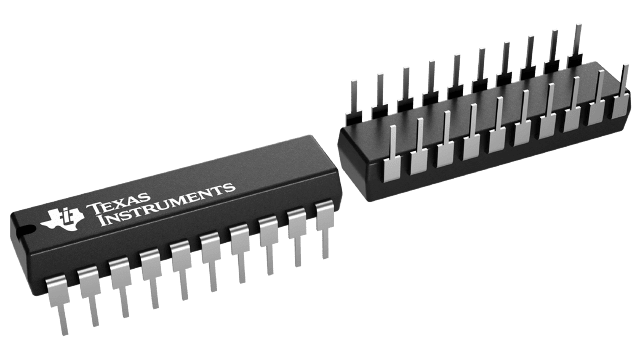
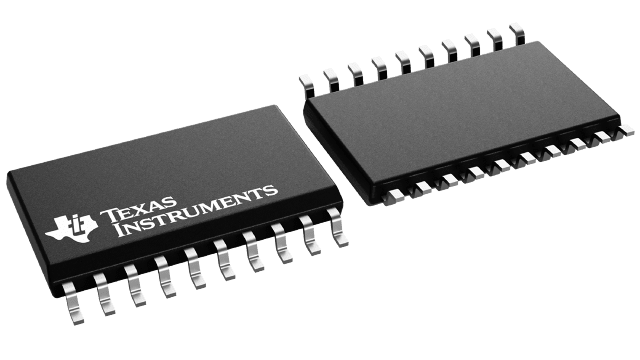
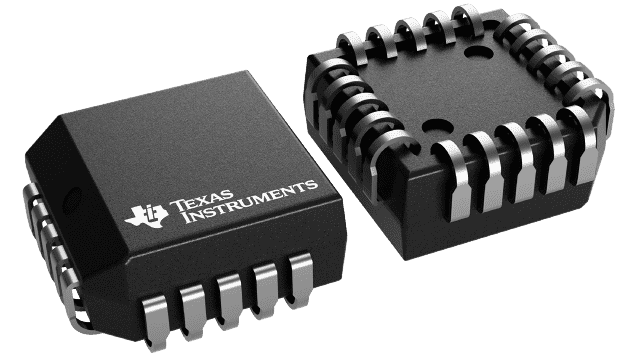
These devices are available in 20-pin DIP, 28-pin "bat-wing" SOIC and 28 lead power PLCC plastic packages for operation over both 0°C to 70°C and –25°C to +85°C temperature ranges; and in hermetically sealed cerdip, and surface mount packages for –55°C to +125°C operation.
The UC1875 family of integrated circuits implements control of a bridge power stage by phase-shifting the switching of one half-bridge with respect to the other, allowing constant frequency pulse-width modulation in combination with resonant, zero-voltage switching for high efficiency performance at high frequencies. This family of circuits may be configured to provide control in either voltage or current mode operation, with a separate over-current shutdown for fast fault protection.
A programmable time delay is provided to insert a dead-time at the turn-on of each output stage. This delay, providing time to allow the resonant switching action, is independently controllable for each output pair (A-B, C-D).
With the oscillator capable of operation at frequencies in excess of 2MHz, overall switching frequencies to 1MHz are practical. In addition to the standard free running mode, with the CLOCKSYNC pin, the user may configure these devices to accept an external clock synchronization signal, or may lock together up to 5 units with the operational frequency determined by the fastest device.
Protective features include an undervoltage lockout which maintains all outputs in an active-low state until the supply reaches a 10.75V threshold. 1.5V hysteresis is built in for reliable, boot-strapped chip supply. Over-current protection is provided, and will latch the outputs in the OFF state within 70nsec of a fault. The current-fault circuitry implements full-cycle restart operation.
Additional features include an error amplifier with band-width in excess of 7MHz, a 5V reference, provisions for soft-starting, and flexible ramp generation and slope compensation circuitry.
These devices are available in 20-pin DIP, 28-pin "bat-wing" SOIC and 28 lead power PLCC plastic packages for operation over both 0°C to 70°C and –25°C to +85°C temperature ranges; and in hermetically sealed cerdip, and surface mount packages for –55°C to +125°C operation. |
| Power Management (PMIC) | 1 | Obsolete | |
| Power Management (PMIC) | 3 | Active | |
| PMIC | 2 | Active | |
| Power Management - Specialized | 6 | Active | |
UC390220V load share controller, 0°C to 70°C | Integrated Circuits (ICs) | 3 | Active | The UC3902 load share controller is an 8-pin device that balances the current drawn from independent, paralleled power supplies. Load sharing is accomplished by adjusting each supplies’ output current to a level proportional to the voltage on a share bus.
The master power supply, which is automatically designated as the supply that regulates to the highest voltage, drives the share bus with a voltage proportional to its output current. The UC3902 trims the output voltage of the other paralleled supplies so that they each support their share of the load current. Typically, each supply is designed for the same current level although that is not necessary for use with the UC3902. By appropriately scaling the current sense resistor, supplies with different output current capability can be paralleled with each supply providing the same percentage of their output current capability for a particular load.
A differential line is used for the share bus to maximize noise immunity and accommodate different voltage drops in each power converter’s ground return line. Trimming of each converter’s output voltage is accomplished by injecting a small current into the output voltage sense line, which requires a small resistance (typically 20 Ω to 100 Ω) to be inserted.
The UC3902 load share controller is an 8-pin device that balances the current drawn from independent, paralleled power supplies. Load sharing is accomplished by adjusting each supplies’ output current to a level proportional to the voltage on a share bus.
The master power supply, which is automatically designated as the supply that regulates to the highest voltage, drives the share bus with a voltage proportional to its output current. The UC3902 trims the output voltage of the other paralleled supplies so that they each support their share of the load current. Typically, each supply is designed for the same current level although that is not necessary for use with the UC3902. By appropriately scaling the current sense resistor, supplies with different output current capability can be paralleled with each supply providing the same percentage of their output current capability for a particular load.
A differential line is used for the share bus to maximize noise immunity and accommodate different voltage drops in each power converter’s ground return line. Trimming of each converter’s output voltage is accomplished by injecting a small current into the output voltage sense line, which requires a small resistance (typically 20 Ω to 100 Ω) to be inserted. |
UC39030°C to 70°C,quad-supply & Line monitor | Supervisors | 4 | Obsolete | The UC1903 family of quad supply and line monitor integrated circuits will respond to under- and over-voltage conditions on up to four continuously monitored voltage levels. An internal op-amp inverter allows at least one of these levels to be negative. A separate line/switcher sense input is available to provide early warning of line or other power source failures.
The fault window adjustment circuit on these devices provides easy programming of under- and over-voltage thresholds. The thresholds, centered around a precision 2.5-V reference, have an input hysteresis that scales with the window width for precise, glitch-free operation. A reference output pin allows the sense input fault windows to be scaled independently using simple resistive dividers.
The three open collector outputs on these devices sink in excess of 30 mA of load current when active. The under- and over-voltage outputs respond after separate, user defined, delays to respective fault conditions. The third output is active during any fault condition including under- and over-voltage, line/switcher faults, and input supply under-voltage. The off state of this output indicates a "power OK" situation.
An additional, uncommitted, general purpose op-amp is also included. This op-amp, capable of sourcing 20 mA of output current, can be used for a number of auxiliary functions including the sensing and amplification of a feedback error signal when the 2.5-V output is used as a system reference.
These parts operate over an 8-V to 40-V input supply range and require a typical stand-by current of only 7 mA.
The UC1903 family of quad supply and line monitor integrated circuits will respond to under- and over-voltage conditions on up to four continuously monitored voltage levels. An internal op-amp inverter allows at least one of these levels to be negative. A separate line/switcher sense input is available to provide early warning of line or other power source failures.
The fault window adjustment circuit on these devices provides easy programming of under- and over-voltage thresholds. The thresholds, centered around a precision 2.5-V reference, have an input hysteresis that scales with the window width for precise, glitch-free operation. A reference output pin allows the sense input fault windows to be scaled independently using simple resistive dividers.
The three open collector outputs on these devices sink in excess of 30 mA of load current when active. The under- and over-voltage outputs respond after separate, user defined, delays to respective fault conditions. The third output is active during any fault condition including under- and over-voltage, line/switcher faults, and input supply under-voltage. The off state of this output indicates a "power OK" situation.
An additional, uncommitted, general purpose op-amp is also included. This op-amp, capable of sourcing 20 mA of output current, can be used for a number of auxiliary functions including the sensing and amplification of a feedback error signal when the 2.5-V output is used as a system reference.
These parts operate over an 8-V to 40-V input supply range and require a typical stand-by current of only 7 mA. |