S
STMicroelectronics
| Series | Category | # Parts | Status | Description |
|---|---|---|---|---|
| Part | Spec A | Spec B | Spec C | Spec D | Description |
|---|---|---|---|---|---|



| Series | Category | # Parts | Status | Description |
|---|---|---|---|---|
| Part | Spec A | Spec B | Spec C | Spec D | Description |
|---|---|---|---|---|---|
| Part | Category | Description |
|---|---|---|
 STMicroelectronics STEVAL-ISA068V1Obsolete | Development Boards Kits Programmers | EVAL BOARD FOR ST1S32 |
 STMicroelectronics 74VCXHQ163245TTRObsolete | Integrated Circuits (ICs) | IC TRANSLATION TXRX 2.7V 48TSSOP |
 STMicroelectronics | Development Boards Kits Programmers | VNQ9050LAJ EVALUATION BOARD |
 STMicroelectronics LSM303DLHCTRObsolete | Sensors Transducers | IMU ACCEL/MAG 3-AXIS I2C 14LGA |
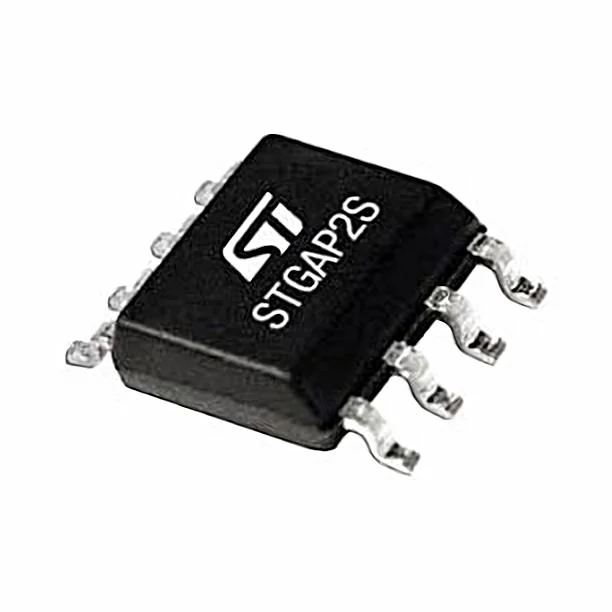 STMicroelectronics M93C56-WMN6TObsolete | Integrated Circuits (ICs) | EEPROM SERIAL-MICROWIRE 2K-BIT 256 X 8/128 X 16 3.3V/5V 8-PIN SO N T/R |
STMicroelectronics | Integrated Circuits (ICs) | STM32U |
 STMicroelectronics TS831-3IZObsolete | Integrated Circuits (ICs) | IC SUPERVISOR 1 CHANNEL TO92-3 |
 STMicroelectronics STMPE1208SQTRObsolete | Integrated Circuits (ICs) | IC I/O EXPANDER I2C 12B 40QFN |
 STMicroelectronics STM32L1-MAGNETObsolete | Development Boards Kits Programmers | IAR EXPERIMENT STM32 L1 EVAL BRD |
 STMicroelectronics VNB35N07Obsolete | Integrated Circuits (ICs) | IC PWR DRIVER N-CHAN 1:1 D2PAK |
| Series | Category | # Parts | Status | Description |
|---|---|---|---|---|
AEK-MOT-3P99081Specific CAN-controlled brushless motor evaluation board based on SPC560P and L9908 | Development Boards, Kits, Programmers | 1 | Active | The AEK-MOT-3P99081 evaluation board is based on the SPC560P Pictus 32-bit MCU and the L9908 gate driver allowing the control of 6 N-channel FETs for brushless motors in automotive applications.
The AEK-MOT-3P99081 supports independent encoder inputs and Hall sensors to detect and control motor speed.
The L9908 independently controls each N-channel FET through a dedicated PWM input pin. L9908 configuration, protection and diagnostic functions are controlled via SPI by the SPC560P microcontroller.
Firmware is preloaded and can be externally driven via CAN bus. The STSW-AUTODEVKIT contains a CAN bus driving example based on SPC58 Chorus 4M, named "SPC58ECxx_RLA_MainEcuForBLDCControl-L9908 - Test Application". In the project folder, a readme file explains how to use the demo which works only with a BLDC motor with Hall sensors.
To change the motor characteristics or the control firmware on the SPC560P50L5, you need to install the SPC5-MCTK-LIB motor control plug-in in SPC5-STUDIO.
Once the motor control plug-in is installed, select the "SPC560Pxx_RLA_AEK_MOT_3P99081_3Phase_Motor_Control_L9908_via_CAN " demo and make your customizations in the Motor Control Component section.
Update the Motor Settings section according to the motor used and, if the motor sensing is not based on Hall sensors, update also the type of sensor used in the Speed Sensor Selection menu of the Drive Management section. |
AEK-MOT-3P9908MSpecific CAN-controlled brushless motor evaluation board based on SPC560P and L9908 with BLDC motor included | Evaluation Boards | 1 | Active | The AEK-MOT-3P9908M evaluation board is based on the SPC560P Pictus 32-bit MCU and the L9908 gate driver allowing the control of 6 N-channel FETs for brushless motors in automotive applications.
The AEK-MOT-3P9908M supports independent encoder inputs and Hall sensors to detect and control motor speed.
The L9908 independently controls each N-channel FET through a dedicated PWM input pin. L9908 configuration, protection and diagnostic functions are controlled via SPI by the SPC560P microcontroller.
Firmware is preloaded and can be externally driven via CAN bus. The STSW-AUTODEVKIT contains a CAN bus driving example based on SPC58 Chorus 4M, named "SPC58ECxx_RLA_MainEcuForBLDCControl-L9908 - Test Application". In the project folder, a readme file explains how to use the demo which works only with a BLDC motor with Hall sensors.
To change the motor characteristics or the control firmware on the SPC560P50L5, you need to install the SPC5-MCTK-LIB motor control plug-in in SPC5Studio.
Once the motor control plug-in is installed, select the "SPC560Pxx_RLA_AEK_MOT_3P99081_3Phase_Motor_Control_L9908_via_CAN" demo and make your customizations in the Motor Control Component section.
Update the Motor Settings section according to the motor used and, if the motor sensing is not based on Hall sensors, update also the type of sensor used in the Speed Sensor Selection menu of the Drive Management section. |
AEK-MOT-MR200G1Vehicle mirror controller board based on L99DZ200G multioutput driver and SPC582B60E1 Chorus 1M microcontroller | Evaluation Boards | 1 | Active | The AEK-MOT-MR200G1 is designed as a mini zone controller for the side mirror application.
The AEK-MOT-MR200G1 hosts an SPC582B60E1 chorus 1M microcontroller and an L99DZ200G automotive-grade multioutput driver.
Thanks to the integrated L99DZ200G, the board allows controlling different functions related to a vehicle side mirror: folding, unfolding, X-Y mirror inclination, electrochromic dimming, and heating.
The L99DZ200G integrates the current monitor (high-side only) for X-Y, folding/unfolding, and LED outputs, in order to detect the mechanical end stop switches.
Through dedicated connectors, the AEK-MOT-MR200G1 supports external encoders, which detect the effective position of the side mirror and send the acquired data to the SPC582B60E1. This information can be used to implement safety features or, for example, to create and store a specific profile for each vehicle user.
The board also allows driving two strings of LEDs (to be used, for example, for turn signals or puddle lights).
In the AutoDevKit software package, we have included two AEK-MOT-MR200G1 evaluation demos that you can use for your own project development.
The first demo is preloaded on the AEK-MOT-MR200G1 and, once running, it performs an activation sequence of the board outputs (motors, heater, electro-chrome voltage (ECV)). It shows how to drive up to three 12 V DC motors (one up to 7.5 A and the other two up to 500 mA), turn on/off two LED strings (at 12 V, one up to 1.5 A and the other up to 700 mA), activate the heater and the electro-chrome functions.
In addition, the downloaded firmware enables board control through CAN messages received from a host ECU, after flashing the second demo on an AEK-MCU-C4MLIT1. At the end of the first demo sequence, the board waits for 8 seconds to receive CAN messages. In case of no message reception, it restarts the automatic sequence from the beginning. To transmit control CAN messages, connect the AEK-MCU-C4MLIT1 to the AEK-MOT-MR200G1 and press user button 1 (SW_1) or user button 3 (SW_3).
To program the onboard SPC582B60E1 microcontroller, connect the SPC5-UDESTK to the JTAG connector, and connect the board to a PC via USB and run the PLS UDE to flash the code. |
AEK-MOT-TK200G1Power liftgate controller board based on L99DZ200G multioutput driver and SPC582B60E1 Chorus 1M microcontroller | Development Boards, Kits, Programmers | 1 | Active | The AEK-MOT-TK200G1 is designed as a zone controller for the power liftgate application. The two main devices hosted are the L99DZ200G automotive-grade multioutput driver and the SPC582B60E1 Chorus 1M automotive-grade microcontroller.
The L99DZ200G device enables the board with two H-bridge gate drivers that control an external MOS tuned for the power liftgate application actuations. Up to three DC motors can be driven: two simultaneously (SPINDLE) and one by itself (CINCH).
The AEK-MOT-TK200G1 supports the current sensing for both H-bridges to impact on the Hall sensor positioning and to detect obstacles encountered while opening/closing the liftgate.
The AEK-MOT-TK200G1 firmware is preloaded. You can control the board through an external domain controller via a CAN bus.
The AutoDevKit software library (STSW-AUTODEVKIT) includes a CAN bus-driving example based on the SPC58EC Chorus 4M. |
AEK-MOT-WINH92Window lift DC board driver based on the L99H92 gate driver and an external MCU | Evaluation and Demonstration Boards and Kits | 1 | Active | The AEK-MOT-WINH92 evaluation board key objective is to drive a DC motor for car window lifters, ensuring high safety levels.
This board perfectly fits in the automotive market trend, which goes towards the evolution of the window lift application, offering a new anti-pinch mechanism without leveraging on motor encoders but exploiting the board three different types of current sensing (in-line, low-side and high-side).
The board can be configured to work with a single H-bridge for a bidirectional DC motor or two independent half-bridges for two unidirectional DC motors.
Thanks to its compact size, the board can be connected to any microcontroller easily, exploiting separate and dedicated connectors for SPI communication , current sensing, and basic motor commands interface with fault detection capabilities. Another key feature is the adjustable gain for anti-pinch and for fulfilling any of the car window operative conditions (the current range levels could change when opening the window with adverse weather conditions, for example in case of ice).
The board also offers three diagnostic features to detect potential short-to-ground, short-to-battery, and open load conditions when the device is in the off state.
In case of failures, the DIAG pin alerts the external MCU, ensuring a prompt intervention in case of open-load, short-to-ground, and short-to-battery, thermal warning and overtemperature shutdown, under/overvoltage and overcurrent protection. For system debugging during the development phase, a fail-safe button was added to the board layout.
To allow the board robust protection and prevent damage due to the inversion of the power supply polarity, reverse polarity protection has been implemented.
Four external MOSFETs allow current flowing up to 50 A, in line with the board power dissipation capabilities.
The board design is based on the L99H92 H-bridge gate driver for automotive applications, which features flexible current sensing to offer different tools for advanced anti-pinching algorithm development. For systems requiring a higher safety level, you can enable a watchdog with configurable time window.
The AutoDevkit ecosystem offers a wide range of demos and drivers for the SPC58 microcontroller to facilitate your application design by rapidly jumping to the board usage:
1) The SPC582Bxx_RLA - AEK_MOT_WINH92 Test application for discovery, to be downloaded on the SPC582B hosted on the AEK-MCU-C1MLIT1 MCU board;
2) The SPC584Bxx_RLA - AEK_MOT_WINH92 Test application for discovery, to be downloaded on the SPC584B hosted on the SPC584B-DIS discovery board;
3) The SPC58ECxx_RLA - AEK_MOT_WINH92 Full Bridge Test application, to be downloaded on the SPC58EC hosted on the AEK-MCU-C4MLIT1 MCU board;
4) The SPC58ECxx_RLA - AEK_MOT_WINH92 Dual Half Bridge Test application, to be downloaded on the SPC58EC hosted on the AEK-MCU-C4MLIT1 MCU board;
5) The SPC58xNxx_RLA - AEK_MOT_WINH92 Test application for discovery, available in AutoDevKit Studio for reference;
6) The SPC58ECxx_RLA - AEK_MOT_WINH92 Window Lift Test application, to be downloaded on the SPC58EC hosted on the AEK-MCU-C4MLIT1 MCU board.
The first five demos show how to configure the AEK-MOT-WINH92 to drive one bidirectional (full bridge configuration ) or two unidirectional (half-bridge configuration, for example for oil and water pumps) DC motors, varying a PWM duty cycle signal.
The last demo shows how to configure the AEK-MOT-WINH92 for window lift applications. |
AEK-POW-100W4V1Digitally controlled DC-DC converter up to 5 A based on L5964 and dedicated to automotive and transportation applications | DC/DC & AC/DC (Off-Line) SMPS Evaluation Boards | 1 | Active | The AEK-POW-100W4V1 is a very compact DC-DC converter for automotive and transportation applications which allows regulating the output voltage in the following modes: fixed outputs and Programmable Power Supply (PPS) in 20 mV steps.
The board allows setting the output current from a min. of 0.05 A to a max. of 5 A for the entire output voltage range in 50 mA steps.
It features several protection systems, such as short-circuit, overcurrent and thermal protection.
The AutoDevKit software library includes dedicated components able to configure and drive the board via ST microcontrollers. |
AEK-POW-BMS63ENBattery management system module based on L9963E | Evaluation and Demonstration Boards and Kits | 1 | Active | The AEK-POW-BMS63EN is a battery management system (BMS) evaluation board that can handle from 1 to 31 Li-ion battery nodes. Each battery node manages from 4 to 14 battery cells, for a voltage range between 48 V and 800 V.
The board is based on the L9963E, which is designed for operation in both hybrid (HE) and full electric (BE) vehicles using lithium battery packs, but its use can be extended to other Transportation and Industrial applications.
The main activity of the L9963E is monitoring cells and battery node status through stack voltage measurement, cell voltage measurement, temperature measurement, and coulomb counting. Measurement and diagnostic tasks can be executed either on demand or periodically, with a programmable cycle interval. Measurement data are available for an external microcontroller to perform charge balancing and to compute the state of charge (SOC) and the state of health (SOH).
The main functions of a standard BMS are monitoring and protecting the battery pack.
The monitoring function is related to the measurement of the battery current, voltage, and temperature. The protection function brings the system to a safety state in case of under or overvoltage and overheating.
The AEK-POW-BMS63EN provides an elaborate monitoring network to sense the voltage, current, and temperature of each cell. This sensing allows elaborating the SOC of each battery cell and, consequently, the state of charge of all battery packs. The SOC allows assessing the remaining battery capacity, which equates to the remaining driving range.
For maintenance reasons, it is important to monitor the SOC estimation over time. According to our algorithm for the SOC calculation, the more the SOC differs from its nominal value (that is, its value when the batteries are new), the more a cell of the battery pack risks over-discharge. Thus, the SOC evolution over time allows asserting the state of health (SOH) of a cell or a battery pack to spot early indications that a cell is at risk of over-discharge or overcharging.
The SOC of a battery cell is required to maintain its safe operation and duration during charge, discharge, and storage. However, SOC cannot be measured directly and is estimated from other measurements and known parameters (such as characterization curves or look-up tables). This information on the battery cells is necessary to determine how the voltage varies according to the current, the temperature, etc., on the basis of the battery chemical composition and production lot used.
The AEK-POW-BMS63EN can work in two different daisy chain topologies: centralized and dual access ring.
In a centralized daisy chain configuration, a series of BMS is connected to an MCU board through a single transceiver connected to the AEK-POW-BMS63EN isolated ISOLport. The BMS are connected to each other through the isolated ISOH port.
The MCU communicates with the AEK-COM-ISOSPI1 hosted L9963T transceiver through the SPI protocol. The transceiver converts these signals into ISO SPI signals to communicate with the BMS.
The AEK-COM-ISOSPI1 allows converting SPI signals in isolated SPI signals, thereby reducing the number of necessary wires from 4 to 2 and implementing differential communication for higher noise immunity.
A dual access ring configuration is also possible by adding another transceiver that makes the communication bidirectional. The secondary ring is used as a backup in case the primary ring fails. Data moves in opposite directions around the rings, and each ring remains independent of the other unless the primary ring fails. The two rings are connected to continue the flow of data traffic.
In AutoDevKit ecosystem software package, we created two example demos (one for centralized and one for dual access ring configuration) to elaborate SOC and SOH, using Li-ion batteries. Battery packs may have different SOCs, and balancing is necessary to bring them all to the same charge level. After detecting the lowest charge in the battery pack, all the other battery nodes are discharged to reach its level. The demos explain how to activate the internal MOSFETs of the L9963E, which short-circuit the cell on an external dissipation resistor to discharge it. Passive cell balancing can be performed either via the L9963E internal MOSFETs or via external MOSFETs/resistors. The controller can either manually control the balancing drivers or start a balancing task with a fixed duration. In the second case called silent mode, the balancing may be programmed to continue even when the IC enters a low power mode, to avoid unnecessary current absorption from the battery pack. The balancing function is necessary to lengthen the battery capacity and its duration.
Different MCUs can be used. In our demos we used the AEK-MCU-C4MLIT1, while other ASIL-B and ASIL-D microcontrollers of the SPC58 Chorus family are supported. |
AEK-POW-BMSHOLDBattery holder for cylindrical batteries and battery management system node for automotive applications | Development Boards, Kits, Programmers | 1 | Active | The battery management system (BMS) is a fast-growing application pervading several fields of the electronic industry including automotive and industrial markets.
To support fast evaluation and meet stringent time-to-market for BMS solutions, the AutoDevKit ecosystem has been extended to include a specific cylindrical battery holder.
The purpose of this extension is to quickly create a battery pack to evaluate ST BMS solution based on the AEK-POW-BMS63EN analog front end node hosting the L9963E and the AEK-COM-ISOSPI1 ISOSPI transceiver hosting the L9963T.
You can test the battery pack also using our latest BMS evaluation boards: AEK-POW-BMSWTX and AEK-POW-BMSNOTX.
The AEK-POW-BMSHOLD battery holder contains a maximum of 14 cells, all connected in series, and a dedicated slot and connector for our range of BMS evaluation boards.
To build a complete battery pack in both centralized or dual-ring topologies, you can stack up to three / four AEK-POW-BSMHOLD kits (the limit is the stackable weight). A separate bag inside the kit package contains six M3x12 mm pan steel screws, four M3x25 mm plus six M3x30 mm hexagonal steel spacers. These elements can be used to mount another AEK-POW-BMSHOLD layer.
The AEK-POW-BMSHOLD has a long satin ribbon tied to a buttonhole on the plexiglass used to support easy battery removal.
The internal wiring of the featured 4-pole mammoth connector allows adding a sensing resistor between pin 2 and pin 3. Pin 1 and pin 4 are, respectively, the positive and the negative terminals of the mockup. For demo purposes, a 100 mΩ, 10 W, ±1% precision resistor is included in the kit package.
The AEK-POW-BMS63EN node boards have to be connected to the crimped central connector provided in the AEK-POW-BMSHOLD kit.
The connector is organized as follows: pin 1 is the cell VBAT, pin 2 to 16 are dedicated to the battery connections, pins 17 and 18 are ext Ground, pins 19 and 20 are ISenseP and ISenseM, pins 21 to 30 are dedicated to NTCs for temperature sensing.
The even numbers with yellow cables are NTC-, whereas the odd numbers with blue cables are NTC+. Five 10 kΩ, ±1% tolerance NTC thermistors are provided in the kit.
The AEK-POW-BMSHOLD kit supports INR 18650 battery type. The estimation of SoC and SoH included in AutoDevKit Studio is computed through an extended kalman filter with characterization data coming from INR 18650 MJ1 batteries by LG.
For further information on our range of BMS evaluation boards, refer to the board related page on
and to
. |
AEK-POW-BMSNOTXNon-isolated Battery Management node dedicated to auxiliar battery packs able to directly connect the MCU via standard SPI protocol | Evaluation Boards | 1 | Active | The AEK-POW-BMSNOTX is a battery management system (BMS) evaluation board that manages from 4 to 14 battery cells.
The board is based on the L9963E Li-ion battery monitoring and protection chip for high-reliability automotive applications.
The main activity of the L9963E is monitoring the cells and battery node status through stack voltage measurement, cell voltage measurement, temperature measurement, and coulomb counting. Measurement and diagnostic tasks can be executed either on demand or periodically, with a programmable cycle interval. Measurement data are available for an external microcontroller to perform charge balancing and to compute the state of charge (SOC) and the state of health (SOH).
The embedded L9963E can act as a transceiver, directly communicating with an MCU via SPI.
The board is particularly fit for auxiliary battery systems to supply power for devices (such as audio system, window cleaning system, seat heating, light system, light signalization, climate control system) connected to your vehicle (even when the engine is not running), ensuring the main starting battery is reserved for engine cranking and vehicle electrical requirements.
The AEK-POW-BMSNOTX provides an elaborate monitoring network to sense the voltage of each cell. It is possible to sense the current of the entire battery pack. This sensing allows elaborating the SOC of each battery cell and, consequently, the state of charge of all battery packs. The SOC allows assessing the remaining battery capacity, which equates to the remaining driving range. For maintenance reasons, it is important to monitor the SOC estimation over time. According to our algorithm for the SOC calculation, the more the SOC differs from its nominal value (that is, its value when the batteries are new), the more a cell of the battery pack risks overdischarging. Thus, the SOC evolution over time allows asserting the state of health (SOH) of a cell or a battery pack to spot early indications that a cell is at risk of overdischarge or overcharging.
The SOC of a battery cell is required to maintain its safe operation and duration during charge, discharge, and storage. However, SOC cannot be measured directly and is estimated from other measurements and known parameters (such as characterization curves or look-up tables). This information on the battery cells is necessary to determine how the voltage varies according to the current, the temperature, etc., on the basis of the battery chemical composition and production lot used. Thanks to the partnership with About:Energy, it is possible to access various battery data models.
In the AutoDevKit ecosystem software package, we created an example to elaborate SOC and SOH, using Li-ion batteries. Battery packs may have different SOCs, and balancing is necessary to bring them all to the same charge level. After detecting the lowest charge in the battery pack, all the other battery nodes are discharged to reach its level. The demo explains how to activate the internal MOSFETs of the L9963E, which short-circuit the cell on an external dissipation resistor (resistors are already mounted on the board) to discharge it. Passive cell balancing can be performed either via the L9963E internal MOSFETs or via external MOSFETs. The controller can either manually control the balancing drivers or start a balancing task with a fixed duration. In the second case, the balancing may be programmed to continue. Even when the IC enters a low power mode called silent balancing, to avoid unnecessary current absorption from the battery pack. The balancing function is necessary to lengthen the battery capacity and its duration. Different MCUs can be used. In our demos, we used the AEK-MCU-C4MLIT1, and other ASIL-B and ASIL-D microcontrollers of the SPC58 chorus family. |
| DC/DC & AC/DC (Off-Line) SMPS Evaluation Boards | 1 | Active | ||