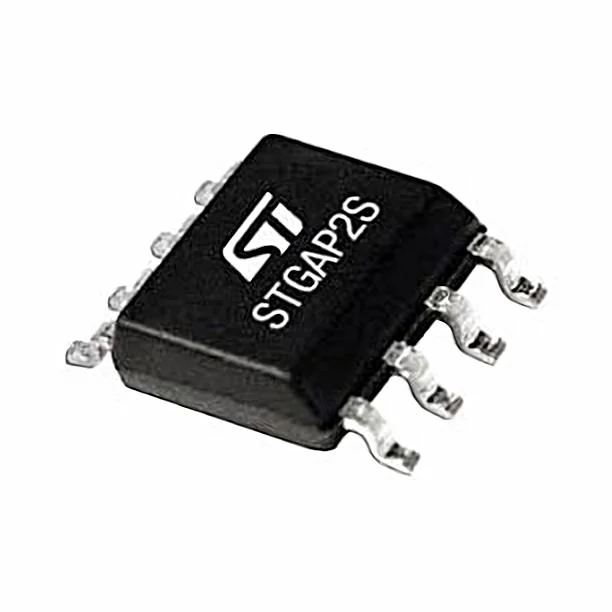
STEVAL-POE003V15V/20A, active clamp forward converter, Power Over Ethernet (PoE) - IEEE 802.3bt compliant reference design | Evaluation Boards | 1 | Active | This reference design represents a PoE Class 8 converter designed for high efficiency conversion over a wide load range. It is based on the PM8805 PoE-PD interface compliant with the IEEE802.3bt standard, and a DC-DC forward active clamp converter driven by the PM8804 PWM controller.
The PM8805 system on package device embeds two active bridges and an IEEE802.3bt compliant Powered Device (PD) interface. It can be used in all medium-to-high power 2P and 4P high efficiency PoE and PoE+ applications such as point of sales and retail logistics devices.
The PM8804 PWM controller represents an integrated solution for a smart and efficient 48 V converter, including a programmable oscillator for the switching frequency, adjustable slope compensation, dual complementary low-side drivers with programmable dead time, programmable soft start, soft turn off and a programmable current sense blanking time. |
STEVAL-POE005V112V/8A, active clamp forward converter, Power Over Ethernet (PoE) IEEE 802.3bt compliant reference design | Evaluation and Demonstration Boards and Kits | 1 | Active | This reference design represents a 12 V, 8 A converter solution ideal for various applications including building safety and security or surveillance, with a PoE-PD interface and a DC-DC active clamp forward converter.
The PoE-PD interface is based on the PM8805 system in package device with two active bridges and an IEEE 802.3bt compliant Powered Device (PD) interface. It can be used in all medium-to-high power 2P and 4P high efficiency PoE and PoE+ applications.
The DC-DC active clamp forward converter is designed around the PM8804 PWM controller, which is an integrated solution for smart and efficient 48 V converters, featuring a programmable oscillator for the switching frequency, adjustable slope compensation, dual complementary low-side drivers with programmable dead time, programmable soft start, soft turn off and a programmable current sense blanking time. |
STEVAL-PROTEUS1Industrial sensor evaluation kit for condition monitoring based on the 2.4 GHz STM32WB5MMG module | Evaluation Boards | 1 | Active | The STEVAL-PROTEUS1 is an evaluation tool designed for temperature and vibration monitoring. It is based on a 2.4 GHz multiprotocol wireless SoC to address machine or facility condition monitoring for industrial applications.
The evaluation board simplifies the prototyping, evaluation and development of wireless industrial sensor nodes to enable the predictive maintenance. It comes with a LiPo battery and a plastic case. All components are mounted exclusively on the top side of the PCB to ensure an easy mounting on other equipment. The included comprehensive software and the firmware libraries with time and frequency domain vibration analysis ease your software customization and can reliably improve your time-to-market.
The main board includes the STM32WB5MMG ultra-low-power and small form factor wireless radio module. This module is FCC and IC certified (FCC ID: YCP-STM32WB5M001 and IC: 8976A-STM32WB5M01). It is based on the STM32WB55VGY wireless SoC, compliant with the Bluetooth® Low Energy SIG specification v5.2, ZigBee 3.0, and IEEE 802.15.4-2011.
The powerful Arm®-based Cortex-M4 with FPU and large memory allows running the embedded algorithm at node level.
The multiprotocol support ensures the development of applications with different types of connectivity, using a unique hardware. Moreover, the main board integrates the STSAFE-A110 secure element that provides authentication and secure data management services to a local or remote host.
The IIS3DWB high bandwidth (up to 6 kHz) accelerometer, the IIS2DLPC ultra-low power, and the ISM330DHCX inertial module (accelerometer and gyroscope) with MLC make the hardware ideal for a customized vibration monitoring development.
The STTS22H high accuracy temperature sensor has been integrated in the board, far from the heat noise sources (the power management and the microcontroller) to provide a more precise temperature measurement. Its exposed pad sensor feature allows the temperature sensor to be in contact with the surface target equipment.
An on-board external memory is connected via QSPI to the STM32WB5MMG module for data buffering and event storage.
The STEVAL-PROTEUS is LiPo rechargeable battery-powered. It can also be powered via USB (5 V at 500 mA) or via a primary battery (which is not included in the kit).
The power management features the ST1PS02 400 mA step down converter for low-power applications and the STBC02 for battery charging.
An application example firmware with dedicated algorithms is preloaded in the STM32WB5MMG flash memory for easy demonstration of wireless vibration and temperature node monitoring. |
STEVAL-PTOOL2V1Compact reference design for battery-operated brushless power tools based on STSPIN32F0252 | Evaluation Boards | 1 | Active | The STEVAL-PTOOL2V1 BLDC driver reference design is tailored for battery-operated power tools using 8S to 15S battery packs. It is based on the STSPIN32F0252 motor controller with embedded 3-phase, 250 V gate driver and low-power STM32 MCU. The power stage is based on the STL130N8F7 power MOSFETs or any similarly rated device in a PowerFlat 5x6 package.
The board implements single shunt sensing topology with both field-oriented control
(FOC) and sensored or sensorless 6-step control supported for driving permanent magnet synchronous motors (PMSM) and brushless DC (BLDC) motors.
The companion 6-step STSW-PTOOL2V1 firmware is ready to use with position feedback from phase Hall-effect sensors.
This reference design can deliver up to 19 A continuous current with very good thermal dissipation performance thanks to the mounted heatsink. It is compatible with a wide input voltage range from 20 to 72 VDC, and includes an auxiliary power stage with the VIPER013 in buck configuration to generate +12V and +3.3V supply voltage required by the application.
The STEVAL-PTOOL2V1 features a potentiometer for speed variation and protection features include thermal shutdown, undervoltage lockout, and overcurrent protection.
This compact 80 mm x 58 mm design is ideal for power tools and any similar battery-operated applications in terms of architecture, rating and performance. |
STEVAL-PTOOL4ACompact, customizable and configurable reference design for battery operated BLDC/PMSM power tools based on STM32G473 and STDRIVE 101 | Evaluation and Demonstration Boards and Kits | 1 | Active | The STEVAL-PTOOL4A is a compact system designed to control a brushless DC (BLDC) or a permanent-magnet synchronous motor (PMSM) in application such as a handheld battery-powered tool.
It works on the standard set of inputs such as throttle to control the motor torque/speed and to deliver power up to 250 W.
The board can be connected to a suitable 21 V / 250 W power tool motor. More peak power can be delivered with heatsink or with arrangement for circulating air to achieve better power dissipation.
This reference design is ideal for high-performance motor control to realize power tools such as drill machines, grinders, disc cutters, circular saws, leaf blowers, handheld mowers etc.
The small form factor and ample computing power make it suitable even for applications such as drones, wheelchairs, home appliances, e-bicycles, and robotic platforms.
The STEVAL-PTOOL4A includes a high performance STM32G473CE MCU featuring integrated peripherals especially optimized for motor control applications controlling a 3 phase full bridge converter consisting of six high current MOSFETS through triple half bridge gate driver STDRIVE101.
The MCU features multiple ADC peripherals thereby enabling simultaneous sampling of motor phase currents and back emf voltages.
The board has the capability to leverage on MCSDK library to provide options of both six-step or high performance FOC algorithm with configurability. |
| Development Boards, Kits, Programmers | 1 | Active | The STEVAL-SCR002V1 introduces a simple and innovative AC-DC front-end circuit that allows the designer to perform an inrush current limitation in any converter with input rectifier bridge topologies.
Based on a discrete control circuit made of one Z0110MN SMD triac and two STTH110A diodes, it offers a compact and non-insulated high voltage driver for the mains SCR. The drive circuit synchronizes the SCR gate signals with the AC line polarity and powers directly the SCR gate from the mains. This operation does not generate reverse losses in the SCRs.
This STEVAL-SCR002V1 solid-state solution provides a high reliability, a long service lifetime, an electromagnetic interference reduction, and a faster response compared to electromechanical solutions.
This solution is also compatible with an inrush current limitation performed either in the NTC/PTC bypass mode or in the MCU phase-control mode.
The enable control pin of the SCR driver is referenced to GND_DC. Therefore, an uninsulated power supply or a direct control by the MCU can be used.
With five wires to connect, the STEVAL-SCR002V1 is designed for an easy implementation on existing AC-DC converters for plug-and-play tests.
It is suitable for applications with an RMS current up to 4.3 A (at an ambient temperature of 60°C). |
STEVAL-SILKT01Evaluation kit for industrial PLC solutions targeting SIL3 applications | Evaluation Boards | 1 | Active | The STEVAL-SILKT01 is an evaluation kit designed to implement a PLC solution with hardware architecture designed to meet the requirements coming from functional safety standards IEC61508, EN 62061, EN ISO 13849-1, EN ISO 13849-2, to enable the use as a reference design for factory automation use cases having a hardware platform with safety integrity level SIL3.
The evaluation kit STEVAL-SILKT01 contains one mother board STEVAL-SILKTA01 (main board) and two daughter boards STEVAL-SILKTB01 (actuation board).
The board architecture offers a dual-core data processing based on STM32H743ZG for the STEVAL-SILKTA01 and on STM32G431RB for the STEVAL-SILKTB01.
On the main board (STEVAL-SILKTA01) are available three connectivity interfaces, two of them with differential communication working on RS485 and CAN physical layer, the other one with Ethernet technology to support the Ethernet/IP.
The hardware is coming with the firmware package STSW-SILKT01 based on the STM32Cube architecture and consisting of: application layer, drivers layer with BSP/CMSIS and HAL library, middleware layer. |
| Embedded MCU, DSP Evaluation Boards | 1 | Active | The STEVAL-SILPC01 is a PLC solution with a 1oo2 architecture, featuring the CLT03-2Q3dual channel digital input and the IPS160HF single channel digital output.
The hardware is designed to meet the SIL level. It has been officially assessed by TÜV Italia (TÜV SUD Group) in compliance with SIL 2 / PL d requirements: random failure rates, systematic capability (for the hardware), architectural constraints in accordance with IEC 61508, EN 62061, EN ISO 13849-1, and EN ISO 13849-2 standards.
The system is built around the STM32H723VG microcontroller. It is able to manage connectivity, load actuation and system diagnostic check for power management, digital input/output ICs, and temperature monitoring at the same time.
The solution integrates DC-DC converters in a buck configuration powered by the L7987L and L7983. The switching converters have been designed to provide 3.5 V on the user side and 6 V on the isolated side. With dedicated post regulation circuits, these voltage levels are stepped down to 3.3 V for the MCU, connectivity, and temperature sensor (available on the isolated side) and 5 V for the signal delta isolator (also available on the isolated side).
The CLT03-2Q3 input can detect a fixed DC voltage via a 0-36 V or 4-20 mA sensor, whereas the two IPS160HF allow load driving with a 2.5 A current capability for each output.
Several diagnostic and protection circuits are available on the board to ensure the system proper functionality and meet the IEC61508-2 requirements.
The hardware is supported by STSW-SILPLC firmware package, based on the STM32Cube architecture. It consists of an application layer, a drivers layer with BSP/CMSIS and HAL library, and a middleware layer.
The firmware solution embeds the EtherCAT protocol stack V5.0.8 and X-CUBE-STL-H7 v1.2.0 certified by TÜV Rheinland. The stack library provides dedicated APIs to handle the data packet exchange between the master and the slave. Data consist of a set of commands to drive the load through the on-board IPS on board and manage system diagnostic using dedicated signals. These data types are exchanged using the process data channel of the protocol stack.
A daisy-chain configuration can be implemented to connect more than one sensor node to the same network. In this case, the master generates a common frame with the data to be addressed to all EtherCAT slaves (ECS). Each node identifies its own frame by verifying only the MAC address reported in the frame.
Dedicated documentation related to TÜV assessment on the hardware, such as TN1395 "Analysis of hardware systematic failures and techniques for on-chip redundancy", FMEDA, Assessment on hardware Report TI 722260614 Rev. 0, and the industrialization package, as well as the user manual, are available on demand, by signing a specific NDA. |
STEVAL-SMACH15V115 W 5 V output USB adapter evaluation board with STCH03 CC-mode primary sensing switching controller | Development Boards, Kits, Programmers | 1 | Active | The STEVAL-SMACH15V1 USB adapter evaluation board is based on the STCH03 offline PWM controller for low standby adapters. The controller can provide constant output current (CC) regulation using primary sensing feedback.
The device combines a high-performance low-voltage PWM controller chip and a 650 V HV start-up cell in the same package. It also features extremely low quiescent current and burst-mode management. These features help minimize residual input consumption to less than 15 mW under no-load conditions.
The device offers output overvoltage protection (OVP) and over-temperature protection (OTP). It also offers Hiccup-mode protection for when the transformer saturates or the secondary diode fails short, and an output UVP protection that limits the average output current when an output short circuit occurs.
The adapter satisfies energy saving recommendations (EuCoC rev. 5 – Tier 2 and EPS of DOE USA) and EN55022-Class-B Conducted noise emissions.
The small form factor and the output USB connector renders the design suitable for small USB chargers and adapters for mobile phones, tablets and other handheld equipment. |
| RF, RFID, Wireless Evaluation Boards | 1 | Active | The STEVAL-SMARTAG2 is an NFC-enabled sensor node with inertial MEMS sensors and environmental sensors, an STM32 microcontroller, and a dynamic NFC tag for communication with NFC readers, such as tablets and smartphones.
Optionally, the STEVAL-SMARTAG2 can be equipped with: a battery charger fed by a full-wave rectifier for NFC energy harvesting (on top of the energy harvester already embedded in the dynamic NFC tag) and a real-time clock (RTC) with an embedded crystal oscillator to enable an accurate timekeeping and time stamping.
The board has a small and thin form factor, comparable to the size of a credit card, which makes it particularly fit for deployment in the field and data collection. |