F
Freescale Semiconductor - NXP
| Series | Category | # Parts | Status | Description |
|---|---|---|---|---|
| Part | Spec A | Spec B | Spec C | Spec D | Description |
|---|---|---|---|---|---|
| Series | Category | # Parts | Status | Description |
|---|---|---|---|---|
| Part | Spec A | Spec B | Spec C | Spec D | Description |
|---|---|---|---|---|---|
| Part | Category | Description |
|---|---|---|
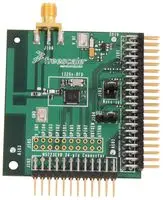
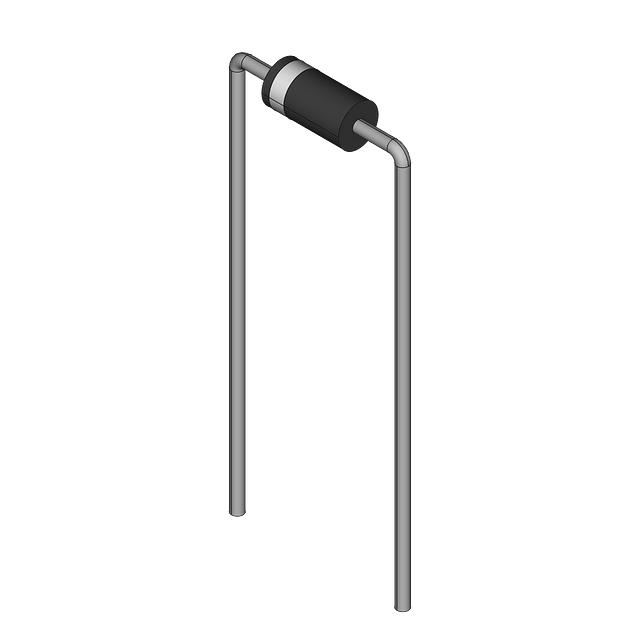
Freescale Semiconductor - NXP | Circuit Protection | TVS DIODE 14VWM 23.2VC SOD123W |
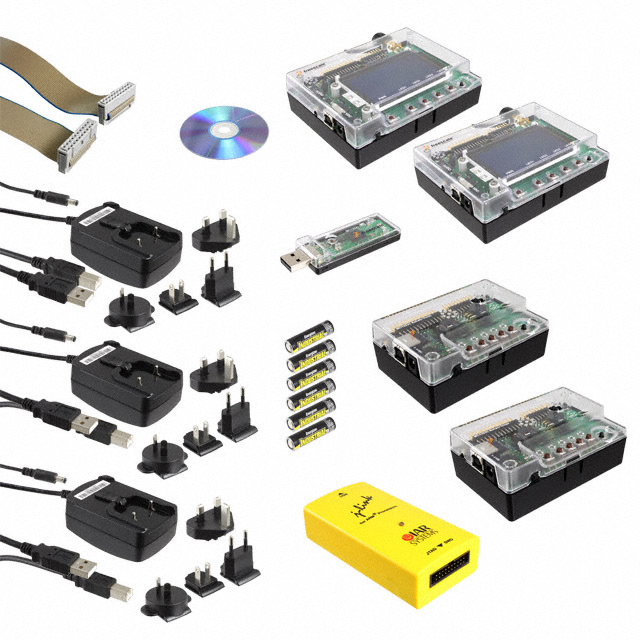
Freescale Semiconductor - NXP OM7605/BGA2711Obsolete | Development Boards Kits Programmers | EVAL BOARD FOR BGA2711 |
Freescale Semiconductor - NXP | Integrated Circuits (ICs) | NXP 32-BIT MCU, POWER ARCH CORES, 8MB FLASH, 264MHZ, -40/+125DEGC, AUTOMOTIVE GRADE, 516 MAP/ REEL ROHS COMPLIANT: YES |
Freescale Semiconductor - NXP | Integrated Circuits (ICs) | 74LVC1G98GV-Q100/SOT457/SC-74 |
Freescale Semiconductor - NXP | Discrete Semiconductor Products | DIODE ZENER 36V 250MW DFN1006-2 |
Freescale Semiconductor - NXP | Discrete Semiconductor Products | TRANS PREBIAS PNP 50V TO236AB |
Freescale Semiconductor - NXP | Integrated Circuits (ICs) | I.MX 8DUALX 17X17 |
Freescale Semiconductor - NXP | Discrete Semiconductor Products | DIODE ZENER ARRAY 11V SOT663 |
Freescale Semiconductor - NXP 74LV139DB,118Obsolete | Integrated Circuits (ICs) | IC DECODER/DEMUX 1X2:4 16SSOP |
Freescale Semiconductor - NXP | RF and Wireless | AIRFAST POWER AMPLIFIER MODULE, |
| Series | Category | # Parts | Status | Description |
|---|---|---|---|---|
| Flip Flops | 1 | Obsolete | ||
| Integrated Circuits (ICs) | 1 | Obsolete | ||
| Integrated Circuits (ICs) | 2 | Active | ||
| Counters, Dividers | 1 | Active | ||
74HC191DPresettable synchronous 4-bit binary up/down counter | Counters, Dividers | 2 | Active | The 74HC191 is an asynchronously presettable 4-bit binary up/down counter. It contains four master/slave flip-flops with internal gating and steering logic to provide asynchronous preset and synchronous count-up and count-down operation. Asynchronous parallel load capability permits the counter to be preset to any desired value. Information present on the parallel data inputs (D0 to D3) is loaded into the counter and appears on the outputs when the parallel load (PL) input is LOW. This operation overrides the counting function. Counting is inhibited by a HIGH level on the count enable (CE) input. WhenCEis LOW internal state changes are initiated synchronously by the LOW-to-HIGH transition of the clock input. The up/down (U/D) input signal determines the direction of counting as indicated in the function table. TheCEinput may go LOW when the clock is in either state, however, the LOW-to-HIGHCEtransition must occur only when the clock is HIGH. Also, theU/D input should be changed only when eitherCEor CP is HIGH. Overflow/underflow indications are provided by two types of outputs, the terminal count (TC) and ripple clock (RC). The TC output is normally LOW and goes HIGH when a circuit reaches zero in the count-down mode or reaches '15' in the count-up-mode. The TC output will remain HIGH until a state change occurs, either by counting or presetting, or untilU/D is changed. Do not use the TC output as a clock signal because it is subject to decoding spikes. The TC signal is used internally to enable theRCoutput. When TC is HIGH andCEis LOW, theRCoutput follows the clock pulse (CP). This feature simplifies the design of multistage counters as shown in Figure 1 and Figure 2. In Figure 1, eachRCoutput is used as the clock input to the next higher stage. It is only necessary to inhibit the first stage to prevent counting in all stages, since a HIGH onCEinhibits theRCoutput pulse. The timing skew between state changes in the first and last stages is represented by the cumulative delay of the clock as it ripples through the preceding stages. This can be a disadvantage of this configuration in some applications. Figure 2 shows a method of causing state changes to occur simultaneously in all stages. TheRCoutputs propagate the carry/borrow signals in ripple fashion and all clock inputs are driven in parallel. In this configuration the duration of the clock LOW state must be long enough to allow the negative-going edge of the carry/borrow signal to ripple through to the last stage before the clock goes HIGH. Since theRCoutput of any package goes HIGH shortly after its CP input goes HIGH there is no such restriction on the HIGH-state duration of the clock. In Figure 3, the configuration shown avoids ripple delays and their associated restrictions. Combining the TC signals from all the preceding stages forms theCEinput for a given stage. An enable must be included in each carry gate in order to inhibit counting. The TC output of a given stage it not affected by its ownCEsignal therefore the simple inhibit scheme of Figure 1 and Figure 2 does not apply. Inputs include clamp diodes. This enables the use of current limiting resistors to interface inputs to voltages in excess of VCC. |
| Counters, Dividers | 2 | Active | ||
74HC193PW-Q100Presettable synchronous 4-bit binary up/down counter | Counters, Dividers | 5 | Active | The 74HC193-Q100; 74HCT193-Q100 is a 4-bit synchronous binary up/down counter. Separate up/down clocks, CPU and CPD respectively, simplify operation. The outputs change state synchronously with the LOW-to-HIGH transition of either clock input. If the CPU clock is pulsed while CPD is held HIGH, the device counts up. If the CPD clock is pulsed while CPU is held HIGH, the device counts down. Only one clock input can be held HIGH at any time to guarantee predictable behavior. The device can be cleared at any time by the asynchronous master reset input (MR). It may also be loaded in parallel by activating the asynchronous parallel load input (PL). The terminal count up (TCU) and terminal count down (TCD) outputs are normally HIGH. When the circuit has reached the maximum count state of 15, the next HIGH-to-LOW transition of CPU causesTCUto go LOW.TCUremains LOW until CPU goes HIGH again, duplicating the count up clock. Likewise, theTCDoutput goes LOW when the circuit is in the zero state and the CPD goes LOW. The terminal count outputs duplicate the clock waveforms and can be used as the clock input signals to the next higher-order circuit in a multistage counter. Multistage counters are not fully synchronous, since there is a slight delay time difference added for each stage that is added. The counter may be preset by the asynchronous parallel load capability of the circuit. Information on the parallel data inputs (D0 to D3), is loaded into the counter. This information appears on the outputs (Q0 to Q3) regardless of the conditions of the clock inputs when the parallel load (PL) input is LOW. A HIGH level on the master reset (MR) input disables the parallel load gates. It overrides both clock inputs and sets all outputs (Q0 to Q3) LOW. If one of the clock inputs is LOW during and after a reset or load operation, the next LOW-to-HIGH transition of that clock is interpreted as a legitimate signal and it is counted. Inputs include clamp diodes that enable the use of current limiting resistors to interface inputs to voltages in excess of VCC. |
| Logic | 2 | Active | ||
| Integrated Circuits (ICs) | 3 | Obsolete | ||
74HC1G00GW-Q1002-input NAND gate | Gates and Inverters | 1 | Active | The 74HC1G00-Q100; 74HCT1G00-Q100 is a single 2-input NAND gate. Inputs include clamp diodes. This enables the use of current limiting resistors to interface inputs to voltages in excess of VCC. |