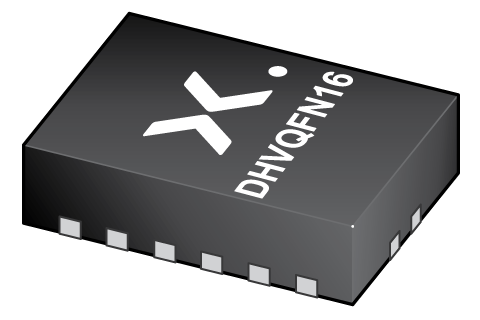
| Gates and Inverters | 6 | Active | The 74HC4002 is a dual 4-input NOR gate. Inputs also include clamp diodes that enable the use of current limiting resistors to interface inputs to voltages in excess of VCC. |
| Integrated Circuits (ICs) | 1 | Active | The 74HC4002-Q100 is a dual 4-input NOR gate. Inputs also include clamp diodes, this enables the use of current limiting resistors to interface inputs to voltages in excess of VCC. |
74HC401038-bit synchronous binary down counter | Integrated Circuits (ICs) | 4 | Active | The 74HC40103 is an 8-bit synchronous down counter. It has control inputs for enabling or disabling the clock (CP), for clearing the counter to its maximum count and for presetting the counter either synchronously or asynchronously. In normal operation, the counter is decremented by one count on each positive-going transition of the clock (CP). Counting is inhibited when the terminal enable input (TE) is HIGH. The terminal count output (TC) goes LOW when the count reaches zero ifTEis LOW, and remains LOW for one full clock period. When the synchronous preset enable input (PE) is LOW, data at the jam input (P0 to P7) is clocked into the counter on the next positive-going clock transition regardless of the state ofTE. When the asynchronous preset enable input (PL) is LOW, data at the jam input (P0 to P7) is asynchronously forced into the counter regardless of the state ofPE,TE, or CP. The jam inputs (P0 to P7) represent a single 8-bit binary word. When the master reset input (MR) is LOW, the counter is asynchronously cleared to its maximum count (decimal 255) regardless of the state of any other input. If all control inputs exceptTEare HIGH at the time of zero count, the counters will jump to the maximum count, giving a counting sequence of 256 clock pulses long. Device may be cascaded using theTEinput and the TC output, in either a synchronous or ripple mode. Inputs include clamp diodes. This enables the use of current limiting resistors to interface inputs to voltages in excess of VCC. |
| Logic | 5 | Obsolete | |
| Analog Switches, Multiplexers, Demultiplexers | 2 | Obsolete | |
74HC4017Johnson decade counter with 10 decoded outputs | Logic | 5 | Active | The 74HC4017-Q100; 74HCT4017-Q100 is a 5-stage Johnson decade counter with 10 decoded outputs (Q0 to Q9), an output from the most significant flip-flop (Q5-9), two clock inputs (CP0 andCP1) and an overriding asynchronous master reset input (MR). The counter is advanced by either a LOW-to-HIGH transition at CP0 whileCP1 is LOW or a HIGH-to-LOW transition atCP1 while CP0 is HIGH. When cascading counters, theQ5-9 output, which is LOW while the counter is in states 5, 6, 7, 8 and 9, can be used to drive the CP0 input of the next counter. A HIGH on MR resets the counter to zero (Q0 =Q5-9 = HIGH; Q1 to Q9 = LOW) independent of the clock inputs (CP0 andCP1). Automatic code correction of the counter is provided by an internal circuit: following any illegal code the counter returns to a proper counting mode within 11 clock pulses. Inputs include clamp diodes. This enables the use of current limiting resistors to interface inputs to voltages in excess of VCC. |
74HC4017DJohnson decade counter with 10 decoded outputs | Counters, Dividers | 1 | Active | The 74HC4017; 74HCT4017 is a 5-stage Johnson decade counter with 10 decoded outputs (Q0 to Q9), an output from the most significant flip-flop (Q5-9), two clock inputs (CP0 andCP1) and an overriding asynchronous master reset input (MR). The counter is advanced by either a LOW-to-HIGH transition at CP0 whileCP1 is LOW or a HIGH-to-LOW transition atCP1 while CP0 is HIGH. When cascading counters, theQ5-9 output, which is LOW while the counter is in states 5, 6, 7, 8 and 9, can be used to drive the CP0 input of the next counter. A HIGH on MR resets the counter to zero (Q0 =Q5-9 = HIGH; Q1 to Q9 = LOW) independent of the clock inputs (CP0 andCP1). Automatic code correction of the counter is provided by an internal circuit: following any illegal code the counter returns to a proper counting mode within 11 clock pulses. Inputs include clamp diodes. This enables the use of current limiting resistors to interface inputs to voltages in excess of VCC. |
| Integrated Circuits (ICs) | 1 | Active | The 74HC4017-Q100; 74HCT4017-Q100 is a 5-stage Johnson decade counter with 10 decoded outputs (Q0 to Q9), an output from the most significant flip-flop (Q5-9), two clock inputs (CP0 andCP1) and an overriding asynchronous master reset input (MR). The counter is advanced by either a LOW-to-HIGH transition at CP0 whileCP1 is LOW or a HIGH-to-LOW transition atCP1 while CP0 is HIGH. When cascading counters, theQ5-9 output, which is LOW while the counter is in states 5, 6, 7, 8 and 9, can be used to drive the CP0 input of the next counter. A HIGH on MR resets the counter to zero (Q0 =Q5-9 = HIGH; Q1 to Q9 = LOW) independent of the clock inputs (CP0 andCP1). Automatic code correction of the counter is provided by an internal circuit: following any illegal code the counter returns to a proper counting mode within 11 clock pulses. Inputs include clamp diodes. This enables the use of current limiting resistors to interface inputs to voltages in excess of VCC. |
| Counters, Dividers | 5 | Active | The 74HC4020; 74HCT4020 is a 14-stage binary ripple counter with a clock input (CP), an overriding asynchronous master reset input (MR) and 12 buffered parallel outputs (Q0, and Q3 to Q13). The counter advances on the HIGH-to-LOW transition ofCP. A HIGH on MR clears all counter stages and forces all outputs LOW, independent of the state ofCP. Each counter stage is a static toggle flip-flop. Inputs include clamp diodes. This enables the use of current limiting resistors to interface inputs to voltages in excess of VCC. |
| Logic | 1 | Active | The 74HC4020; 74HCT4020 is a 14-stage binary ripple counter with a clock input (CP), an overriding asynchronous master reset input (MR) and 12 buffered parallel outputs (Q0, and Q3 to Q13). The counter advances on the HIGH-to-LOW transition ofCP. A HIGH on MR clears all counter stages and forces all outputs LOW, independent of the state ofCP. Each counter stage is a static toggle flip-flop. Inputs include clamp diodes. This enables the use of current limiting resistors to interface inputs to voltages in excess of VCC. |