M
Microchip Technology
| Series | Category | # Parts | Status | Description |
|---|---|---|---|---|
| Part | Spec A | Spec B | Spec C | Spec D | Description |
|---|---|---|---|---|---|



| Series | Category | # Parts | Status | Description |
|---|---|---|---|---|
| Part | Spec A | Spec B | Spec C | Spec D | Description |
|---|---|---|---|---|---|
| Part | Category | Description |
|---|---|---|
Microchip Technology | Crystals Oscillators Resonators | CMOS OUTPUT CLOCK OSCILLATOR, 24MHZ NOM |
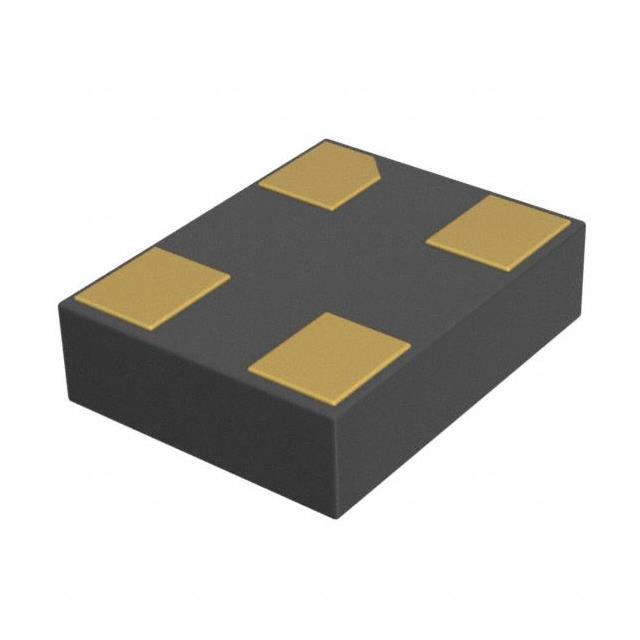 Microchip Technology | Crystals Oscillators Resonators | MEMS OSC |
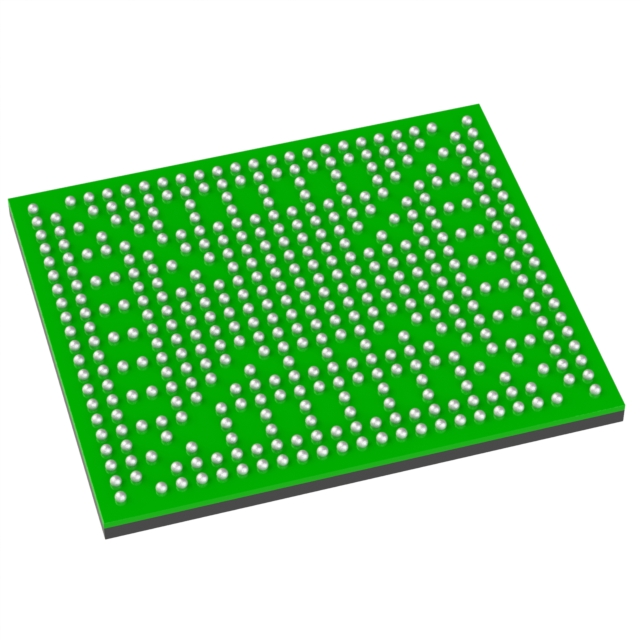 Microchip Technology | Integrated Circuits (ICs) | 1GHZ ARM CORTEX A7 W/ MIPI CAMERA AND 2GB INTEGRATED DDR3L |
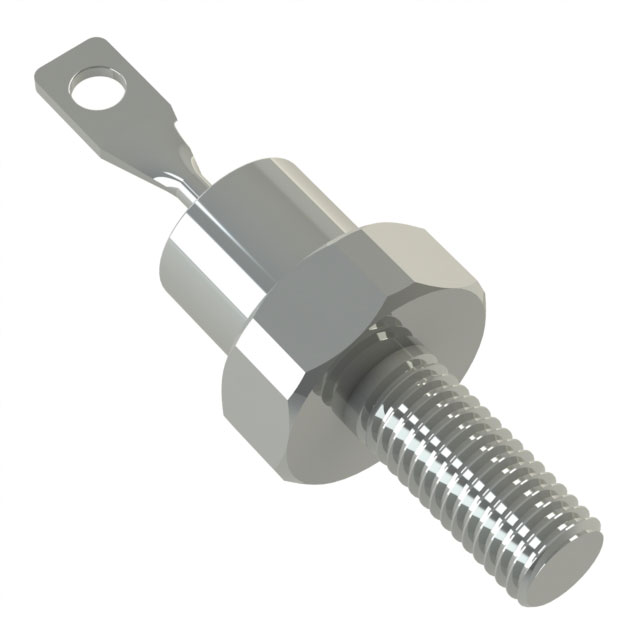 Microchip Technology | Discrete Semiconductor Products | DIODE GEN PURP 100V 12A DO203AA |
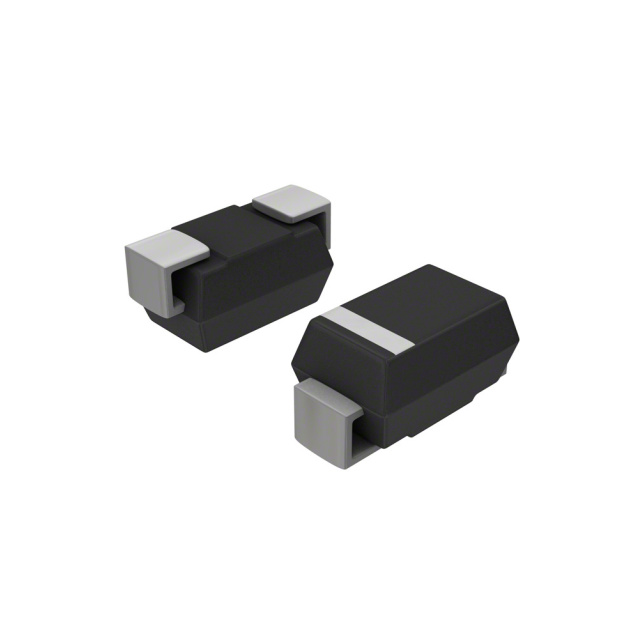 Microchip Technology MSMBJ5372BLTB | Circuit Protection | VOLTAGE REGULATOR |
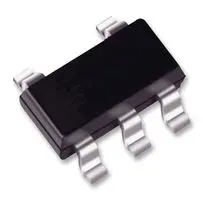 Microchip Technology | Integrated Circuits (ICs) | OPERATIONAL AMPLIFIER, 1 CHANNELS, 10 MHZ, 15 V/ΜS, 2.2V TO 5.5V, SOT-23, 5 PINS |
Microchip Technology LE9531CMQCTObsolete | Integrated Circuits (ICs) | IC TELECOM INTERFACE 28QFN |
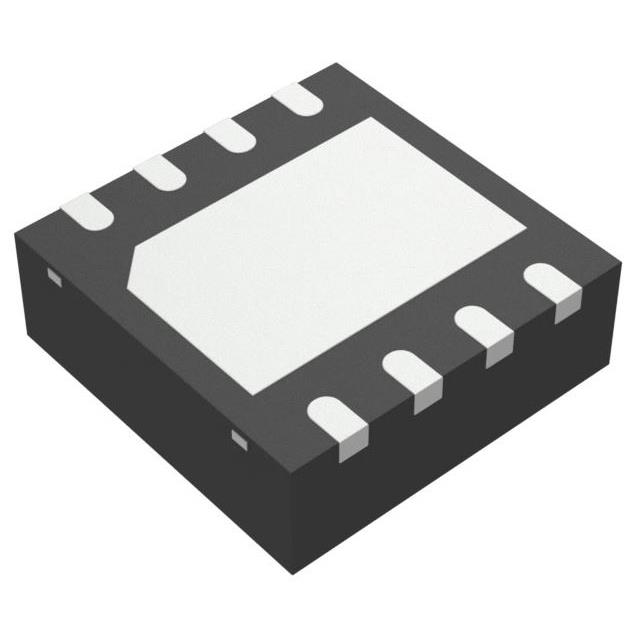 Microchip Technology MCP2021-330E/MD-AE2VAOObsolete | Integrated Circuits (ICs) | IC TRANSCEIVER |
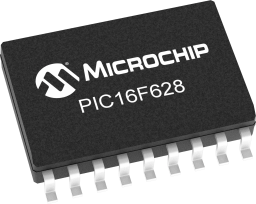 Microchip Technology | Integrated Circuits (ICs) | MCU 8-BIT PIC16 PIC RISC 3.5KB FLASH 3.3V/5V 18-PIN SOIC W TUBE |
Microchip Technology VCC6-LCF-212M500000Obsolete | Crystals Oscillators Resonators | DIFFERENTIAL XO +3.3 VDC +/-5% L |
| Series | Category | # Parts | Status | Description |
|---|---|---|---|---|
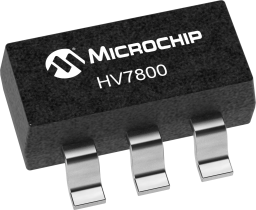
HV7800High Side Current Monitor | Integrated Circuits (ICs) | 1 | Active | The HV7800 high side current monitor IC transfers a high-side current measurement voltage to its ground referenced output with an accurate voltage gain of one. The measurement voltage typically originates at a current sense resistor which is located in a "high side" circuit, such as the positive supply line.
This monitor IC features a very wide input voltage range, high accuracy of transfer ratio, small size, low component count, low power consumption, ease of use, and low cost. Offline, battery and portable applications can be served equally well due to the wide input voltage range and the low quiescent current of the HV7800. |
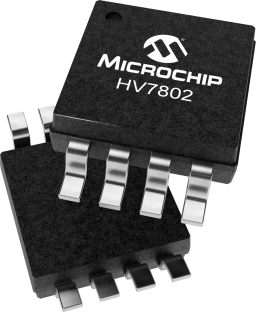
HV7802High Side Current Monitor | Current Regulation/Management | 1 | Active | The HV7802 high side current monitor IC contains a transconductance amplifier which translates a high side current measurement voltage into an output current with resistor programmable transconductance gain. An optional second resistor transforms this output current into an output voltage with an overall voltage gain set by the ratio of the two resistors.
The measurement voltage typically originates at a current sense resistor, which is located in a "high side" circuit, for example a circuit not directly associated with ground.
This monitor IC features a very wide input voltage range, configurable gain, small size, low component count, low power consumption, ease of use, and low cost. Offline, battery, and portable applications can be served equally well due to the wide input voltage range and the low quiescent current. |
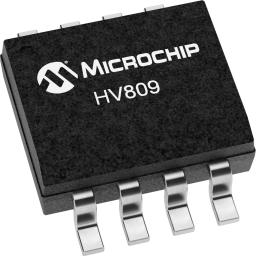
HV809Off-Line High Voltage EL Lamp Driver | Lighting, Ballast Controllers | 1 | Active | HV809 is an off-line, high voltage, EL lamp driver integrated circuit designed for driving EL lamps of up to 350nF at 400Hz. The input supply voltage can be a rectified nominal 120V AC source or any other DC source up to 200V. The HV809 will supply the EL lamp with an AC square wave with a peak-to-peak voltage of two times the input DC voltage.
The HV809 has two internal oscillators, a low voltage output linear regulator, and a high voltage output H-bridge. The high voltage output H-bridge frequency is set by an external resistor connected between the REL-Osc and GND pins. The EL lamp is connected between pins VA and VB. For the HV809 in the 8-pin package, an external RC network can be connected between the oscillator’s Osc1 and Osc2 pins to pulse the EL lamp on and off.
For detailed circuit and application information please refer to Application Note AN-H36. |
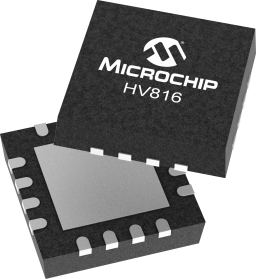
HV816High Voltage, Dimmable EL Lamp Driver | Lighting, Ballast Controllers | 1 | Active | HV816 is a high voltage Electroluminescent (EL) lamp driver designed for driving a lamp capacitance of up to 150nF, or an area of approximately 42 square inches. It is comprised of a boost converter followed by an H-bridge. The boost converter produces a regulated output voltage, which is set at a nominal value of 180V using an internal reference voltage. The H-bridge is used to produce a differential output drive and the EL lamp will therefore see ±180V (360V peak-to-peak). The HV816 has two internal oscillators, one for controlling the boost converter switching frequency and the other for controlling the H-bridge switching frequency. Having separate control of each switching frequency allows flexibility in the circuit design.
The operating input supply voltage is 2.7 to 5.5V, but the Enable (EN) and Select (SEL) interface to the device will accept logic high levels down to 1.5V. The EN input is for turning the device ON and OFF. The SEL input is for external logic control of the H-bridge switching frequency, if required.
The HV816 boost converter stage uses a single inductor and a minimum number of external components. The input voltage to the inductor can be different from the input voltage to the HV816 (split supply). The external inductor is connected either between the LX and VDD pins or, for split supply applications, between the LX pin and a higher voltage supply (shown as VIN in the Block Diagram). An external MOSFET has to be driven by the switch oscillator to generate a high voltage. The switching frequency for this MOSFET is set by an external resistor connected between the RSW-Osc pin and the supply pin VDD. During operation, the external switching MOSFET turns on and allows energy to be stored in the inductor; this energy is transferred into the capacitor CS when the MOSFET turns off. The voltage at the CS pin will increase with every switching cycle. Once the voltage at the CS pin reaches the desired regulation limit, nominally 180V, the external switching MOSFET is turned OFF to conserve power.
The CS capacitor is connected between the CS pin and ground; the CS pin is internally connected to the H-bridge. Energy from the boost converter stage is stored in the capacitor before being transferred to the EL lamp. Depending on the EL lamp sizes, a 1.0nF to 15nF capacitor should be used for CS.
The EL lamp switching frequency can be in the range of 100Hz to 1.0kHz. This frequency can be set by either an external logic signal at the SEL pin, with a frequency that is 4 times the desired EL lamp switching frequency, or by an external resistor connected between the REL-Osc and VDD pins. If external frequency is input to the device at the SEL pin, the REL-Osc pin should be connected to ground.
The HV816 has the provision to control the discharge rate of the output to minimize audible noise emitted by the EL lamp, which is connected between the VA and VB pins. An external resistor from the RSLEW-OUT pin to ground controls the VA, VB output discharge rate.
EL lamp dimming can be accomplished by changing the input voltage to the VREG pin. The VREG pin allows an external voltage source to control the VCS amplitude. The VCS voltage is approximately 143 times the voltage at the VREG pin. |
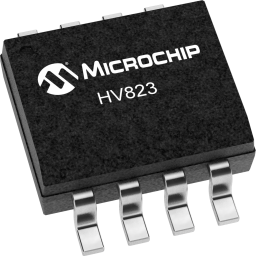
HV823High Voltage, EL Lamp Driver IC | Power Management (PMIC) | 1 | Active | HV823 is a high-voltage driver designed for driving EL lamps of up to 50nF. EL lamps greater than 50nF can be driven for applications not requiring high brightness. The input supply voltage range is from 2.0V to 9.5V. The device uses a single inductor and a minimum number of passive components. The nominal regulated output voltage that is applied to the EL lamp is ±90V. The chip can be enabled by connecting the resistors on the RSW-Osc pin and the REL-Osc pin to the VDD pin, and disabled when connected to GND.
The HV823 has two internal oscillators, a switching MOSFET and a high-voltage EL lamp driver. The frequency of the switching converter MOSFET is set by an external resistor connected between the RSW-Osc pin and the VDD supply pin. The EL lamp driver frequency is set by an external resistor connected between the REL-Osc pin and the VDD pin. An external inductor is connected between the LX pin and the VDD pin. A 0.01µF to 0.1µF capacitor is connected between the CS pin and the GND. The EL lamp is connected between the VA and VB pins.
The switching MOSFET charges the external inductor and discharges it into the CS capacitor. The voltage at CS will start to increase. Once the voltage at CS reaches a nominal value of 90V, the switching MOSFET is turned OFF to conserve power. The output pins VA and VB are configured as an H-bridge and are switched in opposite states to achieve 180V peak-to-peak across the EL lamp. |
| Lighting, Ballast Controllers | 2 | Active | ||
HV830High Voltage, EL Lamp Driver IC | Lighting, Ballast Controllers | 1 | Active | HV830 is a high-voltage driver designed for driving EL lamps of up to 50nF. EL lamps greater than 50nF can be driven for applications not requiring high brightness. The input supply voltage range is from 2.0 to 9.5V. The device uses a single inductor and a minimum number of passive components. The nominal regulated output voltage that is applied to the EL lamp is ±100V. The chip can be enabled by connecting the resistors on the RSW-Osc and REL-Osc pins to the VDD pin, and disabled when connected to GND.
The HV830 has two internal oscillators, a switching MOSFET and a high-voltage EL lamp driver. The frequency of the switching converter MOSFET is set by an external resistor connected between the RSW-Osc and the VDD pins. The EL lamp driver frequency is set by an external resistor connected between the REL-Osc and the VDD pins. An external inductor is connected between the LX and VDD pins. A 0.01µF to 0.1µF capacitor is connected between the CS pin and the GND. The EL lamp is connected between the VA and VB pins.
The switching MOSFET charges the external inductor and discharges it into the CS capacitor. The voltage at CS will start to increase. Once the voltage at CS reaches a nominal value of 100V, the switching MOSFET is turned OFF to conserve power. The output pins VA and VB are configured as an H-bridge and are switched in opposite states to achieve 200V peak-to-peak across the EL lamp. |
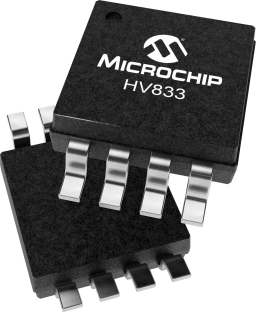
HV833High Voltage, EL Lamp Driver | Power Management (PMIC) | 1 | Active | HV833 is a high voltage driver designed for driving EL lamps of up to 35nF (10-12in2). The input supply voltage range is from 1.8 to 6.5V. The device uses a single inductor and a minimum number of passive components. The nominal regulated output voltage that is applied to the EL lamp is ±90V. The chip can be enabled/disabled by connecting a resistor between the RSW-Osc pin and the VDD/GND pins.
The HV833 has two internal oscillators, a switching MOSFET, and a high voltage EL lamp driver. The frequency for the switching MOSFET is set by an external resistor connected between the RSW-Osc pin and the VDD supply pin. The EL lamp driver frequency is set by an external resistor connected between the REL-Osc pin and the VDD pin. An external inductor is connected between the LX pin and VDD or VIN pin. A 0.003-0.1µF capacitor is connected between the CS pin and the GND pin. The EL lamp is connected between the VA pin and the VB pin.
The switching MOSFET charges the external inductor and discharges it into the capacitor at CS. The voltage at CS will start to increase. Once the voltage at CS reaches a nominal value of 90V, the switching MOSFET is turned OFF to conserve power. The outputs VA and VB are configured as an H bridge and are switching in opposite states to achieve 180V peak-to-peak across the EL lamp. |
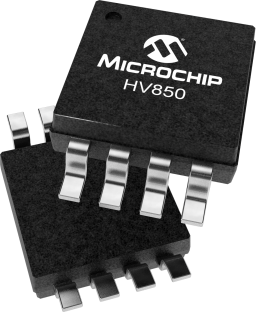
HV850High Voltage, Low Noise, Inductorless EL Lamp Driver | Integrated Circuits (ICs) | 1 | Active | HV850 is a high voltage electroluminescent (EL) Lamp Driver IC. It is designed to drive EL lamps of up to 1.5in2, with capacitive values up to 5.0nF. The HV850 converts a low voltage DC input to a high voltage AC output across an EL lamp. It uses a charge pump scheme to boost the input voltage, eliminating the need for external inductors, diodes, and high voltage capacitors, components commonly found in conventional topologies.
The charge pump circuit discharges its energy into an EL lamp through a high voltage H-bridge. Once the voltage reaches its regulated limit, it is turned off to conserve power. The EL lamp is then discharged to ground and the H-bridge changes state to allow the charge pump to charge the EL lamp in the opposite direction.
The EL lamp frequency can be set either by an external resistor, REL, or by applying an external clock, where the clock frequency is divided by 128 to set the EL lamp frequency. |
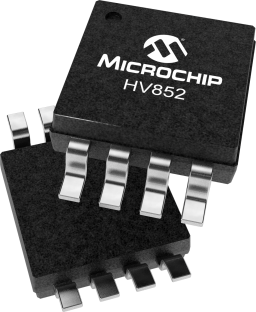
HV852High Voltage, Low Noise, Inductorless EL Lamp Driver | Power Management (PMIC) | 1 | Active | HV852 is a high voltage, low noise, inductorless EL (electroluminescent) lamp driver. It is designed to drive EL lamps of up to 1.5in2, with capacitive values up to 5.3nF over an input voltage range of 2.4 to 5.0V. The HV852 converts a low voltage DC input to a high voltage AC output across an EL lamp. It uses a charge pump scheme to boost the input voltage eliminating the need for an external inductor, diode, and high voltage capacitor commonly found in conventional topologies.
The charge pump circuit discharges its energy into an EL lamp through a high voltage H-bridge. Once the voltage reaches its regulated limit, it is turned off to conserve power. The EL lamp is then discharged to ground and the H-bridge changes state to allow the charge pump to charge the EL lamp in the opposite direction. |