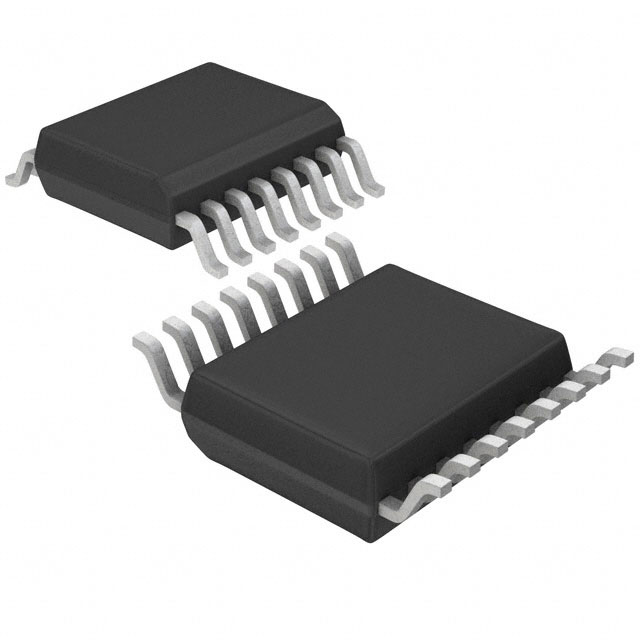
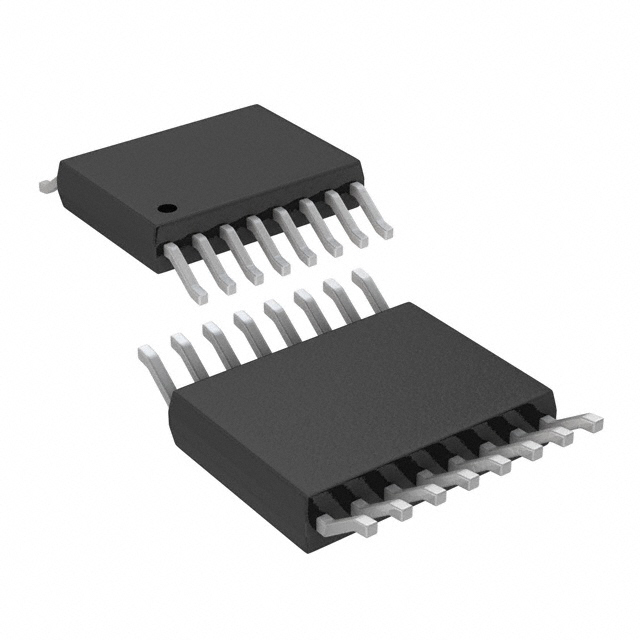
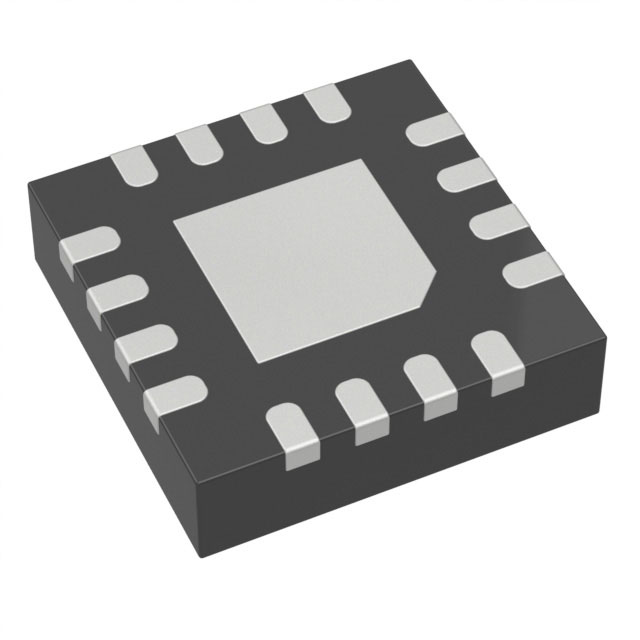
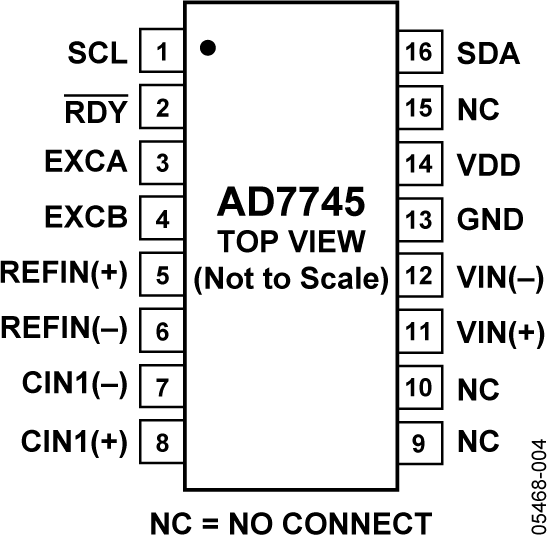
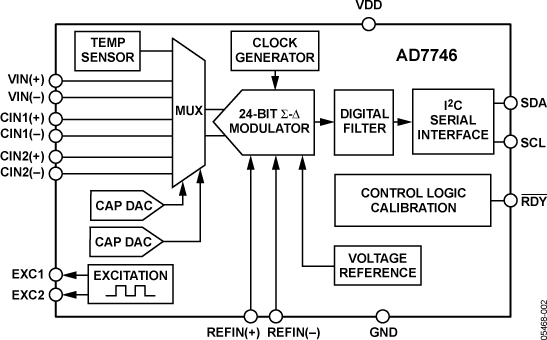
AD774524-bit, 1 Channel Capacitance to Digital Converter | Integrated Circuits (ICs) | 1 | Active | The AD7745/AD7746 are a high resolution, Σ-Δ capacitance-to-digital converter (CDC). The capacitance to be measured is connected directly to the device inputs. The architecture features inherent high resolution (24-bit no missing codes, up to 21-bit effective resolution), high linearity (±0.01%), and high accuracy (±4 fF factory calibrated). The AD7745/AD7746 capacitance input range is ±4 pF (changing), while it can accept up to 17 pF common-mode capacitance (not changing), which can be balanced by a programmable on-chip, digital-to-capacitance converter (CAPDAC).The AD7745 has one capacitance input channel, while the AD7746 has two channels. Each channel can be configured as single-ended or differential. The AD7745/AD7746 are designed for floating capacitive sensors. For capacitive sensors with one plate connected to ground, the AD7747 is recommended.The parts have an on-chip temperature sensor with a resolution of 0.1°C and accuracy of ±2°C. The on-chip voltage reference and the on-chip clock generator eliminate the need for any external components in capacitive sensor applications. The parts have a standard voltage input, which together with the differential reference input allows easy interface to an external temperature sensor, such as an RTD, thermistor, or diode.The AD7745/AD7746 have a 2-wire, I2C-compatible serial interface. Both parts can operate with a single power supply from 2.7 V to 5.25 V. They are specified over the automotive temperature range of –40°C to +125°C and are housed in a 16-lead TSSOP package.ApplicationsAutomotive, Industrial and Medical Systems for:Pressure MeasurementPosition SensorsLevel SensorsFlowmetersHumidity SensorsImpurity Detection |
| ADCs/DACs - Special Purpose | 5 | Active | |
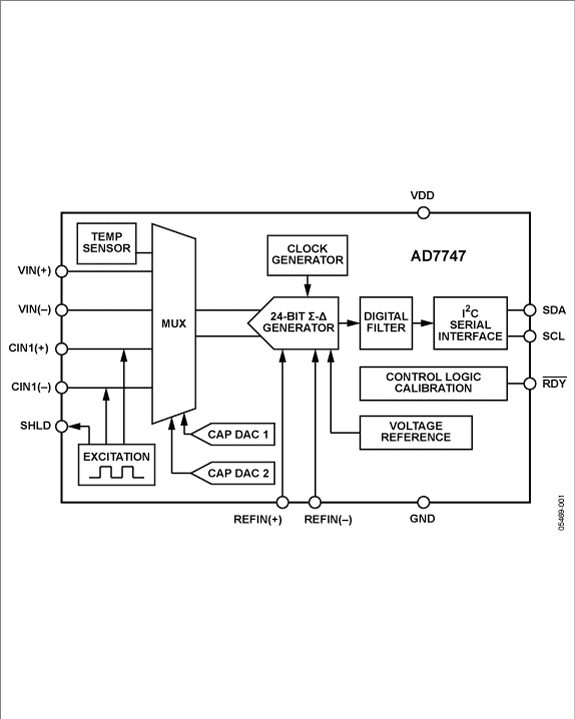
AD774724-Bit Capacitance-to-Digital Converter with Temperature Sensor | ADCs/DACs - Special Purpose | 1 | Active | The AD7747 is a high-resolution, Σ-Δ capacitance-to-digital converter (CDC). The capacitance to be measured is connected directly to the device inputs. The architecture features inherent high resolution (24-bit no missing codes, up to 19.5-bit effective resolution), high linearity (±0.01%), and high accuracy (±10 fF factory calibrated). The AD7747 capacitance input range is ±8 pF (changing), and it can accept up to 17 pF common-mode capacitance (not changing), which can be balanced by a programmable on-chip digital-to-capacitance converter (CAPDAC).The AD7747 is designed for single-ended or differential capacitive sensors with one plate connected to ground. For floating (not grounded) capacitive sensors, the AD7745 or AD7746 are recommended.The part has an on-chip temperature sensor with a resolution of 0.1°C and accuracy of ±2°C. The on-chip voltage reference and the on-chip clock generator eliminate the need for any external components in capacitive sensor applications. The part has a standard voltage input that, together with the differential reference input, allows easy interface to an external temperature sensor, such as an RTD, thermistor, or diode.The AD7747 has a 2-wire, I2C-compatible serial interface. The part can operate with a single power supply of 2.7 V to 5.25 V. It is specified over the automotive temperature range of −40°C to +125°C and is housed in a 16-lead TSSOP package.ApplicationsAutomotive, industrial, and medical systems for:Pressure measurementPosition sensingProximity sensingLevel sensingFlowmetersImpurity detections |
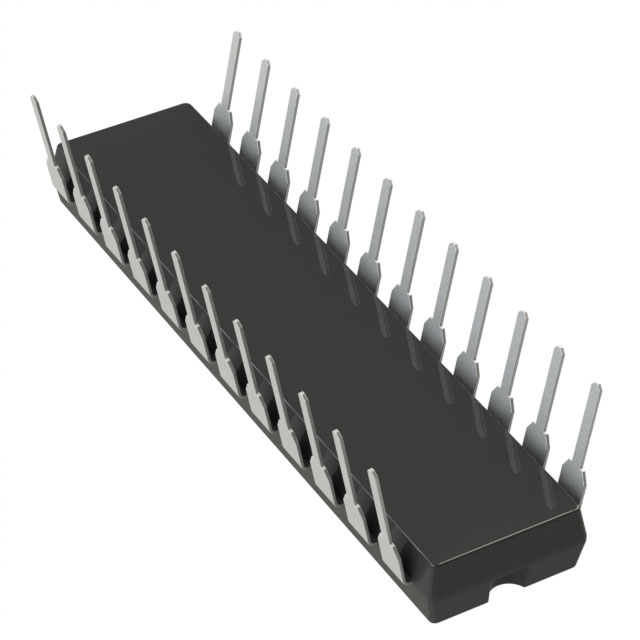
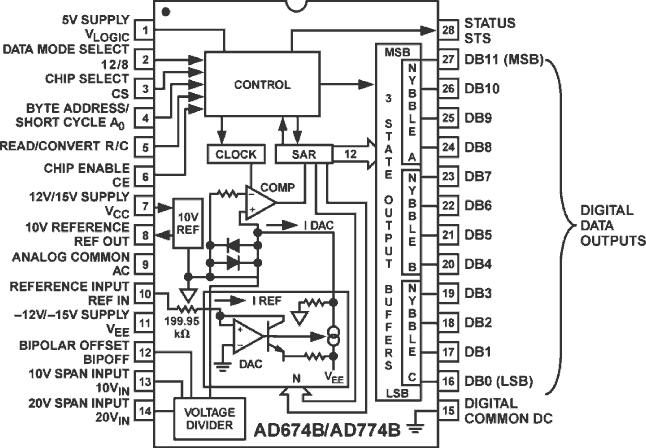
AD774BComplete 12-Bit Successive Approximation Analog-to-Digital Converters With Three-State Output and 8 us Conversion | Data Acquisition | 5 | Active | TheAD674Band AD774B are complete 12-bit successive approximation analog-to-digital converters with three-state output buffer circuitry for direct interface to 8- and 16-bit microprocessor busses. A high precision voltage reference and clock are included on chip, and the circuit requires only power supplies and control signals for operation.The AD674B and AD774B are pin compatible with the industry standard AD574A, but offer faster conversion time and access speed than the AD574A and lower power consumption. The AD674B converts in 15 µs (maximum) and the AD774B converts in 8 µs (maximum).The monolithic design is implemented using Analog Devices' BiMOS II process allowing high performance bipolar analog circuitry to be combined on the same die with digital CMOS logic. Offset linearity and scaling errors are minimized by active trimming of thin-film resistors.Five different grades are available. The J and K grades are specified for operation over the 0°C to +70°C temperature range. A and B grades are specified from -40°C to +85°C, the T is specified from -55°C to +125°C. The J and K grades are available in a 28-pin plastic DIP or 28-lead SOIC. All other grades are available in a 28-pin hermetically sealed ceramic DIP.PRODUCT HIGHLIGHTSIndustry Standard Pinout: The AD674B and AD774B use the pinout established by the industry standard AD574A.Analog Operation: The precision, laser-trimmed scaling and bipolar offset resistors provide four calibrated ranges: 0 V to 10 V and 0 V to 20 V unipolar; –5 V to +5 V and –10 V to +10 V bipolar. The AD674B and AD774B operate on +5 V and ±12 V or ±15 V power supplies.Flexible Digital Interface: On-chip multiple-mode three-state output buffers and interface logic allow direct connection to most microprocessors. The 12 bits of output data can be read either as one 12-bit word or as two 8-bit bytes (one with 8 data bits, the other with 4 data bits and 4 trailing zeros).The internal reference is trimmed to 10.00 V with 1% maximum error and 10 ppm/°C typical temperature coefficient. The reference is available externally and can drive up to 2.0 mA beyond the requirements of the converter and bipolar offset resistors.The AD674B and AD774B are available in versions compliant with MIL-STD-883. Refer to the Analog Devices Military Products Databook or current AD674B / AD774B / 883B data sheet for detailed specifications. |
| Integrated Circuits (ICs) | 1 | Active | |
| PMIC | 2 | Active | |
| PMIC | 4 | Active | |
| Energy Metering | 1 | Active | |
| Data Acquisition | 2 | Active | |
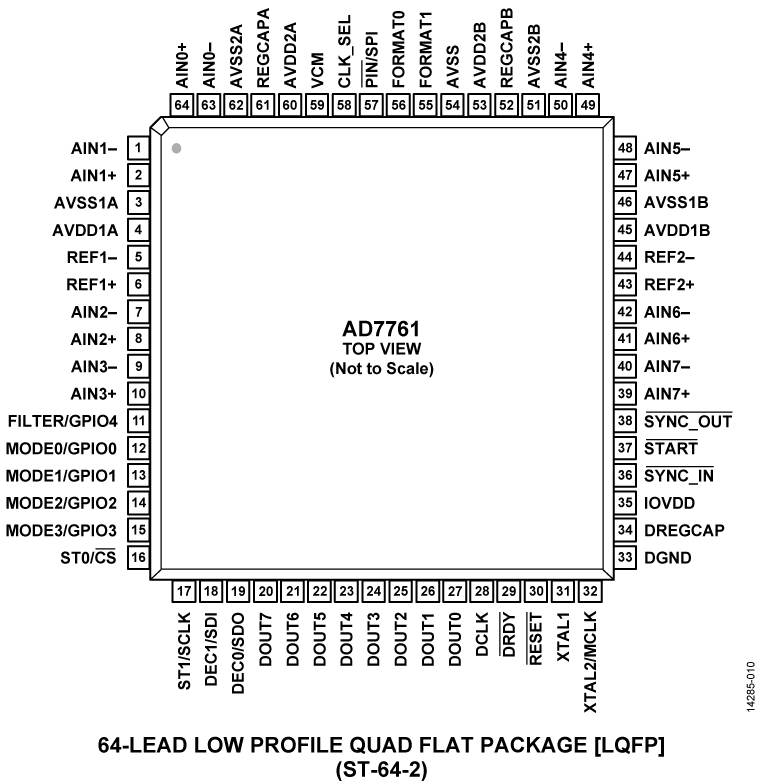
AD77618-Channel, 16-Bit, Simultaneous Sampling ADC with Power Scaling, 110.8 kHz BW | Evaluation Boards | 2 | Active | The AD7761 is an 8-channel, simultaneous sampling sigma-delta (Σ-Δ) analog-to-digital converter (ADC) with a Σ-Δ modulator and digital filter per channel, enabling synchronized sampling of ac and dc signals.The AD7761 achieves 97.7 dB dynamic range at a maximum input bandwidth of 110.8 kHz, combined with typical performance of ±1 LSB integral nonlinearity (INL), ±1 LSB offset error, and ±5 LSB gain error.The AD7761 user can trade off input bandwidth, output data rate, and power dissipation. Select one of three power modes to optimize the device for noise targets and power consumption. The flexibility of the AD7761 allows it to become a reusable platform for low power dc and high performance ac measurement modules.The AD7761 has three modes: fast mode (256 kSPS maximum, 110.8 kHz input bandwidth, 51.5 mW per channel), median mode (128 kSPS maximum, 55.4 kHz input bandwidth, 27.5 mW per channel) and low power mode (32 kSPS maximum, 13.8 kHz input bandwidth, 9.375 mW per channel).The AD7761 offers extensive digital filtering capabilities, such as a wideband, low ±0.005 dB pass-band ripple, antialiasing low-pass filter with sharp roll-off, and 105 dB attenuation at the Nyquist frequency.Frequency domain measurements can use the wideband linear phase filter. This filter has a flat pass band (±0.005 dB ripple) from dc to 102.4 kHz at 256 kSPS, from dc to 51.2 kHz at 128 kSPS, or from dc to 12.8 kHz at 32 kSPS.The AD7761 also offers sinc response via a sinc5 filter, a low latency path for low bandwidth, and low noise measurements.The wideband and sinc5 filters can be selected and run on a per channel basis.Within these filter options, the user can improve the dynamic range by selecting from decimation rates of ×32, ×64, ×128, ×256, ×512, and ×1024. The ability to vary the decimation filtering optimizes noise performance to the required input bandwidth.Embedded analog functionality on each ADC channel makes design easier, such as a precharge buffer on each analog input that reduces analog input current and a precharge reference buffer per channel reduces input current and glitches on the reference input terminals.The device operates with a 5 V AVDD1A and AVDD1B supply, a 2.25 V to 5.0 V AVDD2A and AVDD2B supply, and a 2.5 V to 3.3 V or 1.8 V IOVDD supply (see the 1.8 V IOVDD Operation section for specific requirements for operating at 1.8 V IOVDD).The device requires an external reference; the absolute input reference voltage range is 1 V to AVDD1 − AVSS.For the purposes of clarity within this data sheet, the AVDD1A and AVDD1B supplies are referred to as AVDD1 and the AVDD2A and AVDD2B supplies are referred to as AVDD2. For the negative supplies, AVSS refers to the AVSS1A, AVSS1B, AVSS2A, AVSS2B, and AVSS pins.The specified operating temperature range is −40°C to +105°C. The device is housed in a 10 mm × 10 mm 64-lead LQFP package with a 12 mm × 12 mm printed circuit board (PCB) footprint.Throughout this data sheet, multifunction pins, such as XTAL2/MCLK, are referred to either by the entire pin name or by a single function of the pin, for example MCLK, when only that function is relevant.ApplicationsData acquisition systems: USB/PXI/EthernetInstrumentation and industrial control loopsAudio testing and measurementVibration and asset condition monitoring3-phase power quality analysisSonarHigh precision medical electroencephalogram (EEG)/ electromyography (EMG)/electrocardiogram (ECG) |