A
Analog Devices
| Series | Category | # Parts | Status | Description |
|---|---|---|---|---|
| Part | Spec A | Spec B | Spec C | Spec D | Description |
|---|---|---|---|---|---|



| Series | Category | # Parts | Status | Description |
|---|---|---|---|---|
| Part | Spec A | Spec B | Spec C | Spec D | Description |
|---|---|---|---|---|---|
| Part | Category | Description |
|---|---|---|
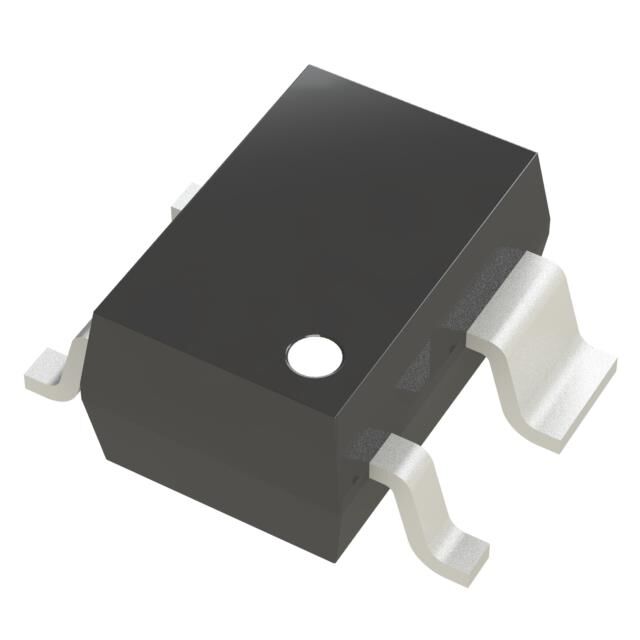 Analog Devices ADM6713RAKSZ-REELObsolete | Integrated Circuits (ICs) | IC SUPERVISOR 1 CHANNEL SC70-4 |
Analog Devices | RF and Wireless | RF AMP SINGLE GENERAL PURPOSE RF AMPLIFIER 20GHZ 3.6V 22-PIN DIE TRAY |
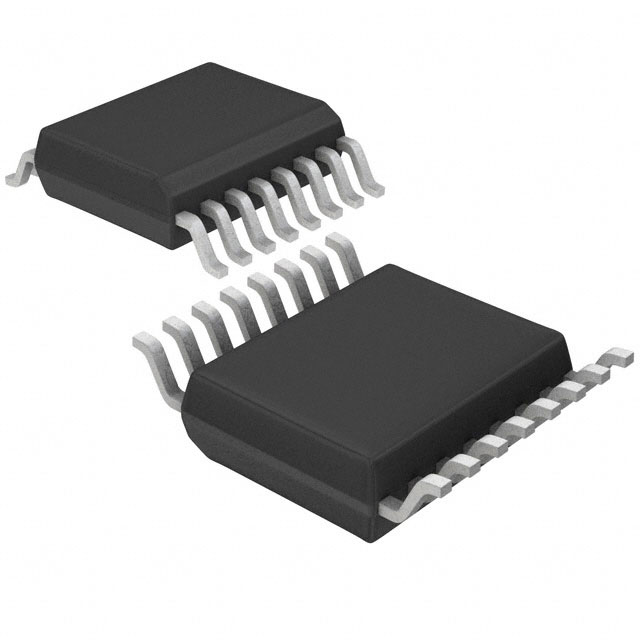 Analog Devices | Integrated Circuits (ICs) | LOW NOISE, SWITCHED CAPACITOR REGULATED VOLTAGE INVERTERS |
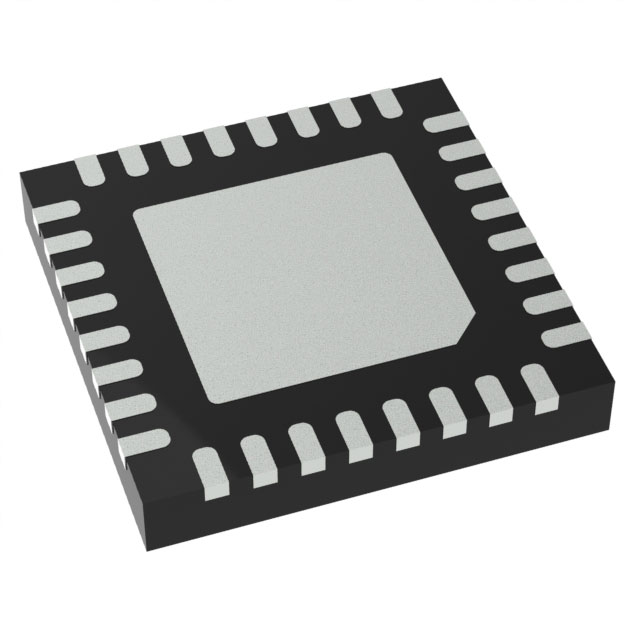 Analog Devices | Integrated Circuits (ICs) | QUAD 16-BIT/12-BIT ±10V VOUTSOFTSPAN DACS WITH 10PPM/°C MAX REFERENCE |
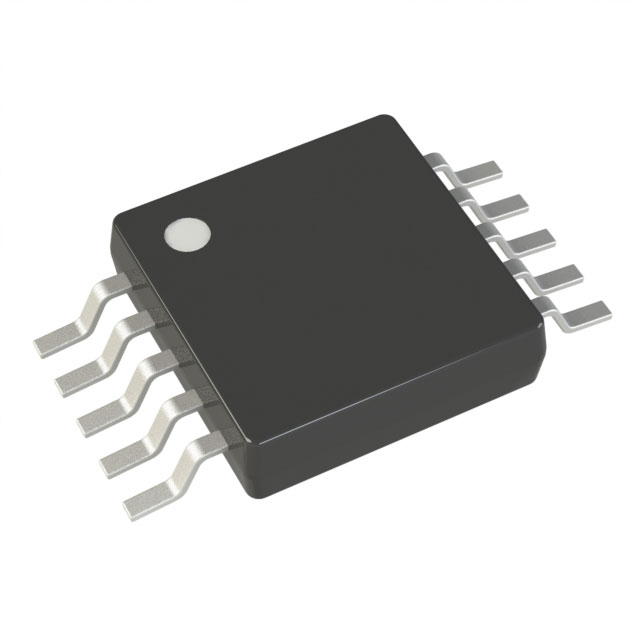 Analog Devices | Integrated Circuits (ICs) | SERIAL 14-BIT, 3.5MSPS SAMPLING ADC WITH BIPOLAR INPUTS |
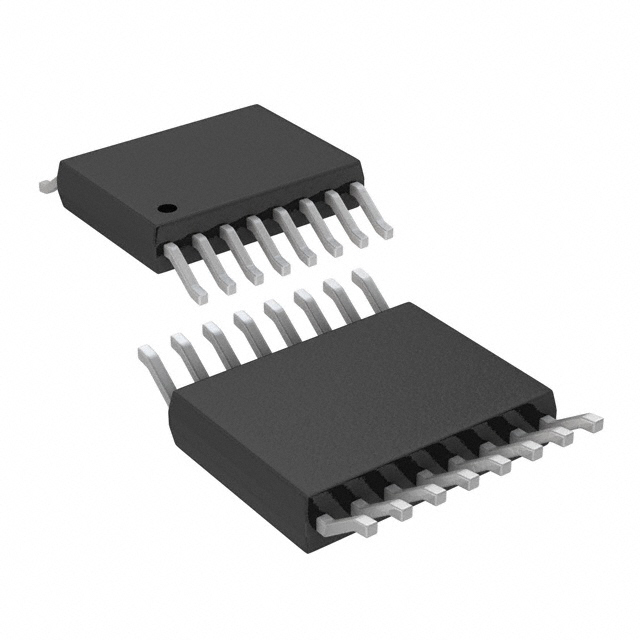 Analog Devices | Integrated Circuits (ICs) | ISOSPI ISOLATED COMMUNICATIONS INTERFACE |
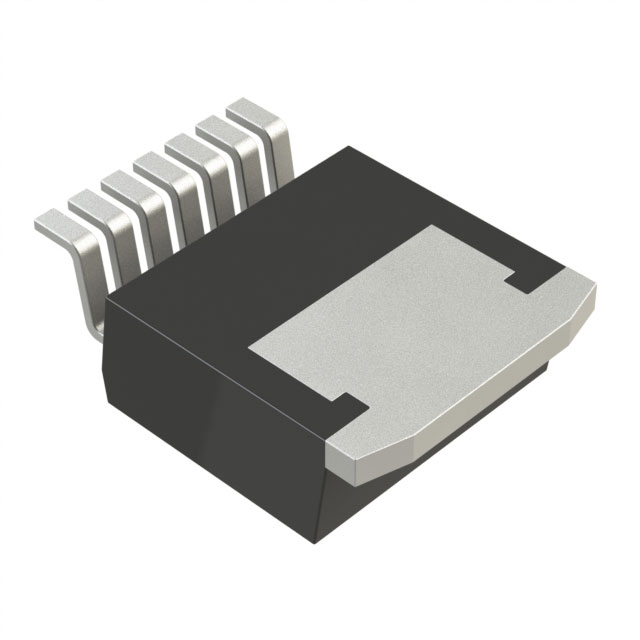 Analog Devices | Integrated Circuits (ICs) | 4.5A, 500KHZ STEP-DOWN SWITCHING REGULATOR |
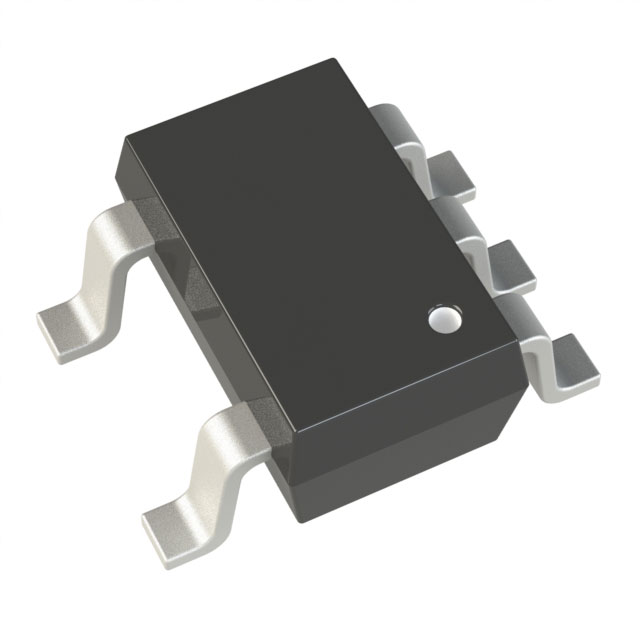 Analog Devices | Integrated Circuits (ICs) | 300 MA, LOW QUIESCENT CURRENT, ADJUSTABLE OUTPUT, CMOS LINEAR REGULATOR |
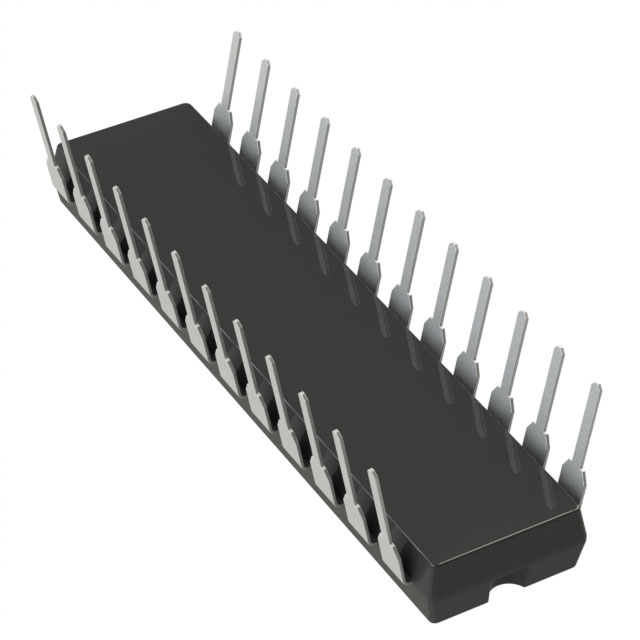 Analog Devices AD767KNObsolete | Integrated Circuits (ICs) | IC DAC 12BIT V-OUT 24DIP |
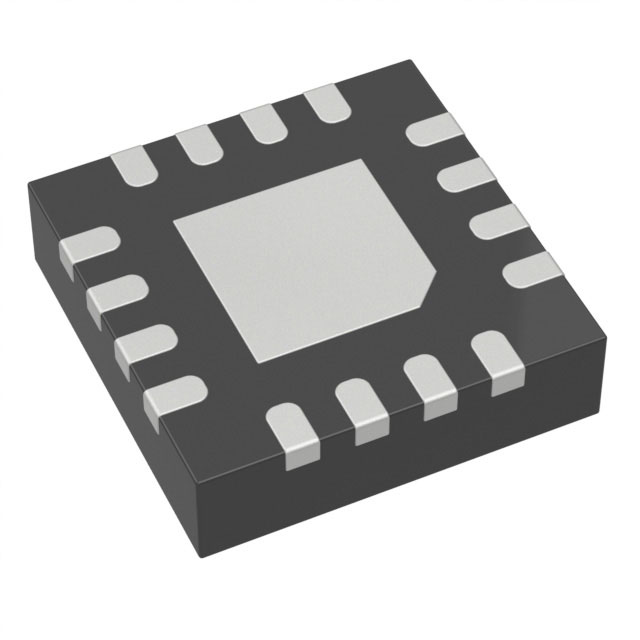 Analog Devices | Integrated Circuits (ICs) | QUAD 12-/10-/8-BIT RAIL-TO-RAIL DACS WITH 10PPM/°C REFERENCE |
| Series | Category | # Parts | Status | Description |
|---|---|---|---|---|
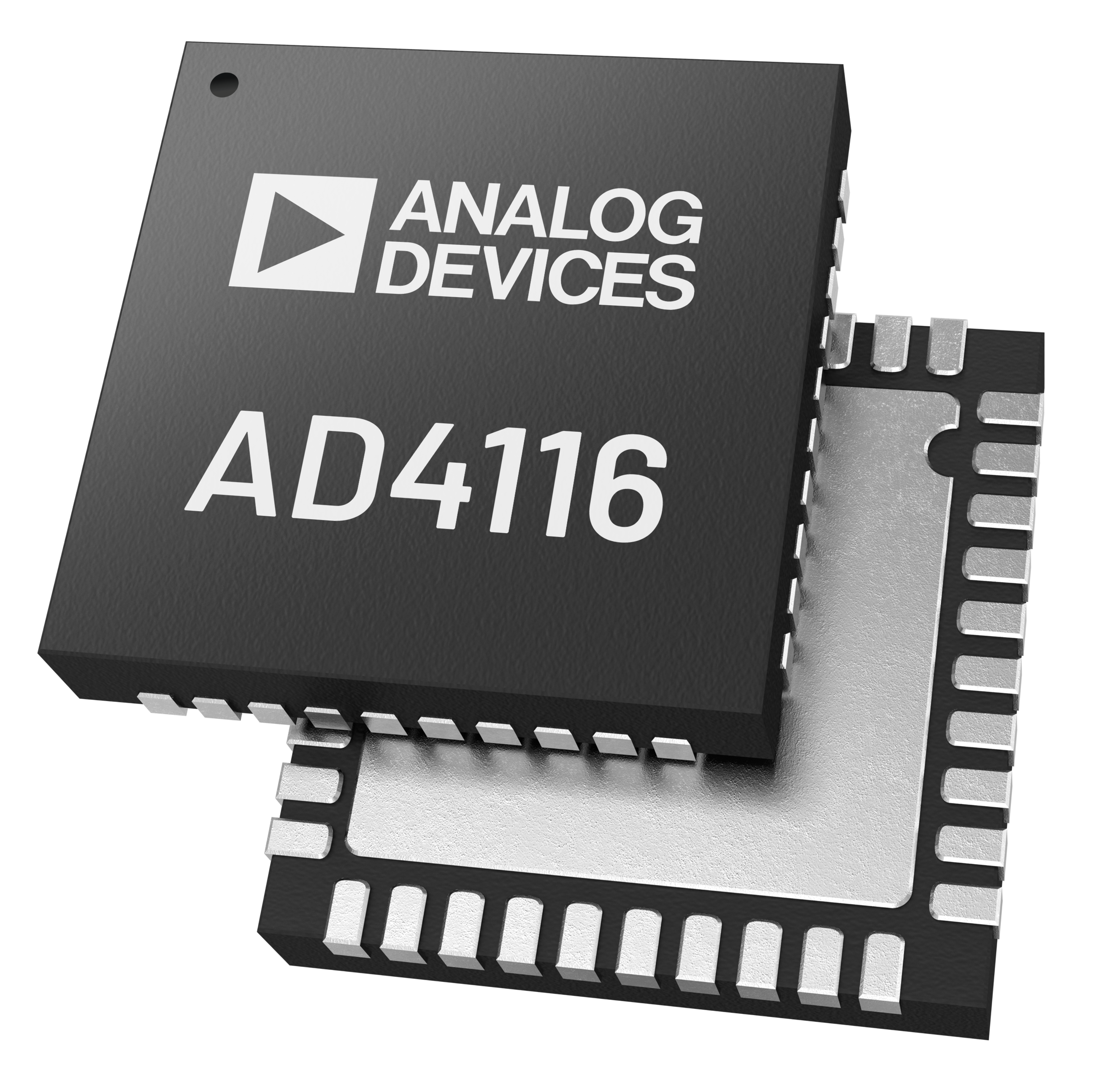
AD4116Single Supply, 24-Bit, Sigma-Delta ADC with ±10 V, 10 MΩ Inputs and Buffered Low Level Inputs | Analog to Digital Converters (ADC) | 1 | Active | The AD4116 is a low power, low noise, 24-bit, Σ-Δ analog-to-digital converter (ADC) that integrates an analog front end (AFE) for six fully differential or eleven single-ended, high impedance (≥10 MΩ) bipolar, ±10 V voltage inputs. The additional two differential or four single-ended/pseudo differential direct ADC inputs provides excellent performance at lower input ranges.The AD4116 also integrates key analog and digital signal conditioning blocks to configure eight individual setups for each analog input channel in use. As many as 16 channels can be enabled at any time. A channel is defined as any of the standard analog voltage inputs or a low level direct ADC input. The AD4116 features a maximum channel scan rate of 12,422 SPS (80 μs) using a sinc5 + sinc1 filter and 20,618 SPS per channel (48 μs) using a sinc3 filter.The embedded 2.5 V, low drift (5 ppm/°C), band gap internal reference (with output reference buffer) reduces the external component count.The digital filter allows flexible settings, including simultaneous 50 Hz and 60 Hz rejection at a 27.27 SPS output data rate. The user can select between the different filter settings depending on the demands of each channel in the application. The automatic channel sequencer enables the ADC to switch through each enabled channel.The precision performance of the AD4116 is achieved by integrating the proprietaryiPassives®technology from Analog Devices, Inc.The AD4116 operates with a single power supply, making it easy to use in galvanically isolated applications. The specified operating temperature range is −40°C to +105°C. The AD4116 is housed in a 40-lead, 6 mm × 6 mm LFCSP.APPLICATIONSProcess controlPLC and DCS modulesInstrumentation and measurement |
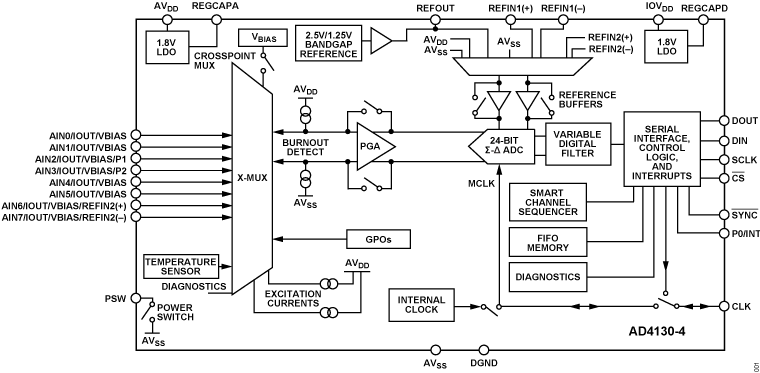
AD4130-432 μA, Ultra-Low Power, 24-Bit Sigma-Delta ADC with Integrated PGA and FIFO | Analog to Digital Converters (ADC) | 1 | Active | The AD4130-4 is an ultra-low power, high precision, and measurement solution for low bandwidth battery operated applications. The fully integrated analog front end (AFE) includes a multiplexer for up to 8 single-ended or 4 differential inputs, programmable gain amplifier (PGA), 24-bit sigma-delta (Σ-Δ) analog-to-digital converter (ADC), on-chip reference and oscillator, selectable filter options, smart sequencer, sensor biasing and excitation options, diagnostics, and newly added features to improve the battery-operated lifetime (more than 5 years on a coin cell), that is, a first in, first out (FIFO) buffer and duty cycling.The AD4130-4 allows users to measure low frequency signals with a current consumption of 28.5 μA (gain = 1) and 32.5 μA (gain = 128) while continuously converting, and even lower average currents when using one of the duty cycling options. The AD4130-4 can be configured to have 4 differential inputs or 8 single-ended or pseudo differential inputs, which connect to a crosspoint multiplexer, where any input pair can become a measurement channel input to the PGA and ADC.The AD4130-4 is designed to allow the user to operate from a single analog supply voltage from 1.71 V to 3.6 V. In battery applications, operation as low as 1.71 V can extend the system lifetime as the AFE can continue its operation, even as the battery voltage dissipates. The digital supply can be separate and range from 1.65 V to 3.6 V.Together with the reduced current consumption, the integration of an on-chip FIFO buffer can be used in tandem with the smart sequencer, to enable the AD4130-4 to become an autonomous measurement system, which allows the microcontroller to sleep for extended periods.Intelligent interrupt functionality gives the user a greater confidence in both error detection and safety. The user can enable an interrupt signal to trigger when the samples in the FIFO reach a predefined value or when a user programmable threshold is exceeded.The following key analog functions are offered on the AD4130-4 to allow simple and effective connection to transducers used for measuring temperature, load, and pressure:PGA: Due to the programmable gain (from 1 to 128) and the high input impedance with low input current, the PGA allows direct interfacing to transducers with low output amplitudes such as resistive bridges, thermocouples, and resistance temperature detectors (RTDs).The capacitive PGA allows full common-mode input range, which gives designers a greater margin for widely varying input common modes. A wider common-mode input range improves the overall resolution and is highly effective in ratio metric measurements.Low drift precision current sources. The IEXC0 and IEXC1 current source can be used to excite 2‑, 3‑, and 4‑wire RTDs. Excitation current output options include 100 nA, 10 μA, 20 μA, 50 μA, 100 μA, 150 μA, and 200 μA.The low-side power switch (PDSW) can be used to power down bridge sensors between conversions. The PDSW can be controlled within the sequencer on a per channel basis, which allows optimum timing and energy savings in the overall system. The PDSW can also allow higher powered analog sensors to be used in a low power system.Voltage bias for thermocouples (the VBIAS source sets the common-mode voltage of a channel to AVDD/2).The smart sequencer allows the conversion of each enabled preconfigured channel in a predetermined order, which allows a mix of transducer, system checks, and diagnostic measurements to be interleaved. The sequencer eliminates need for repetitive serial interface communication with the device. The 16 channels can be configured in the sequence, each of them selecting from eight predefined ADC setups that allow selection of gain, filter type, output data rate, buffering, timing, and reference source.High levels of integrated front-end functionality coupled with small package options allow smaller end solutions. For example, the AD4130-4 integrates a low thermal drift band gap reference in addition to accepting an external differential reference, which can be internally buffered.In safety critical applications, the AD4130-4 includes diagnostic functionality such as open-wire detection through burnout currents, internal temperature sensor, reference detection, and analog input overvoltage and undervoltage detection. Added diagnostics are included on the digital interface such as cyclic redundancy check (CRC) and serial interface checks for a robust communication link.ApplicationsSmart transmittersWireless battery and harvester powered sensor nodesPortable instrumentationTemperature measurement: thermocouple, RTD, thermistorsPressure measurement: bridge transducersHealthcare and wearables |
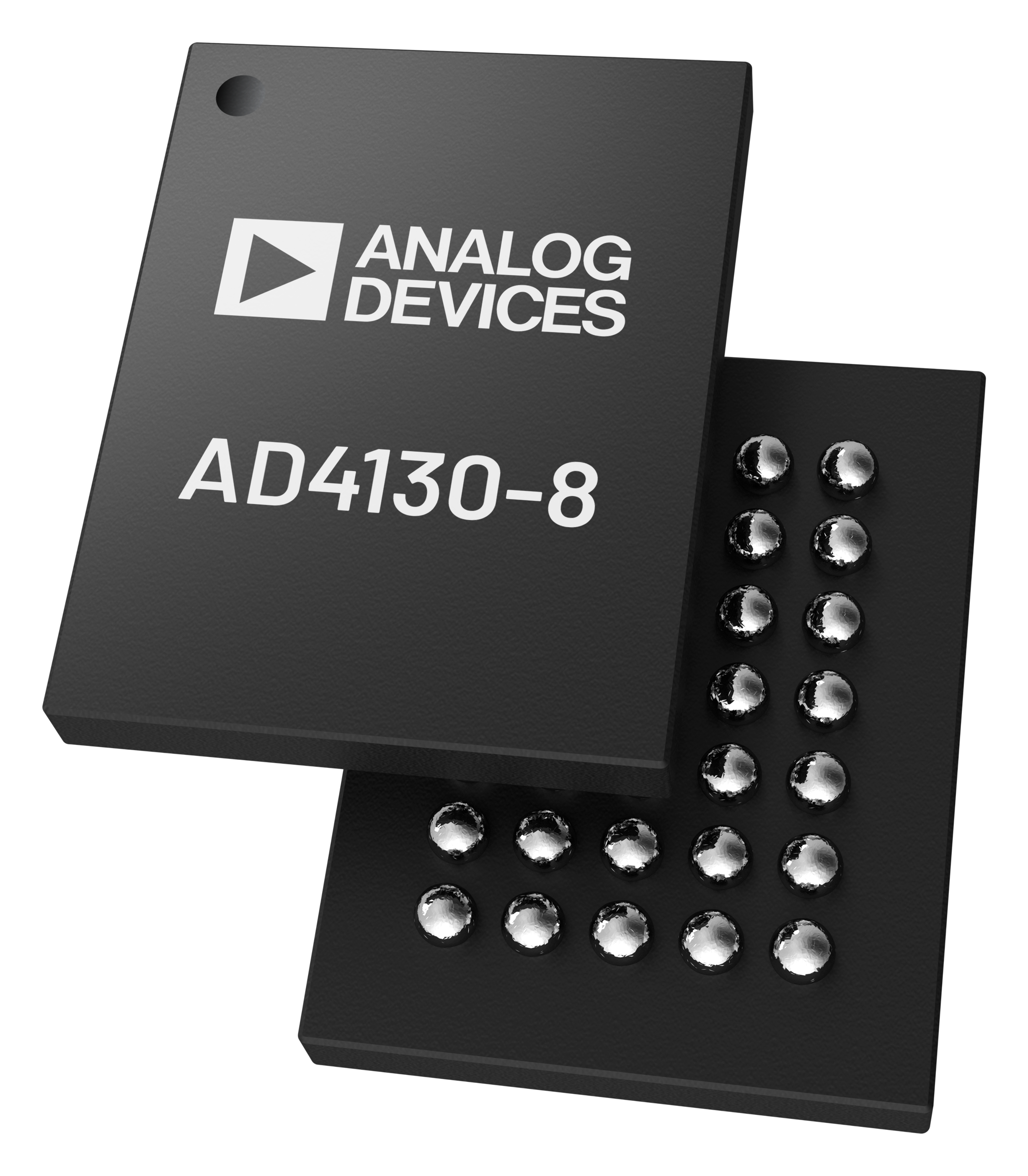
AD4130-832 μA, Ultra Low Power, 24-Bit Sigma-Delta ADC with Integrated PGA and FIFO | Integrated Circuits (ICs) | 1 | Active | The AD4130-8 is an ultra low power, high precision, measurement solution for low bandwidth battery operated applications. The fully integrated analog front end (AFE) includes a multiplexer for up to 16 single-ended or eight differential inputs, programmable gain amplifier (PGA), 24-bit sigma-delta (Σ-Δ) analog-to-digital converter (ADC), on-chip reference and oscillator, selectable filter options, smart sequencer, sensor biasing and excitation options, diagnostics, and newly added features to improve the battery-operated lifetime (more than 5 years on a coin cell), that is, a first in, first out (FIFO) buffer and duty cycling.The AD4130-8 allows users to measure low frequency signals with a current consumption of 28.5 μA (gain = 1) and 32.5 μA (gain = 128) while continuously converting, and even lower average currents when using one of the duty cycling options. The AD4130-8 can be configured to have 8 differential inputs or 16 single-ended or pseudo differential inputs, which connect to a crosspoint multiplexer, where any input pair can become a measurement channel input to the PGA and ADC.The AD4130-8 is designed to allow the user to operate from a single analog supply voltage from 1.71 V to 3.6 V. In battery applications, operation as low as 1.71 V can extend the system lifetime as the AFE can continue its operation, even as the battery voltage dissipates. The digital supply can be separate and range from 1.65 V to 3.6 V.Together with the reduced current consumption, the integration of an on-chip FIFO buffer can be used in tandem with the smart sequencer, to enable the AD4130-8 to become an autonomous measurement system, which allows the microcontroller to sleep for extended periods.Intelligent interrupt functionality gives the user a greater confidence in both error detection and safety. The user can enable an interrupt signal to trigger when the samples in the FIFO reach a predefined value or when a user programmable threshold is exceeded.The following key analog functions are offered on the AD4130-8 to allow simple and effective connection to transducers used for measuring temperature, load, and pressure:PGA. Due to the programmable gain (from 1 to 128) and the high input impedance with low input current, the PGA allows direct interfacing to transducers with low output amplitudes like resistive bridges, thermocouples, and resistance temperature detectors (RTDs).The capacitive PGA allows full common-mode input range, giving designers greater margin for widely varying input common modes. A wider common-mode input range improves the overall resolution and is highly effective in ratio metric measurements.Low drift precision current sources. The IEXC0 and IEXC1 current source can be used to excite 2‑, 3‑, and 4‑wire RTDs. Excitation current output options include 100 nA, 10 μA, 20 μA, 50 μA, 100 μA, 150 μA, and 200 μA.The low-side power switch (PDSW) can be used to power down bridge sensors between conversions. The PDSW can be controlled within the sequencer on a per channel basis, allowing optimum timing and energy savings in the overall system. The PDSW can also allow higher powered analog sensors to be used in a low power system.Voltage bias for thermocouples (the VBIAS source sets the common-mode voltage of a channel to AVDD/2).The smart sequencer allows the conversion of each enabled preconfigured channel in a predetermined order, allowing a mix of transducer, system checks and diagnostic measurements to be interleaved. The sequencer eliminates need for repetitive serial interface communication with the device. Sixteen channels can be configured in the sequence, each of them selecting from eight predefined ADC setups that allow selection of gain, filter type, output data rate, buffering, timing, and reference source.High levels of integrated front-end functionality coupled with small package options allow smaller end solutions. For example, the AD4130-8 integrates a low thermal drift band gap reference in addition to accepting an external differential reference, which can be internally buffered.In safety critical applications the AD4130-8 includes diagnostic functionality such as open wire detection via burnout currents, internal temperature sensor, reference detection, and analog input overvoltage and undervoltage detection. Added diagnostics are included on the digital interface like cyclic redundancy check (CRC) and serial interface checks for a robust communication link.APPLICATIONSSmart transmittersWireless battery and harvester powered sensor nodesPortable instrumentationTemperature measurement: thermocouple, RTD, thermistorsPressure measurement: bridge transducersHealthcare and wearables |
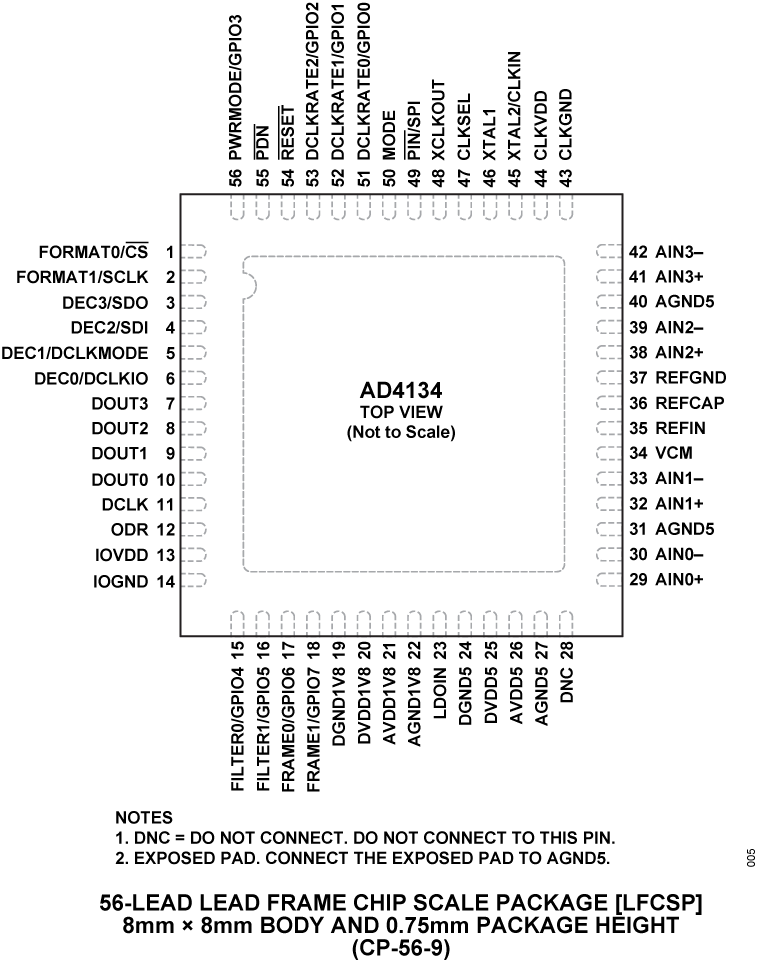
AD413424-Bit, 4-Channel Simultaneous Sampling 1.5 MSPS Precision Alias Free ADC | Integrated Circuits (ICs) | 1 | Active | The AD4134 is a quad channel, low noise, simultaneous sampling, precision analog-to-digital converter (ADC) that delivers on functionality, performance, and ease of use.Based on the continuous time sigma-delta (CTSD) modulation scheme, the AD4134 removes the traditionally required switched capacitor circuitry sampling preceding the Σ-Δ modulator, which leads to a relaxation of the ADC input driving requirement. The CTSD architecture also inherently rejects signals around the ADC aliasing frequency band, giving the device its inherent antialiasing capability, and removes the need for a complex external antialiasing filter.The AD4134 has four independent converter channels in parallel, each with a CTSD modulator and a digital decimation and filtering path. The AD4134 enables simultaneous sampling of four separate signal sources, each supporting a maximum input bandwidth of 391.5 kHz and achieving tight phase matching between these four signal measurements. The high level of channel integration, together with its simplified analog front-end requirement, enables the AD4134 to provide a high density multichannel data acquisition solution in a small form factor.The signal chain simplification property of the AD4134 also improves the system level performance through the reduction of noise, error, mismatch, and distortion that is normally introduced by the analog front-end circuitry.The AD4134 offers excellent dc and ac performance. The bandwidth of each ADC channel ranges from dc to 391.5 kHz, making the device an ideal candidate for universal precision data acquisition solutions supporting a breadth of sensor types, from temperature and pressure to vibration and shock.The AD4134 offers a large number of features and configuration options, giving the user the flexibility to achieve the optimal balance between bandwidth, noise, accuracy, and power for a given application.An integrated asynchronous sample rate converter (ASRC) allows the AD4134 to precisely control the decimation ratio and, in turn, the output data rate (ODR) using interpolation and resampling techniques. The AD4134 supports a wide range of ODR frequencies, from 0.01 kSPS to 1496 kSPS with less than 0.01 SPS adjustment resolution, allowing the user to granularly vary sampling speed to achieve coherent sampling. The ODR value can be controlled through the ODR_VAL_INT_× and ODR_VAL_FLT_× registers (Register 0×16 to Register 0×1C, ASRC master mode), or using an external clock source (ASRC slave mode). The ASRC slave mode operation enables synchronous sampling between multiple AD4134 devices to a single system clock. The ASRC simplifies the clock distribution requirement within a medium bandwidth data acquisition system because it no longer requires a high frequency, low jitter master clock from the digital back end to be routed to each ADC.The ASRC acts as a digital filter and decimates the oversampled data from the Σ-Δ modulator to a lower rate to favor higher precision. The ADC data is then further processed by one of the AD4134 user-selectable digital filter profiles to further reject the out of band signals and noises, and reduce the data rate to the final desired ODR value.The AD4134 offers three main digital filter profile options: a wideband low ripple filter with a brick wall frequency profile and an ODR range from 2.5 kSPS to 374 kSPS that is suitable for frequency domain analysis, a fast responding sinc3 filter with an ODR range from 0.01 kSPS to 1496 kSPS that is suitable for low latency time domain analysis and low frequency high dynamic range input types, and a balanced sinc6 filter with an ODR range from 2.5 kSPS to 1.496 MSPS, offering optimal noise performance and response time.The AD4134 is also capable of performing on-board averaging between two or four of its input channels. The result is a near 3 dB, if two channels are combined, or 6 dB, if all four channels are combined, improvement in dynamic range while maintaining the bandwidth.The AD4134 supports two device configuration schemes: serial peripheral interface (SPI) and hardware pin configuration (pin control mode). The SPI control mode offers access to all the features and configuration options available on the AD4134. SPI control mode also enables access to the on-board diagnostic features designed to enable a robust system design. Pin control mode offers the benefit of simplifying the device configuration, enabling the device to operate autonomously after power-up operating in a standalone mode.In addition to the optional SPI, the AD4134 has a flexible and independent data interface for transmitting the ADC output data. The data interface can act as either a bus master or a slave with various clocking options to support multiple communication bus protocols. The data interface also supports daisy-chaining and an optional minimum input/output (I/O) mode designed to minimize the number of digital isolator channels required in isolated applications.The AD4134 has an operating ambient temperature range from -40°C to 105°C. The device is housed in an 8 mm × 8 mm, 56-lead lead frame chip scale package (LFCSP).APPLICATIONSElectrical test and measurementAudio test3-phase power quality analysisControl and hardware in loop verificationSonarsCondition monitoring for predictive maintenanceAcoustic and material science research and development |
| Analog to Digital Converters (ADC) | 1 | Obsolete | ||
| Digital to Analog Converters (DAC) | 2 | Active | ||
| Data Acquisition | 3 | Active | ||
| Drivers, Receivers, Transceivers | 5 | Obsolete | ||
| Analog to Digital Converters (ADCs) Evaluation Boards | 3 | Active | ||
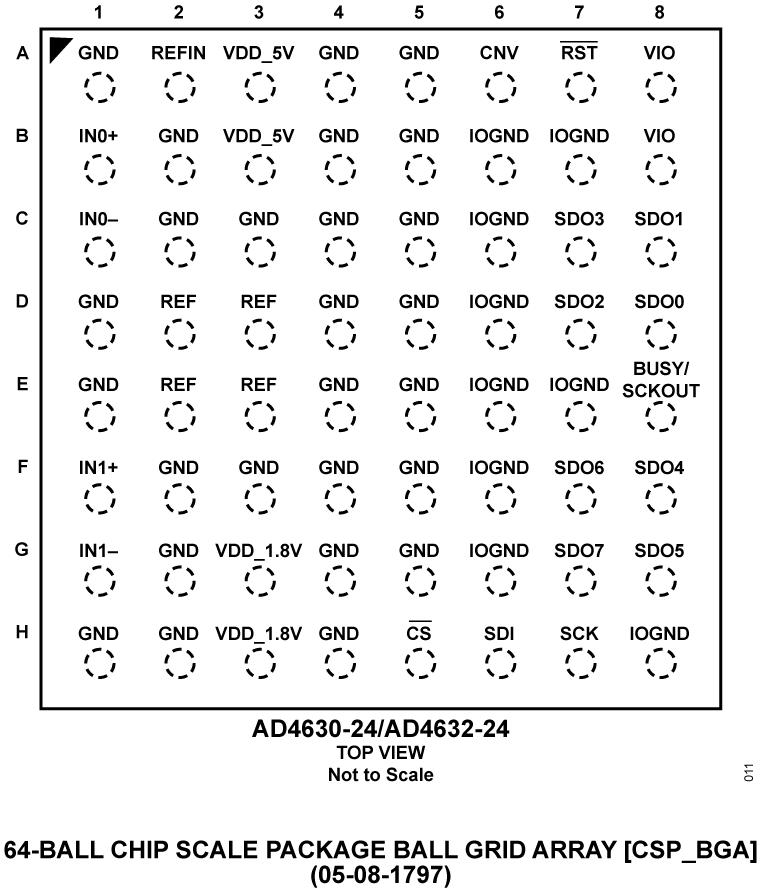
AD4630-2424-Bit, 2 MSPS Dual Channel SAR ADC | Analog to Digital Converters (ADC) | 2 | Active | The AD4630-24/AD4632-24are two-channel, simultaneous sampling, Easy Drive™, 2 MSPS or 500 kSPS successive approximation register (SAR) analog-to-digital converters (ADCs). With a guaranteed maximum ±0.9 ppm INL and no missing codes at 24 bits, the AD4630-24/AD4632-24 achieve unparalleled precision from −40°C to +125°C. Figure 1 in the data sheet shows the functional architecture of the AD4630-24/AD4632-24.A low drift, internal precision reference buffer eases voltage reference sharing with other system circuitry. The AD4630-24/ AD4632-24 offer a typical dynamic range of 106 dB when using a 5 V reference. The low noise floor enables signal chains requiring less gain and lower power. A block averaging filter with programmable decimation ratio can increase dynamic range up to 153 dB. The wide differential input and common-mode ranges allow inputs to use the full voltage reference (±VREF) range without saturating, simplifying signal conditioning requirements and system calibration. The improved settling of the Easy Drive analog inputs broadens the selection of analog front-end components compatible with the AD4630-24/AD4632-24. Both single-ended and differential signals are supported.The versatile Flexi-SPI serial peripheral interface (SPI) eases host processor and ADC integration. A wide data clocking window, multiple SDO lanes, and optional dual data rate (DDR) data clocking can reduce the serial clock to 10 MHz while operating at a sample rate of 2 MSPS or 500 kSPS. Echo clock mode and ADC host clock mode relax the timing requirements and simplify the use of digital isolators.The 64-ball chip scale package ball grid array (CSP_BGA) of the AD4630-24/AD4632-24 integrates all critical power supply and reference bypass capacitors, reducing the footprint and system component count, and lessening sensitivity to board layout.APPLICATIONSAutomatic test equipmentDigital control loopsMedical instrumentationSeismologySemiconductor manufacturingScientific instrumentation |