AD7713 Series
CMOS, Low Power 24-Bit Sigma-Delta, Signal Conditioning ADC with Matched RTD Current Sources
Manufacturer: Analog Devices
Catalog
CMOS, Low Power 24-Bit Sigma-Delta, Signal Conditioning ADC with Matched RTD Current Sources
Key Features
• Charge Balancing ADC24 Bits No Missing Codes±0.0015% Nonlinearity
• Low-Pass Filter with Programmable Filter Cutoffs
• Ability to Read/Write Calibration Coefficients
• Bidirectional Microcontroller Serial Interface
• 3-Channel Programmable Gain Front EndGains from 1 to 1282 Differential Inputs1 Single-Ended High Voltage Input
• Single-Supply Operation
• Low Power (3.5 mW typ) with Power-Down Mode (150 µW typ)
Description
AI
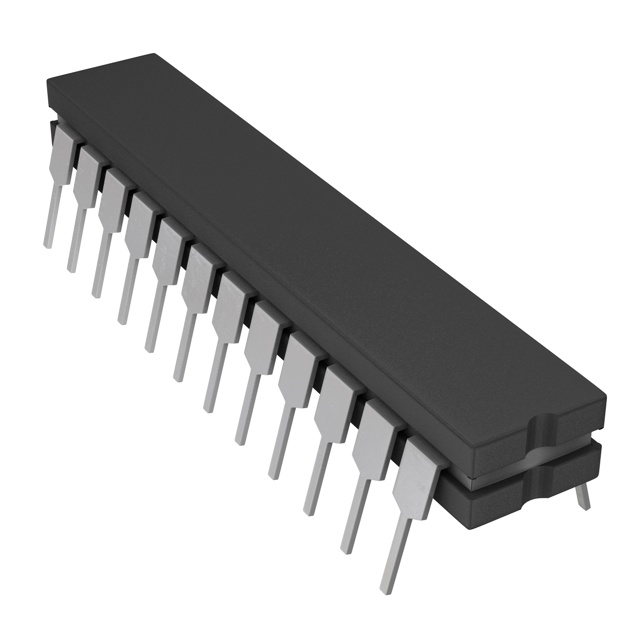
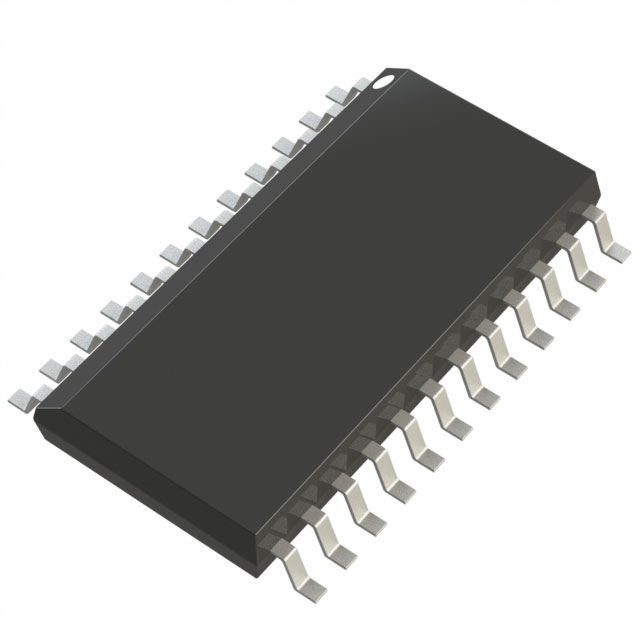
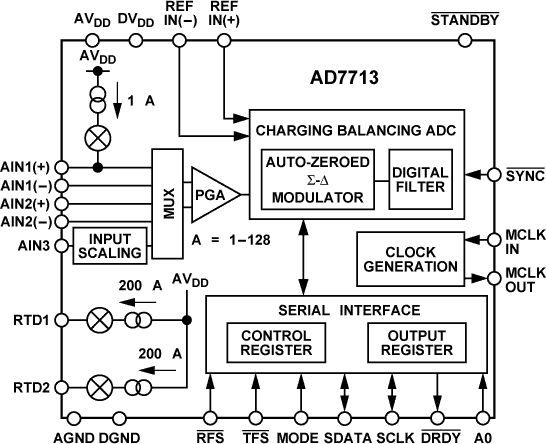
The AD7713 is a complete analog front end for low frequency measurement applications. The device accepts low level signals directly from a transducer or high level signals (4 × VREF) and outputs a serial digital word. It employs a sigma-delta conversion technique to realize up to 24 bits of no missing codes performance. The input signal is applied to a proprietary programmable gain front end based around an analog modulator. The modulator output is processed by an on-chip digital filter. The first notch of this digital filter can be programmed via the on-chip control register allowing adjustment of the filter cutoff and settling time.The part features two differential analog inputs and one single-ended high level analog input as well as a differential reference input. It can be operated from a single supply (AVDDand DVDDat +5 V). The part provides two current sources which can be used to provide excitation in three-wire and four-wire RTD configurations. The AD7713 thus performs all signal conditioning and conversion for a single, dual or three-channel system.The AD7713 is ideal for use in smart, microcontroller-based systems. Gain settings, signal polarity and RTD current control can be configured in software using the bidirectional serial port. The AD7713 contains self-calibration, system calibration and background calibration options and also allows the user to read and to write the on-chip calibration registers.CMOS construction ensures low power dissipation and a hardware programmable power-down mode reduces the standby power consumption to only 150 µW typical. The part is available in a 24-pin, 0.3 inch wide, plastic and hermetic dual-in-line package (DIP) as well as a 24-lead small outline (SOIC) package.