ATSAM3U4E Series
Manufacturer: Microchip Technology
Catalog
Key Features
• * ARM Cortex-M3 revision 2.0 running at up to 96 MHz
• * Memory Protection Unit (MPU)
• * Thumb®-2 instruction set
• * 2 x 128Kbytes Dual Plane embedded Flash, 128-bit wide access, memory accelerator, dual bank
• * 52 Kbytes embedded SRAM
• * 16 Kbytes ROM with embedded bootloader routines (UART, USB) and IAP routines
• * Static Memory Controller (SMC): SRAM, NOR, NAND support. NAND Flash controller with 4 Kbytes RAM buffer and ECC
• * External Bus Interface - 8 or 16 bits, 4 chip selects, 24-bit address
• * Embedded voltage regulator for single-supply operation
• * POR, BOD and Watchdog for safe reset
• * Quartz or resonator oscillators: 3 to 20 MHz main and optional low power 32.768 kHz for RTC or device clock
• * High precision 8/12 MHz factory trimmed internal RC oscillator with 4 MHz Default Frequency for fast device startup
• * Slow Clock Internal RC oscillator as permanent clock for device clock in low power mode
• * One PLL for device clock and one dedicated PLL for USB 2.0 High Speed Device
• * 17 Peripheral DMA Controller (PDC) channels and 4-channel central DMA
• * Sleep, Wait, and Backup modes, down to 1.65 μA in Backup mode with RTC, RTT, and GPBR
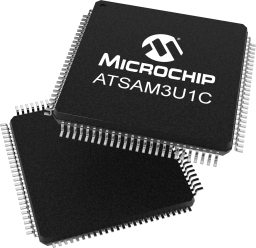
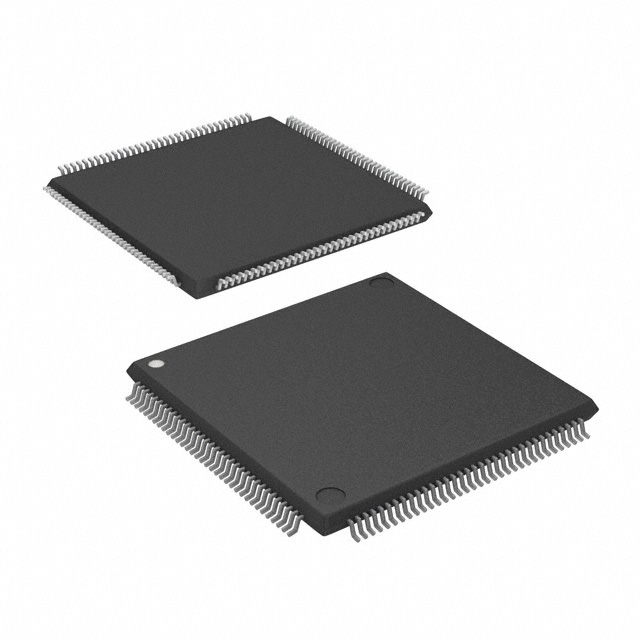
• * 144-lead LQFP – 20 × 20 mm, pitch 0.5 mm
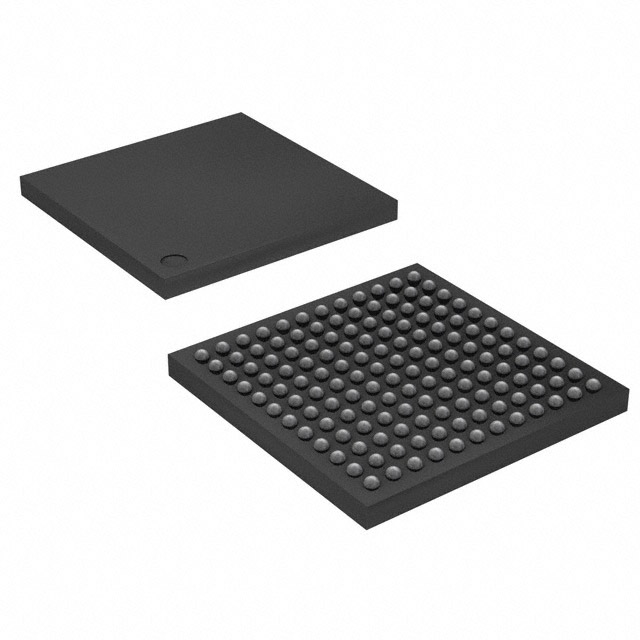
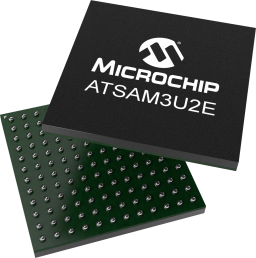
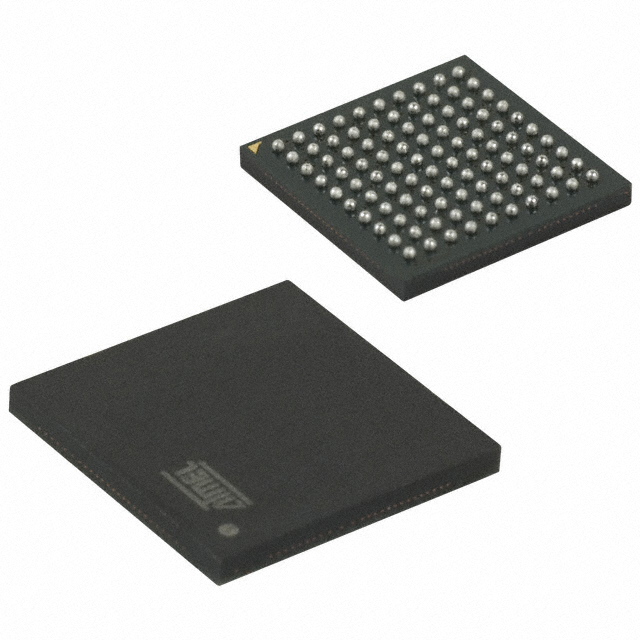
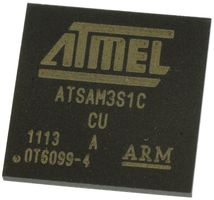
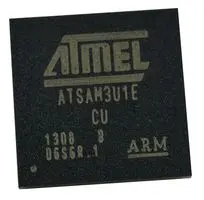
• * 144-ball LFBGA – 10 × 10 mm, pitch 0.8 mm
• * Industrial (-40° C to +85° C)
• * USB 2.0 Device: 480 Mbps, 4-Kbyte FIFO, up to 7 bidirectional Endpoints, dedicated DMA
• * 4 USARTs (ISO7816, IrDA®, Flow Control, SPI, Manchester support) and one UART
• * 2 TWI (I2C compatible)
• * 1 Serial Perpheral Interface (SPI)
• * 1 Synchronous Serial Controller (SSC) (I2S)
• * 1 High Speed Multimedia Card Interface (HSMCI) (SDIO/SD/MMC)
• * 3-channel 16-bit Timer/Counter (TC) for capture, compare and PWM
• * 4-channel 16-bit PWM (PWMC)
• * 32-bit Real-time Timer (RTT) and Real-time Clock (RTC) with calendar and alarm features
• * 96 I/O lines with external interrupt capability (edge or level sensitivity), debouncing, glitch filtering and on-die Series Resistor Termination
• * Three 32-bit Parallel Input/Output Controllers
• * 8-channel 12-bit 1 msps ADC with differential input mode and programmable gain stage
• * 8-channel 10-bit ADC
• * Serial Wire/JTAG Debug Port(SWJ-DP)
• * Debug access to all memories and registers in the system, including Cortex-M4 register bank when the core is running, halted, or held in reset.
• * Serial Wire Debug Port (SW-DP) and Serial Wire JTAG Debug Port (SWJ-DP) debug access.
• * Flash Patch and Breakpoint (FPB) unit for implementing breakpoints and code patches.
• * Data Watchpoint and Trace (DWT) unit for implementing watchpoints, data tracing, and system profiling.
• * Instrumentation Trace Macrocell (ITM) for support of printf style debugging.
• * IEEE1149.1 JTAG Boundary-scan on all digital pins.
• * ASF-Atmel software Framework – SAM software development framework
• * Integrated in the Atmel Studio IDE with a graphical user interface or available as standalone for GCC, IAR compilers.
• * DMA support, Interrupt handlers Driver support
• * USB, TCP/IP, Wi-Fi and Bluetooth, Numerous USB classes, DHCP and Wi-Fi encryption Stacks
• * RTOS integration, FreeRTOS is a core component
Description
AI
Microchip's ARM®-based SAM3U4E is a member of the SAM3U family of flash microcontrollers based on the high-performance 32-bit ARM Cortex®-M3 RISC processor.
It operates at a maximum speed of 96MHz and features two 128KB of dual-bank flash memory and 52KB of SRAM.
The peripheral set includes a High Speed USB device and PHY at 480Mbps, high-speed multimedia card interface for SDIO/SD/MMC, a 16-bit external bus interface supporting NAND flash, three USARTs, two TWIs (I2C), four SPIs, I2S, four PWM timers, three 16-bit timers, RTC, and eight 12-bit and eight 10-bit ADCs.
The architecture sustains high-speed data transfers, with multi-layer bus matrix, multiple SRAM banks, PDC, and DMA support parallel tasks to maximize data throughput.
The SAM3U4C operates from 1.62V to 3.6V and is available in 144-pin LQFP and BGA packages.